

![[For Lower Elementary Students] A Comprehensive Introduction to Pieces That Are Easier to Win With in Piano Competitions](https://i.ytimg.com/vi_webp/6TU6EawjEv8/maxresdefault.webp)


Children’s piano competitions come in several formats: the “set piece” format, where contestants choose from predetermined pieces; the “free choice” format, where they can select any piece; and some competitions that require both a set piece and a free-choice piece.
In every case, choosing pieces that are a perfect fit for the young performers—considering factors such as “whether the piece suits their level, technique, and strengths,” “whether it matches their body and hand size,” “whether it aligns with the competition’s tendencies,” “whether it will help improve their performance skills and musical expression,” and “whether the style matches their preferences so they can practice with enthusiasm”—has a significant impact on the results.
In this article, we’ve gathered recommended pieces that tend to be prize-winning, or make it easier to aim for prizes, especially suitable for lower elementary school students.
If you’re struggling to choose repertoire for a piano competition, we hope you’ll find this helpful!
- For Preschoolers to Elementary School Children: Challenging Piano Pieces — A Curated Selection from Competition Repertoire
- [Piano Recital] Carefully Selected Masterpieces and Popular Pieces Recommended for 3rd Grade Elementary School Students!
- [Piano Recital] Carefully Selected Classical Pieces Recommended for Upper Elementary School Students
- [For 6-year-olds] A curated selection of standout pieces for piano recitals!
- [Piano Recital] Recommended for Boys! A Curated Selection of Cool, Impressive, and Popular Pieces
- For Beginners: Easy to Play and Sounds Impressive! Pieces That Shine at Piano Recitals
- [Piano Recital] Carefully Selected Classical Pieces Recommended for Upper Elementary School Students
- [For Elementary School Students] Brilliant, Showy Masterpieces That Sound Impressive at Piano Recitals
- [Beginner] Also great for piano recitals! Classical pieces that look cool when you can play them
- [Piano Recital] A selection of intermediate-level pieces perfect for girls!
- [Intermediate Level] Cool Piano Pieces You Can Play [Great for Recitals Too]
- [Classical Music] All pieces under 3 minutes! A collection of short and cool piano pieces
- [Beginner] Recommended Piano Pieces to Play at a Recital
[For Lower Elementary Grades] A Roundup of Pieces That Are Easy to Win With in Piano Competitions (1–10)
BaumkuchenYuyama Akira
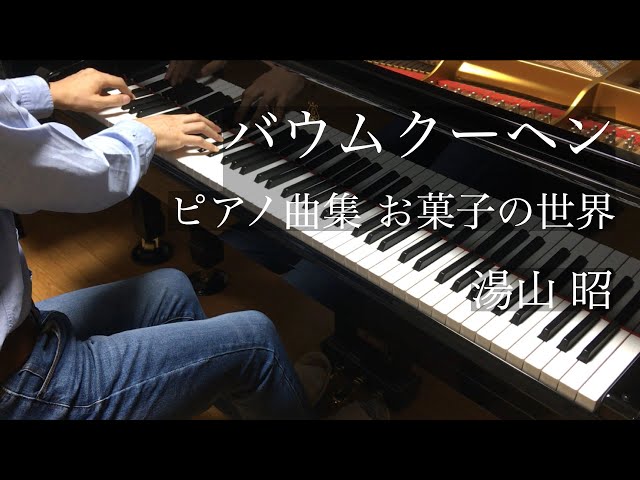
This piece is known as one of the works from the 1974 piano collection “The World of Confections.” Composed by Akira Yuyama, it is inspired by a traditional German confection.
Its phrases unfold in beautifully shaped four-measure units, evoking a flow of sound like layers of pastry stacking up.
Although considered intermediate in technical difficulty, it demands delicate touch, precise pedaling, and accurate articulation, making it a popular choice for recitals and competitions.
It features a soft, delicate melody that begins cantabile; from the middle to the end, changes in tempo and key are introduced, and the work concludes with a weighty fortissimo.
When performing, it’s best to grasp the piece as a whole while sensing these transitions.
25 Etudes, Op. 100 No. 20 “Tarantella”Johann Burgmüller

A well-loved collection of piano études, Johann Burgmüller’s landmark album 25 Études, Op.
100.
No.
20, “Tarantella,” is a passionate and exhilarating piece inspired by the traditional dance of southern Italy.
Its rapid passages and buoyant rhythms vividly conjure a scene of revelers dancing feverishly at a festival! Though it’s a dazzling, stage-ready work, precise control of each note is crucial.
Practice carefully by altering rhythms and breaking the piece into a few beats at a time.
It’s a wonderful challenge that fosters fingertip technique and expressive richness at the same time.
TarantellaWilliam Gillock

Tarantella by William Gillock, an American music educator who left many piano pieces for children, is characterized by its lively rhythm and melody with a sense of swell.
This piece is perfect for lower elementary school students to develop finger movement and a sense of rhythm.
Practice while incorporating foundational exercises to strengthen technique so you can maintain a fast tempo and play brightly and energetically.
Being mindful of the shift from the undulating melody to the bouncing, step-like rhythm is also key to creating a performance with impact!
Phantom KnightWilliam Gillock

This is a piece by William Gillock, notable for a melody that carries a mysterious, quiet strength.
Its atmosphere evokes the image of a knight standing within a mirage, captivating the hearts of many children.
The resonant low register creates a sense of weight, while the high register reveals a delicate, dreamlike melody—drawing listeners into a world of storytelling.
Frequently selected as a required piece for the PTNA Piano Competition, it’s perfect for expressive young players.
It’s also recommended to practice while expanding concrete imagery—asking questions like, “What kind of scene do you picture here?”
small black personClaude Debussy

A short piano piece by Claude Debussy.
It features a light, cheerful character that incorporates the rhythm of the cakewalk, a dance that originated in the American South in the 19th century.
Set in duple meter, it deftly alternates staccato and legato to evoke an endearing image of a shy child peeking out.
Debussy composed this work for a method book; while it is simple enough for beginners to play, it also teaches the importance of playing simple pieces beautifully.
It may be a perfect choice for lower elementary school children preparing for a piano competition.
Fountain on a rainy dayWilliam Gillock

Composed by William Gillock, this piece is an Impressionistic work that depicts a fountain on a rainy day.
Its beautiful melody and virtuosic elements are skillfully integrated, reflecting Gillock’s educational intent.
Beginning with a quiet introduction, moving through a brilliant middle section that evokes a fountain surging upward, and returning to a gentle atmosphere, the structure keeps listeners engaged.
It is an ideal piece for improving technique and refining expressiveness through competitions.
Where the hands cross, you can reduce missed notes by shifting positions as early as possible, so be sure to practice that movement as well.
Midnight Fire FestivalHirayoshi Takeshu

“Midnight Fire Festival” is one of the pieces in Takashi Hiraishi’s piano collection for children, “Rainbow Rhythm.” With its passionate and powerful character that makes a striking impression, it is extremely popular as a competition and recital piece.
The irregular, complex rhythm in 6/8 time will surely be a major challenge for children! It’s recommended to start by practicing each hand separately to grasp the rhythms accurately, then gradually increase the tempo.
Faithfully reproduce the dynamics and accents indicated in the score, and aim for a strong, dramatic performance!