

[Congratulations on Your Recital Debut] Recommended Pieces for Your First Piano Recital

Most people who attend piano lessons experience their “recital debut.” For a first piano recital, everyone takes on the challenge with a mix of excitement, nerves, and anxiety.
Sometimes the teacher will suggest a piece for the recital, but if there’s a piece you’d like to try, it’s definitely worth proposing it yourself! In this article, we’ll introduce plenty of recommended pieces for recitals aimed at beginners and early-level students.
We’ve gathered pieces perfect for a recital debut—such as short, dynamic pieces for children, classic recital favorites everyone knows, and piano pieces suited for adult beginners—so please use this as a reference!
- [For 6-year-olds] A curated selection of standout pieces for piano recitals!
- [Beginner] Recommended Piano Pieces to Play at a Recital
- [For Elementary School Students] Brilliant, Showy Masterpieces That Sound Impressive at Piano Recitals
- [Piano Pieces for Young Children] Perfect for Recitals! A Curated Selection of Brilliant, Showy Favorites
- For Beginners: Easy to Play and Sounds Impressive! Pieces That Shine at Piano Recitals
- [For 4-year-olds] Recommended pieces for a piano recital!
- Disney Classics on Piano: A Curated Selection of Easy Pieces, Perfect for Recitals
- Recommended for piano beginners! 10 sheet music picks that adults can enjoy too
- For 2nd Grade Elementary School Students: Must-Play Pieces for Piano Recitals! Recommended Masterpieces & Famous Songs
- [Piano Recital] Recommended for Boys! A Curated Selection of Cool, Impressive, and Popular Pieces
- Piano Masterpieces: Surprisingly Easy Despite Sounding Difficult!? A Curated Selection Perfect for Recitals
- [Beginner] Also great for piano recitals! Classical pieces that look cool when you can play them
- [Piano Pieces] Easy for Children to Play! A Roundup of Simple Classical Works
[Congrats on Your Recital Debut!] Recommended Pieces for Your First Piano Recital (31–40)
clock towerCornelius Gurlitt

Cornelius Gurlitt, the great German composer who created numerous works ranging from songs and piano pieces to cantatas, operas, and symphonies.
While he left many highly challenging pieces, he also wrote some simple and charming works for children.
One of these is The Clock Tower.
Because the accompaniment is somewhat difficult, we recommend performing it as a duet, as shown in the video.
It’s a must-check piece for those planning to perform at a piano recital as a parent-child duo.

Piano Sonata No. 16, K. 545Wolfgang Mozart

Beginner-level pieces tend to be less striking to listen to.
Even beginners want to perform cool pieces that really sound impressive, right? For those people, I recommend this piece: Piano Sonata No.
16, K.
545.
It’s like a gateway to the intermediate level, and despite its difficulty, it features a dazzling melody that leaves a strong impression.
It may be hard to play unless both hands are agile, but since the piece contains a lot of repetition, the more you practice, the more your efforts will show.
PicnicMary Clark

Clark’s Picnic has a bright, exhilarating feel.
It’s a piece that conjures up the image of a cheerful spring picnic.
The buoyant rhythm—almost like skipping—is a hallmark of the work and appears repeatedly throughout.
To convey the joyful atmosphere, I want to play it lightly, taking care not to make the sound heavy.
Also, in the middle section where the right and left hands alternate, be mindful to bring out clear dynamic contrasts between them as you perform.

marchDmitri Shostakovich

Shostakovich was a composer active in the Soviet Union during the 20th century.
Exceptionally talented both as a pianist and as a composer, he firmly established his reputation as one of the greatest classical music composers of the 20th century.
This piece is No.
1 from Children’s Notebook and evokes soldiers marching without bending their knees.
Aside from the slurs indicated by the composer, it is preferable to play non-legato; however, since it depicts a soldiers’ march, be careful not to make it too light.
Chase the mysteryJuhara Ryoko

A piece characterized by a mysterious, thrilling atmosphere.
Its storyline-like structure, which unfolds gradually from a suspenseful introduction, creates a sense of immersion reminiscent of game or anime background music.
Though only about the difficulty level of completing Beyer, it skillfully weaves in rhythmic changes and harmonic progressions, resulting in a work that shines on stage.
Included in the album “Piano Land 5: Sing and Play with Your Teacher” and published by Ongaku No Tomo Sha in February 1992, this piece is beloved for allowing performers to express the music as if telling a story.
Highly recommended for those who want to perform at recitals or competitions.
With a powerful performance, it is sure to captivate the audience.
[Congratulations on Your Recital Debut] Recommended Pieces for Your First Piano Recital (41–50)
Babayaga Op. 39-20Pyotr Tchaikovsky

This is a masterpiece created by a Russian composer devoted to nurturing children’s hearts through music.
The work vividly portrays, in sound, the tale of a mysterious witch who lives in a hut standing on chicken legs and travels in a flying mortar—captivating children’s imaginations.
With a melodic line that includes rapid ascending and descending scales and wide leaps, along with unstable harmonic sonorities, it skillfully conveys the witch’s eeriness and enigmatic movements.
Composed in 1878, its brisk tempo and richly descriptive power brim with immediacy, letting listeners savor the story’s excitement.
Brimming with expressive nuance and drama, this piece is perfect for a child’s piano recital or as an encore.
A recommended classic for anyone who wishes to foster imagination through music.
Go see the circusWilliam Gillock
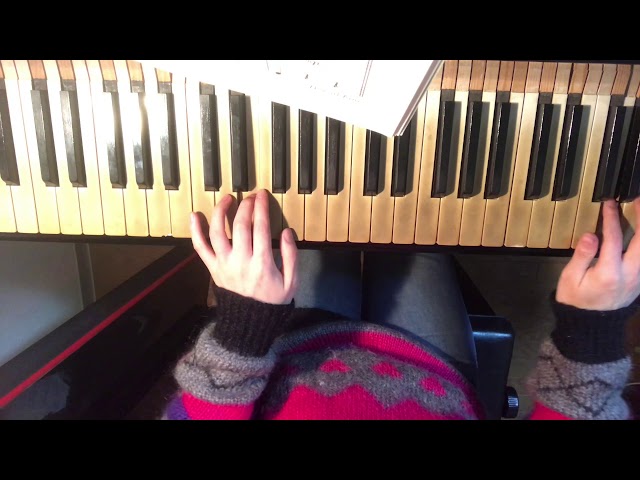
Gillis, an American music educator and composer.
His works are now played by piano enthusiasts all over Japan and are widely used as teaching materials.
Even though the melody and rhythm are simple, it’s a fun piece that conjures images of all sorts of acts at a circus.
I’d like to play the scale runs that pop up here and there cleanly.
If you keep the left hand from getting too heavy, your performance will convey the joy of the circus.
The collection First Lessons in Gillock also contains many other beginner-friendly pieces, so be sure to check it out!