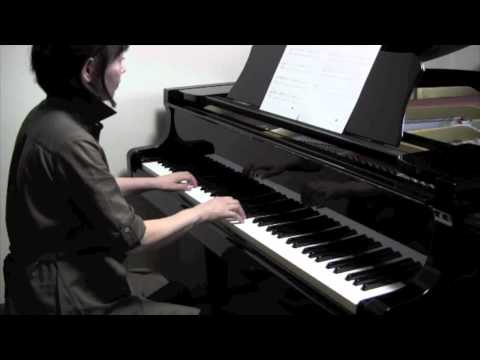
Most people who attend piano lessons experience their “recital debut.” For a first piano recital, everyone takes on the challenge with a mix of excitement, nerves, and anxiety.
Sometimes the teacher will suggest a piece for the recital, but if there’s a piece you’d like to try, it’s definitely worth proposing it yourself! In this article, we’ll introduce plenty of recommended pieces for recitals aimed at beginners and early-level students.
We’ve gathered pieces perfect for a recital debut—such as short, dynamic pieces for children, classic recital favorites everyone knows, and piano pieces suited for adult beginners—so please use this as a reference!
[Congratulations on Your Recital Debut] Recommended Pieces for Your First Piano Recital (1–10)
CanonJohann Pachelbel
Canon / Pachelbel / with sheet music / Piano / Canon / Pachelbel / Piano / CANACANA
The famous masterpiece by the German composer Johann Pachelbel, widely known as “Pachelbel’s Canon”! Its calm and beautiful character captivates piano learners of all ages, from adults to children.
The simple and elegant chord progression—known as the “canon progression”—has been incorporated into works across genres, including J-pop and Western music.
Its gentle, heart-penetrating melody is especially popular among those who began learning piano as adults.
Choose this universally beloved classic for your recital piece and make your debut performance truly unforgettable.
12 Variations on “Ah, vous dirai-je, Maman” (Twinkle, Twinkle, Little Star Variations)Wolfgang Amadeus Mozart
First Recital: Twinkle, Twinkle, Little Star Variations — Mozart
Wolfgang Amadeus Mozart’s “Twelve Variations on the French Song ‘Ah, vous dirai-je, Maman’,” popularly known as the “Twinkle, Twinkle, Little Star Variations,” is a work based on the melody of a love song that was fashionable in 1778.
The theme is a classic tune that many children perform at recitals, but as the piece progresses, the variations become increasingly complex and technically demanding.
Ideally, one should aim to play all the variations, but for a first recital, it’s also a good idea to select and perform only the easier variations.
The opening theme of the 1988 animated film My Neighbor Totoro, titled “Sanpo” (“Stroll”), remains an unshakably popular staple for recitals even decades after the movie’s release.
The phrase “I want to play Totoro!” is something piano teachers hear so often from students that it’s practically a refrain.
With a wide variety of arrangements available for purchase, it’s easy to find sheet music suited to each player’s level—perhaps another reason for the song’s enduring popularity.
A piece also known by alternative titles like “Playful Waltz” and “Music Box.” Its hallmark is the instruction to perform it “mechanically.” The Romantic-era Russian composer and conductor Lyadov included this direction as he experimented with how closely a music-box sound could be reproduced.
From the very beginning, evenly spaced eighth notes appear, and the inserted rests conjure up the delicate mechanism of a cylinder music box.
It’s a piece you’ll want to play while imagining the sound of a music box!
Theodor Oesten, a pianist, composer, and piano teacher from Berlin, Germany.
His works are characterized by poetic titles and a fusion of brilliant virtuosity with melodious, song-like lines.
This piece was written as the fourth piece in the set Scenes of Childhood, Op.
202, which consists of six pieces.
The entire work is in C major and can be divided into four sections.
Each bears an English performance indication—“Lullaby,” “The Doll Sleeps,” “The Doll’s Dream,” and “The Doll’s Dance”—so it would be nice to perform it in a way that conveys these scenes as you imagine them.


![[Congratulations on Your Recital Debut] Recommended Pieces for Your First Piano Recital](https://i.ytimg.com/vi_webp/esBkFrwm4aI/maxresdefault.webp)