

[Piano Solo with Vocals] Recommended for Piano-and-Vocal Performances! Hit Songs from the Heisei to Reiwa Eras


Singing while accompanying yourself on the piano—piano-vocal performances—are so cool and wonderful, aren’t they!
Many famous artists perform in a piano-and-vocal style, and every year brings a wealth of great songs.
In this article, we’ll introduce recommended songs for those who want to try piano-vocal covers, focusing on hits from the Heisei and Reiwa eras.
We’ve gathered a variety of tracks—not only songs originally written for piano-and-vocal performance, but also pieces with captivating piano timbres, songs where the piano isn’t the main instrument yet suit piano-vocal arrangements perfectly, and more.
Why not use this article as a starting point to make your own piano-vocal debut?
- [Piano/vocal] Super cool! Recommended songs you can breeze through
- Even beginners can play them easily on the piano! A curated selection of popular and latest J-POP songs.
- [Piano Accompaniment Score] A curated selection of recommended sheet music for popular sing-and-play songs!
- [Piano Beginners] J-POP That Looks Hard but Is Surprisingly Playable [2026]
- It’s so cool if you can play these on the piano! A selection of irresistibly charming masterpieces.
- [Piano × J‑Pop] A curated selection of the coolest new hits and anime songs that’ll look great when you play them
- A must-see for anyone who wants to try piano-and-vocal performances through code! From nostalgic oldies to the latest hits, all introduced at once.
- [Intermediate Level] Cool Piano Pieces You Can Play [Great for Recitals Too]
- Poignant and beautiful! A collection of recommended piano pieces
- [Graduation Songs] Graduation songs featuring captivating piano tones! Introducing Japanese songs perfect for piano-and-vocal performances
- Recommended for piano beginners! 10 sheet music picks that adults can enjoy too
- [Piano × Vocaloid] A selection of recommended songs that are easy for beginners to play
- Today's Piano: Masterpieces and Popular Pieces Woven with Delicate Tones
[Piano Solo with Vocals] Recommended for Piano Solo with Vocals! Hit Songs from the Heisei to Reiwa Eras (21–30)
A Bouquet for YouUtada Hikaru

Utada Hikaru’s “Hanataba o Kimi ni,” with lyrics addressed to her late mother, is a tearjerker.
Released as a single in 2016, it topped Billboard’s download chart.
The piano that supports the song has a somewhat wistful tone, and its beauty stands out thanks to a simple accompaniment that avoids unnecessary embellishment.
The key has four sharps and uses many black keys, so it’s a bit challenging for beginners, but if you can capture the mood and sing while playing, you’re sure to draw listeners in.
Give it a try!

Flower of loveaimyon

Aiming’s “Ai no Hana,” written for the NHK morning drama Ranman, has a warm, gentle atmosphere and lyrics that beautifully suggest bonds between people continuing forever, making it perfect for solo voice-and-guitar performance.
The key when doing a sing-and-play rendition is to value subtle nuances so the performance feels expressive.
In the soaring chorus, rather than just playing loudly, aim for a gentle touch to better convey the song’s warmth.
For beginners, start by learning the basic chords and getting a feel for the flow of the song.
[Piano and Vocals] Recommended for piano-vocal performances! Hit songs from the Heisei to Reiwa eras (31–40)
Sakura (Solo)Moriyama Naotaro
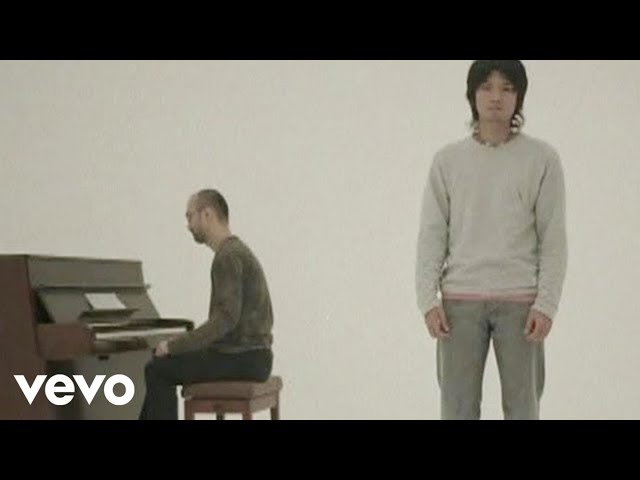
Released in 2003, “Sakura” is one of Naotaro Moriyama’s signature songs and a staple at graduation ceremonies and weddings.
The accompaniment for the solo vocal version is simple, making it great for piano beginners.
Intermediate players should try the arrangement performed in the music video, which differs from the single version and beautifully supports the vocal by hitting the right accompaniment points.
The piano phrases that come in between the singing are called obbligato—one technique for filling the musical space.
It’s a piece that both beginners and intermediate pianists should try!
The Future Projection IIDREAMS COME TRUE

When it comes to ballads with beautiful piano intros, DREAMS COME TRUE’s “Mirai Yosouzu II” is a must.
It was included on their 1989 album “LOVE GOES ON…” and is a classic love song often played at weddings.
The piano in the intro deliberately uses chords that step outside the song’s key, creating a striking sound.
Since it’s in a key with six flats—one of the most challenging—it’s recommended to look for sheet music transposed to an easier key, or use the transpose function if you’re playing on a digital piano!
MPRINCESS PRINCESS
When it comes to songs by the all-girl band PRINCESS PRINCESS with beautiful piano, M is the one that stands out.
Although it was included as the coupling track to their smash-hit single Diamonds and was a B-side, it became a beloved classic for many.
The piano accompaniment in the first verse, which feels like a conversation with the vocals, is both beautiful and striking.
Since the song is in 12/8 time using triplets, it may be challenging to get used to the rhythm, but it’s definitely a piece you should try!
contrailArai Yumi

When it comes to classic piano ballads by Yumi Matsutoya, “Hikoukigumo” (Vapor Trail) stands out.
It’s the title track of her 1973 album Hikoukigumo, and in 2013 it was chosen as the theme song for Studio Ghibli’s animated film The Wind Rises.
“Hikoukigumo” is also a staple in her concerts and is often performed as a piano-and-vocal solo by Matsutoya herself.
It’s in E-flat major with three flats, so you’ll encounter black keys, but with practice you can definitely master it.
Try using her live piano-vocal performances as a reference and give it a go!
BoyhoodInoue Yosui

Among Yosui Inoue’s songs, the one with a strikingly simple piano accompaniment is “Shonen Jidai” (Childhood).
Released in 1990, it reached No.
4 on the Oricon singles chart and became a million-seller—his biggest hit and signature song.
From the intro to the end, it features steady quarter-note chord playing.
While there are occasional chords that require two black keys, the progression is relatively easy to finger and memorize.
Several times throughout the piece, a beautiful high-register phrase is interwoven, so be sure to practice until you can sing while playing!