

[Western music] What is post-hardcore? — Summary of representative bands

If you like bands that are often introduced as emo or loud, whether Western or Japanese, you’ve probably come across the genre called “post-hardcore” at least once.
Among the bands that originated from hardcore punk, which began in the late 1970s, those who created a unique sound that didn’t fit neatly within existing hardcore came to be called “post-hardcore.” From there, derivative genres like emo-core and screamo emerged, and since the 2000s the term has been used in a broader sense—making it a very difficult genre to define.
In this article, we’ll introduce, all at once, the bands that debuted from the 1980s to the 1990s and played an important role in shaping post-hardcore.
- [Western Music] Hardcore Punk Masterpieces and Popular Songs – Beginner’s Guide
- [Western Music] A classic of 90s emocore. One album I want you to listen to first.
- Coexistence of Ferocity and Beauty: A Roundup of Japanese Screamo/Post-Hardcore Bands
- [2026] A Beginner’s Guide to Popular Overseas Turquoise-Core Bands
- Recommended Western screamo bands. Popular overseas bands.
- Nu metal masterpieces. Recommended popular songs.
- If you want to listen to Western emo music, start here! A list of overseas emo bands
- Classic hardcore punk tracks. Recommended popular songs.
- Enduring popularity! Classic emo songs in Western music
- [2026] Masterpieces of Melodic Hardcore: A roundup of popular tracks, old and new
- Classic emo masterpieces in Japanese music. Recommended popular songs.
- [2026] A roundup of popular Japanese hard rock bands, including those famous overseas
- From emotional tracks to exhilarating tunes! Heisei-era youth songs
[Western Music] What Is Post-Hardcore? A Summary of Representative Bands (1–10)
If It Kills YouDrive Like Jehu

In San Diego, California, there’s a distinctive punk-to-hardcore scene that has produced many uniquely individual bands.
Looking back at the history of post-hardcore, you can see that there were bands operating with a different kind of appeal from the Washington hardcore scene centered around Fugazi.
One of the most renowned bands symbolizing that unique scene is Drive Like Jehu, active from 1990 to 1995.
Formed by members of Pitchfork, a band that was active in the late 1980s during the dawn of post-hardcore, they released only two albums, yet—much like legends such as Fugazi and Jawbox—they exerted a powerful influence on subsequent emo-core and post-hardcore bands.
Their style—interlocking, unconventional twin-guitar phrases that depart from established rock and punk patterns, bass and drums that support intricately unfolding ensembles, and vocals hovering between melody and a scream—can rightly be called a prototype of post-hardcore.
Many musicians cite them as an influence, but what I’d like to emphasize here is that they weren’t merely a short-lived cult favorite; several members went on to make major contributions to the music scene.
Rhythm guitarist and vocalist Rick Froberg was active in Rocket from the Crypt, which broke into the mainstream, and after returning to the indie world, he continued with bands like Hot Snakes.
Drummer Mark Trombino found great success as a producer, bringing to the world seminal ’90s emo-core classics by bands like Jimmy Eat World and Mineral, and since the 2000s he has produced numerous albums for emo and pop-punk bands.

NubTHE JESUS LIZARD

The Jesus Lizard relentlessly pursued a uniquely intense heaviness, ruled by a terrifying sense of tension and a raw, stinging atmosphere.
Formed in 1987 by members from Texas, they relocated to Chicago early on and made a powerful impact on the indie scene working with the renowned engineer Steve Albini—also known for producing Nirvana’s In Utero.
The four albums they released on the famed American indie label Touch and Go with Albini each showcase a strange, singularly heavy sound born of the band’s unique vision—music that, while brilliant, can hardly be called broadly accessible; it’s quintessentially ’90s underground.
David Yow’s deranged vocals, the unorthodox guitar work that reflects a post-punk influence distinct from conventional rock approaches, the bass that drives the groove at the music’s core, and the mechanical drums all combine into a band ensemble that remains shocking even today.
The members’ high-level musicianship influenced many artists, including Nirvana, with whom they released a split single.
Their two major-label albums shifted toward a comparatively more approachable style, but the band’s madness remained intact; true to their own words, they stuck to a sound that was never going to produce million sellers.
This Ain’t No PicnicMinutemen

Hailing from California in the United States, Minutemen were a band that, despite a brief run of about five years after forming in 1980, influenced later post-hardcore and alternative rock, effectively presenting the next phase of punk and hardcore ahead of the curve.
As evidenced by the release of their 2005 documentary film We Jam Econo: The Story of the Minutemen, the impact they had on the scene was enormous.
In 1981, they released their debut album The Punch Line on SST Records, the label run by Greg Ginn of Black Flag, the charismatic figure of the ’80s hardcore scene.
Those who picked up the record expecting “hardcore” might be startled from the very first track by the band’s unique songs—built from a trio’s spacious interplay of funky guitar cutting, a sinuous bassline, and supple drums.
Armed with a singular sensibility and high-level musicianship, the album that stands as their crowning achievement is undoubtedly the sprawling, four-sided Double Nickels on the Dime, released in 1984.
Its songs, which incorporate elements that step far outside hardcore—jazz, funk, and spoken word—and lyrics that tackle wide-ranging themes from social issues to linguistics, make up a sound world that is distinctly Minutemen’s.
It was a remarkable feat within the American indie scene of the 1980s.
Sadly, in 1985 frontman D.
Boon passed away in an accident, and the band was forced to disband.
[Western Music] What Is Post-Hardcore? — Summary of Representative Bands (11–20)
FazerQuicksand
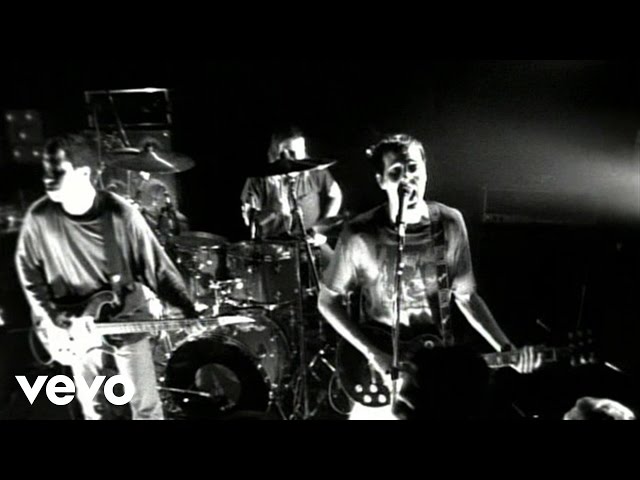
Quicksand, the legendary post-hardcore band set to return to Japan for shows in November 2022.
Formed in 1990 around Walter Schreifels—renowned as the guitarist of Gorilla Biscuits, one of the most iconic bands from the late-1980s New York hardcore scene—the band released two albums in the 1990s, then unexpectedly reunited in 2012, followed five years later by a comeback third album, and in 2021 released their fourth, Distant Populations.
One interesting point in their discography is that, while their debut EP came out on the storied hardcore label Revelation Records, they had already made their major-label debut with their first full-length, Slip, in 1993.
You could take that as evidence of the high expectations surrounding them, but unfortunately they did not achieve commercial success.
Even so, many later bands cite the influence of their post-hardcore sound, and Quicksand’s status as an important band in the history of post-hardcore remains unchanged.
Their musical style, while showing the influence of bands like Fugazi and Jawbox, is distinguished by metallic, hard-edged guitar riffs woven throughout.
The overall feel is close to what bands like Helmet were doing in the so-called alternative metal sphere, and the distinctive, solid groove that springs from that sensibility is uniquely theirs.
It’s also worth noting that in their early days they covered The Smiths’ classic How Soon Is Now?, hinting at an admiration for UK rock that comes through in their sound.
PorcelainThursday

Although this article doesn’t cover the so-called “screamo” bands from the 2000s onward, Thursday—who can be seen as forerunners of that movement—are an important band within the trajectory of post-hardcore, so I’m including them here as a representative of early-2000s screamo.
Formed in New Jersey in 1997, Thursday predate bands like The Used and Finch among the early screamo acts, and considering that their seminal debut album “Waiting” was released in 1999, it’s no exaggeration to say they bridged the gap between the underground post-hardcore of the ’90s and the commercially successful screamo scene of the 2000s and beyond.
The record that truly put their name on the map is their masterpiece of a second album “Full Collapse,” released on the venerable Epitaph Records.
But if you listen to “Waiting,” which came out on Eyeball Records—the same label that would later launch My Chemical Romance—you can hear how new possibilities were germinating beneath the surface of a late-’90s American rock scene dominated by nu metal.
The sound production and musicianship bear the rough edges of an indie release, yet the contrast between frontman Geoff Rickly’s introspective lyrics, his fragile singing, and his screams is quintessential early screamo.
And, as evidenced by the track “Ian Curtis,” their influences from UK rock such as new wave are also noteworthy.
Thursday’s sound world—where delicate emotion swirls, distinct from the loud, metallic strain of screamo—stands as one of the remarkable possibilities that post-hardcore brought into being.
Mistakes And Regrets…And You Will Know Us by the Trail of Dead

The memorably long-named …And You Will Know Us by the Trail of Dead is a post-hardcore/alternative rock band formed in 1994 in Austin, Texas.
They released their latest album, XI: Bleed Here Now, in 2022 and remain an active force to this day.
The band is centered around two original members who are multi-instrumentalists, while the rest of the lineup is fluid—one of their distinctive traits.
The record that catapulted them into wider recognition was their second album, Madonna, released in 1999.
Put out by the renowned American indie label Merge Records, it drew attention not only for its impactful artwork featuring a portrait of a Hindu goddess on the cover, but also for its highly praised sound: Sonic Youth-esque noise, at times lyrical guitars, busy and dynamic drumming, beautiful melodies, and dramatic song structures that reflect post-rock influences.
In fact, to mark the album’s 20th anniversary, they even held a headlining show in Japan in 2019.
In 2002, they released their major-label debut, Source Tags & Codes, widely hailed as a masterpiece, which stunned listeners with an artistic sonic universe that transcended the bounds of alternative rock and post-hardcore.
Their creativity has never waned since, as they continue to release works grounded in their own aesthetic.
In a landscape where many bands disband quickly, a group like this—maintaining a high standard over the long term—is truly rare and invaluable.
Head ColdHeroin

In the 2000s, bands labeled as “screamo” such as Thursday, The Used, Finch, and Saosin achieved commercial success and became a major movement, but the term “screamo” itself had existed since the 1990s.
Of course, it wasn’t a genre name coined by the bands themselves; it was already being used as a musical term in the media.
One pioneering band of this “screamo” sound—and an important group in post-hardcore history—is Heroin from San Diego.
They were also a flagship act in the early days of Gravity Records, a label that played a key role in San Diego’s underground scene, and despite their short run from their formation in 1989 to their breakup in 1993, the few recordings they left behind had an enormous impact on subsequent bands.
Rather than tough, aggressive screams, their sound features anguished shrieks tinged with melancholy and fragile clean passages—what you might call truly “pre-screamo.” The way their inward-looking emotion explodes makes them a pioneering presence in what would become “emotional hardcore.” Even their fast parts aren’t exactly exhilarating; there’s a persistent sense of frustration and unresolved tension that feels distinctly post-hardcore and truly compelling.
Listeners accustomed to polished screamo might find it a bit underwhelming, but if you’re interested in the history of post-hardcore or screamo, I can say without hesitation that you should definitely pick up Destination, their discography release issued after the band’s breakup.