

![[Western music] What is post-hardcore? — Summary of representative bands](https://i.ytimg.com/vi/SGJFWirQ3ks/hqdefault.jpg)

If you like bands that are often introduced as emo or loud, whether Western or Japanese, you’ve probably come across the genre called “post-hardcore” at least once.
Among the bands that originated from hardcore punk, which began in the late 1970s, those who created a unique sound that didn’t fit neatly within existing hardcore came to be called “post-hardcore.” From there, derivative genres like emo-core and screamo emerged, and since the 2000s the term has been used in a broader sense—making it a very difficult genre to define.
In this article, we’ll introduce, all at once, the bands that debuted from the 1980s to the 1990s and played an important role in shaping post-hardcore.
- [Western Music] Hardcore Punk Masterpieces and Popular Songs – Beginner’s Guide
- [Western Music] A classic of 90s emocore. One album I want you to listen to first.
- Coexistence of Ferocity and Beauty: A Roundup of Japanese Screamo/Post-Hardcore Bands
- [2026] A Beginner’s Guide to Popular Overseas Turquoise-Core Bands
- Recommended Western screamo bands. Popular overseas bands.
- Nu metal masterpieces. Recommended popular songs.
- If you want to listen to Western emo music, start here! A list of overseas emo bands
- Classic hardcore punk tracks. Recommended popular songs.
- Enduring popularity! Classic emo songs in Western music
- [2026] Masterpieces of Melodic Hardcore: A roundup of popular tracks, old and new
- Classic emo masterpieces in Japanese music. Recommended popular songs.
- [2026] A roundup of popular Japanese hard rock bands, including those famous overseas
- From emotional tracks to exhilarating tunes! Heisei-era youth songs
[Western Music] What Is Post-Hardcore? A Summary of Representative Bands (1–10)
Waiting RoomFugazi
Formed in 1986 around Ian MacKaye—frontman of Washington, D.C.’s Minor Threat and one of the most important figures in American hardcore punk history—Fugazi stands as the very embodiment of this article’s theme: post-hardcore.
Distancing themselves from the more violent aspects of the hardcore scene, Ian, who truly embodied the “hardcore ethos,” started Fugazi to evolve the genre, and that alone underscores their significance.
Their musicality represents a true next stage of hardcore in the 1990s: grooves born from adventurous, varied rhythm patterns that diverge completely from speed-centric punk; inventive yet razor-sharp guitar and bass tones; and melodies that are neither sweet nor overtly catchy yet grip your chest with sheer emotion.
That sound is partly why they’re often called progenitors of emo-core, but their unique style—one that absorbed ’90s alternative rock, grunge, and later post-rock—ended up influencing countless bands.
By the time they went on hiatus in 2003, they had released six albums.
Even as they maintained a thoroughly anti-commercial stance, they continued to wield broad, cross-genre influence—thanks also to Ian’s Dischord Records—making their posture synonymous with the history of American hardcore and post-hardcore itself.
Because Fugazi evolved with each album, I highly recommend checking out their entire discography if possible!

SavoryJawbox

If Fugazi’s Ian MacKaye is the emblem of Washington, D.C.’s hardcore scene with his uncompromising indie ethos, then J.
Robbins—who likewise did a great deal to foster the scene—is a towering artist who thrived not only in the indie world but also in the major-label arena, releasing outstanding work as a producer.
If you’ve listened to albums by bands labeled emo-core or post-hardcore in the ’90s, there’s a good chance you’ve noticed Robbins credited as producer.
Like Ian, Robbins hails squarely from hardcore, yet he stands as one of the key figures who helped shape its evolved form: post-hardcore.
Robbins has played in various bands, but the one I’m introducing here is the renowned Jawbox, formed in 1989 and later signed to a major.
Their first two albums came out on Ian’s Dischord Records; their sound—marked by distinctive guitar interplay that nimbly wields dissonance and noise, a supple rhythm section, and a twisted pop sensibility—undoubtedly exerted a huge influence on ’90s emo and post-hardcore.
They later moved to a major label and released the masterpiece For Your Own Special Sweetheart, a work that could be considered a sacred text of ’90s post-hardcore.
It’s true that the more full-blooded major-label production drew mixed reactions from early fans, but there’s no question it’s essential listening for anyone seeking to understand the history of post-hardcore.
That said, you really should hear all four of their albums!
Celebrated SummerHüsker Dü

When you think of punk, you might picture a skinny look with flashy hairstyles, and many people probably see hardcore punk as tough and intimidating.
Hüsker Dü were the legendary band that appeared on the hardcore punk scene in a plain, everyday style that didn’t fit either image—almost drab, you could say.
While they did enjoy a passionate following during their active years, they’re the kind of band that was truly recognized after breaking up, as waves of later alternative rock bands publicly cited them as an influence.
Standing out from the start in the hardcore scene, they formed in 1979 in Minnesota, USA, and their distinctive name comes from a 1970s board game.
Their 1983 debut album, Everything Falls Apart, is a raw hardcore punk record, but even then it’s notable for weaving in melancholic melodies and phrases.
Evolving their sound with each release, their second album, Zen Arcade, is an ambitious double LP concept album running over 70 minutes, where they quickly asserted a unique artistic identity.
Their third album in 1985, New Day Rising, placed greater emphasis on melody and presented a broader musical palette, forging a sound that was practically a prototype for post-hardcore.
They later signed to a major label but failed to achieve commercial success and ultimately disbanded.
Even so, by crafting a sound that went beyond hardcore and punk—and standing as originators for post-hardcore and emo-core—their work is, as noted above, something that anyone who loves ’90s and later alternative rock should absolutely check out.
Corpse poseUnwound
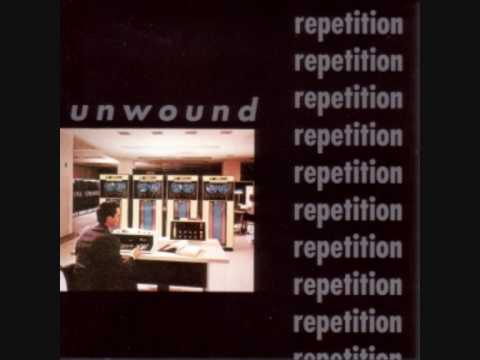
In July 2022, Unwound—the legendary trio of the US indie scene—announced the unexpected: a reunion tour, sending a subset of their devoted fans into rapture.
Based in Olympia, Washington, they operated in a DIY indie mode for roughly a decade from their formation in 1991 until 2002, touring tirelessly, including in Japan.
While they were never a band that made a commercial splash in the mainstream, they wielded a unique influence with a post-hardcore sound that refused to pander to trends.
It’s also notable that they consistently released their work on Kill Rock Stars, the label founded in 1991 that housed bands like Bikini Kill and Sleater-Kinney, catalysts of the so-called riot grrrl movement.
Their music was quintessentially post-hardcore: a trio-driven ensemble exploding with feral noise; vocals that barely qualified as melodic; and a searing, singular tension that led some to describe them as a fusion of Sonic Youth and Fugazi.
That said, with each release they showed a growing interest in melody while steadfastly avoiding any easy sellout, making their austere aesthetic ever more deep and refined.
In terms of accessibility, their fourth album, Repetition, released in 1996, contains relatively pop elements and may serve as a comparatively light entry point into their music.
Bad PennyBig Black

Steve Albini—the godfather of alternative rock: boss of the American indie scene, a fearsome engineer who could silence even crying children, and also a guitarist and vocalist.
Albini’s formidable career as a musician and engineer, often associated with indie fundamentalism and unwavering stubbornness, can’t be summed up in a few sentences.
But here, we’re focusing on his own band, Big Black.
Formed in 1981 while Albini was still a college student, Big Black left behind two studio albums, two live albums, and several EPs before disbanding in 1987.
Notably, they used a Roland drum machine instead of a drummer.
Their sound—effects-drenched, barked vocals; a barrage of solid, noisy guitar riffs; a heavy bass line that fills the negative space; and the drum machine’s characteristically inorganic beat—has been highly regarded as a pioneering template for post-hardcore and noise rock.
Their lyrics, which frequently broached social taboos, are especially controversial by today’s standards, and Albini himself has reflected on them as the excesses of youth.
All told, they were a dangerous, visceral band in every sense.
Even if you’ve heard records Albini engineered, you might not have listened to his own band’s work—so if this piques your interest, they’re well worth checking out!
ScrapeUnsane

They might be a different breed from the bands we’ve covered under the post-hardcore banner—perhaps even an outlier.
Unsane, the so-called “kings of noise rock” from New York’s underground, formed in 1988 as a trio centered around Chris Spencer, the group’s sole original member.
Their self-titled debut, released in 1991 on Matador Records—one of the American indie scene’s key labels—radiates danger from the moment you see its shocking cover art.
The unhinged vocals, metallic and noisy guitar riffs, hulking bass, and aggressive drums fuse into a wall of sound that’s at once hardcore, metal, and somehow neither—already a singular identity at that point.
Compared to alternative metal peers like Helmet, with whom they’re often grouped, Unsane’s swampy sonic world feels brutally raw, and—cover art included—charged with a “touch-it-and-you’ll-get-cut” tension.
Their vicious, desolate, chaotic sound was dubbed “junk,” hinting at a different set of possibilities for the hardcore genre.
While their core approach has remained consistent over a long career, they’ve also woven in rock ’n’ roll guitar solos and bluesy passages, showing a breadth that goes beyond pure chaos—that’s key to their appeal.
It’s not an easy listen, but if you’re curious, don’t be afraid to dive in!
If It Kills YouDrive Like Jehu

In San Diego, California, there’s a distinctive punk-to-hardcore scene that has produced many uniquely individual bands.
Looking back at the history of post-hardcore, you can see that there were bands operating with a different kind of appeal from the Washington hardcore scene centered around Fugazi.
One of the most renowned bands symbolizing that unique scene is Drive Like Jehu, active from 1990 to 1995.
Formed by members of Pitchfork, a band that was active in the late 1980s during the dawn of post-hardcore, they released only two albums, yet—much like legends such as Fugazi and Jawbox—they exerted a powerful influence on subsequent emo-core and post-hardcore bands.
Their style—interlocking, unconventional twin-guitar phrases that depart from established rock and punk patterns, bass and drums that support intricately unfolding ensembles, and vocals hovering between melody and a scream—can rightly be called a prototype of post-hardcore.
Many musicians cite them as an influence, but what I’d like to emphasize here is that they weren’t merely a short-lived cult favorite; several members went on to make major contributions to the music scene.
Rhythm guitarist and vocalist Rick Froberg was active in Rocket from the Crypt, which broke into the mainstream, and after returning to the indie world, he continued with bands like Hot Snakes.
Drummer Mark Trombino found great success as a producer, bringing to the world seminal ’90s emo-core classics by bands like Jimmy Eat World and Mineral, and since the 2000s he has produced numerous albums for emo and pop-punk bands.