

Popular recreation ranking for toddlers

In this article, we introduce recreational activities for preschoolers in a ranking format!
These activities can be used at daycare centers, kindergartens, and certified childcare centers, and can also be incorporated into everyday play at home.
If you want to know which games are popular with preschoolers, are looking for recreational activities you can use for preschooler-oriented events, or want to make everyday play with your child more fun, be sure to check out this article.
You’re sure to discover games that kids will love!
- [Kindergarten/Daycare] Games and Performances for Fun Events
- Indoor games and recreational activities recommended for daycare and kindergarten
- Useful for childcare! Today’s recommended recreational activities, including fingerplay and games!
- [Childcare / Physical Play] Fun Activities to Get Moving
- [Childcare] Play Right Now! Recommended No-Prep Games
- [For Kids] Indoor Fun! Large-Group Recreational Activities and Games
- Indoor Games for Small Groups: Exciting Recreational Activities
- Let's play with a big group! A collection of fun children's recreational activities
- Parent–child interactive play. Fun activities popular in childcare settings and at parent–child observation days.
- Recreation for daycare centers and kindergartens: fun activities for children
- Fun activities with newspaper! Recreation games kids will love
- Indoor games that different ages can enjoy! Ideas for fun everyone can get excited about together
- [Children’s Club] Easy and fun indoor games. Exciting party games
Recreation popularity ranking for toddlers (61–70)
Newspaper War64rank/position

‘Newspaper Battle’ is a game where players split into their own side and the opposing side and throw balls made from newspaper at each other.
It can be enjoyed in small indoor spaces! First, crumple sheets of newspaper to make about 20 to 30 balls, and divide participants into two teams.
Assign each team to its court and place an equal number of balls in both courts.
At the start signal, throw the balls from your side into the opposing team’s court.
The team that manages to throw more balls into the opponent’s court within the time limit wins.
The rules are simple, so even young children can enjoy it.
If there are many participants, you can also run it as a tournament.

Rolling Dodgeball65rank/position

As the name suggests, rolling dodge is a rolled-ball version of dodgeball.
Dodging balls that roll toward you is very effective practice for tracking moving objects with your eyes.
And because rolled balls are slower than thrown ones, it’s less likely to cause fear such as “it hurt when the ball hit me” or “I was scared.” Another plus is that rolling dodgeball is perfect for indoor play.
Play in a spacious area with good traction, such as one covered with mats.

Seated tag66rank/position

“We can’t play outside because of the rain, but I still want to move my body as much as possible today!” In times like these, here’s a childcare-friendly game we recommend: “Seated Tag.” First, the children start in a seated position.
The rule is that they must keep their bottoms on the floor at all times.
Set a time limit, then play tag while staying seated.
Since it doesn’t involve running, it’s safe and fun to play indoors.
It also helps build leg strength as kids move using their legs and bottoms, so be sure to add it to your play repertoire!

Inside-out pots!67rank/position
@hiyoko_sakuranbo Fun for mixed ages, large groups, and parent-child activities! “Nabe-nabe Soko Nuke — All-Participants Version” Next time, I’ll post a reel that returns everyone to the forward-facing circle! **************** “Saito Kimiko’s Sakuranbo Rhythm Play” is a scientifically grounded method that promotes children’s development through play. We share rhythm-play activities that can be applied immediately in educational settings through workshops and at preschools nationwide. If you’re interested, please DM or contact us on LINE↓↓ @hiyoko_sakuranbo ***************** Mayumi Murata | Sakuranbo Rhythm Play ▶ “Complete DVD Book Collection: Saito Kimiko’s Early Childhood Education” — book text composition ▶ “Illustrated Edition: Saito Kimiko’s Sakura Sakuranbo Rhythm Play” — planning and editing Thank you for the likes and follows!#Cherry Rhythm PlaySakura Sakura-nbo Rhythm#Rhythm PlayRhythm PlayHiroko SaitoNursery teacher / Childcare workerKindergarten Teacher#Pot, pot, inside-out
♪ Original Song – hiyoko_sakuranbo – hiyoko_sakuranbo
We’d like to introduce “Nabe Nabe Sokonuke,” a traditional and ever-popular hand-clapping circle game that parents and children can enjoy together.
Whether with two people or a large group, everyone holds hands to make a circle.
When the lyrics say “Let’s go back,” flip yourselves around so you end up back-to-back while keeping your hands joined.
Repeat the same song and movement to return to facing each other again.
By moving your body side to side with the song, you can develop a sense of rhythm, and it’s fun to move while singing together.
It’s a great way to enjoy close interaction, whether with parent and child or among friends—give it a try!

It fell, it fell.68rank/position

Ochita Ochita, a classic singing game, helps children develop a sense of rhythm and quick decision-making by moving their bodies to the song.
The action changes depending on what “fell” after the line, “Ochita, ochita—what fell?” For example, if it’s “genkotsu” (a fist), you hold your head; if it’s “kaminari” (thunder), you cover your belly button; if it’s “ringo” (an apple), you shape your hands as if catching an apple.
You don’t need any special materials—just learn the simple choreography and song—so it’s a game even younger children can enjoy!

Water gun made from a snack tube69rank/position
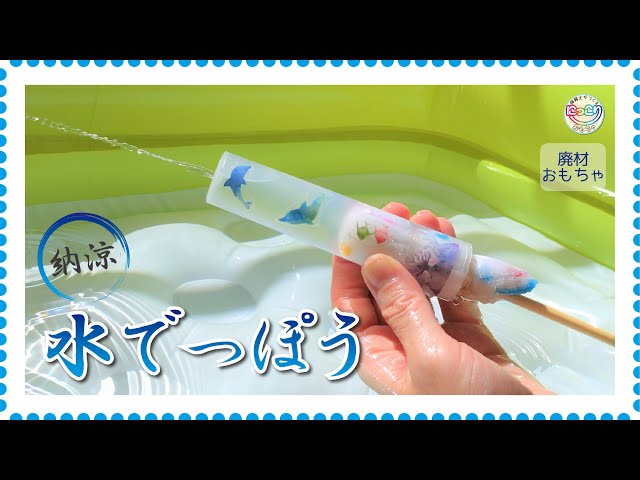
You can make a great water gun using materials and tools you have around you! Here, we’ll introduce a water gun you can make using a snack tube.
First, make a hole in the center of the bottom of the tube.
Next, wrap the tip of a pair of chopsticks with cloth, temporarily secure it with a rubber band, then tightly wind twine over it to fasten it in place—that’s it! It’s also fun to decorate the tube with your favorite stickers.
With this water gun, kids can enjoy the sensation of drawing in water and pushing it out, and they can experiment with changing the water pressure.
Encourage children to try making this traditional-style water gun!

Rokumushi70rank/position

Are you familiar with the traditional playground game called “Rokumushi”? It has simple rules, but it’s a thrilling, heart-pounding ball game.
Draw a circle at each end of a space about 20 meters apart, and have one person stand inside each circle.
These two are “it.” The other children gather in one of the circles, and while the two “it” players are playing catch with the ball, everyone else tries to run to the other circle.
Each successful crossing counts as “ichimushi” (one), and if you go back and forth until you reach “rokumushi” (six), you win.
If you’re hit by the ball while running back and forth, switch roles and become “it.” Because it’s a folk game, the rules can vary a bit by region, but it sounds like a lot of fun, doesn’t it?