

Popular Song Rankings of Monbusho Shoka [2026]

It seems that “Monbushō shōka” refers to the collective name for songs included in elementary school music textbooks compiled by the Ministry of Education from the Meiji era through the Showa era.
They’re all famous tunes that everyone has hummed at some point, and some people might be surprised to find, “Wait, this song is a Monbushō shōka too?”
Many of these pieces will probably feel fresh and new to those born in the Heisei era.
- [Elementary School Music] List of Popular and Nostalgic Songs That Have Appeared in Textbooks
- Ranking of Popular Choral Songs [2026]
- Popular Song Rankings of Monbusho Shoka [2026]
- Ranking of Popular Children's Songs [2026]
- [Elementary School Students] Popular Song Rankings by Generation [2026]
- Hibari Children's Choir Popular Song Rankings [2026]
- Children’s Song Rankings [2026]
- Popular Moving Songs Ranking [2026]
- Ranking of Popular Ghibli Songs [2026]
- Japanese Shoka, Children's Songs, and Nursery Rhymes | Timeless masterpieces that resonate in the heart, passed down across generations
- What songs are popular among elementary schoolers? Well-known and sing-along favorites! [2026]
- [For Women’s Choir] A Curated Selection of Moving Recommended Works & Female-Voice Choir Arrangements [2026]
- Popular Song Ranking of the Suginami Children’s Choir [2026]
Popular Ranking of Monbushō Shōka Songs [2026] (21–30)
I found the first starMonbushō shōka22rank/position

At dusk, everyone has likely had the experience of looking up at the sky to find the first shining star.
Published in 1932 in the Ministry of Education’s elementary school music textbook, this piece simply depicts, from a young child’s perspective, stars glittering above familiar trees such as cedars, willows, and pines.
Its folk-song-like melody is charmingly easy to hum for anyone.
A monument to the song stands at the Akashi Municipal Planetarium, and it continues to be sung today as a work symbolizing the culture of gazing up at the starry sky.
Why not sing it together with someone dear to you while searching for the evening star?
Koi in the pondMonbushō shōka23rank/position

This is a Ministry of Education school song that can be enjoyed while picturing the refreshing scenery of the season.
The gentle way it addresses the carp swimming in the pond brings a sense of calm and warmth.
Included in May 1911 in “Elementary School Songs for the First Grade,” this piece has been loved for many years for its bright, friendly melody and soothing lyrics.
It has appeared in music textbooks and has been passed down through school education.
It will surely resonate in your heart along with nostalgic memories.
Singing it with older adults may revive happy memories from the past and naturally spark conversation.
It’s an ideal song for music activities in care facilities.
tea pickingMonbushō shōka24rank/position

This piece from the Ministry of Education’s song collection—also widely loved as a hand-play song—features an easy-to-remember, simple melody and rhythm, making it perfect for beginners just starting piano! Since it was included in an elementary school textbook published in March 1912, this song has continued to depict the tea-picking scenes of the 88th night of spring, and in 2007 it was selected for the “100 Best Japanese Songs.” With a narrow vocal range and minimal finger movement, it’s ideal not only as a practice piece for small children, but also for adult learners who want to enjoy performing while feeling Japan’s beautiful changing seasons.
Experiencing the joy of playing this nostalgic melody—one that everyone has heard at least once—will surely boost your motivation for daily practice!
Close It, Open ItMonbushō shōka25rank/position

A children’s song that, despite being a foreign piece composed by the French philosopher Jean-Jacques Rousseau, has been selected as one of Japan’s 100 Famous Songs.
Did you know that the original lyricist is unknown, and in Japan the lyrics have changed over time—used as a hymn, a school song, and a military song? Its simple lyrics, with no second or third verse and the same content repeated throughout, leave interpretation to the listener, inviting various readings.
In Japan, it became established as a children’s song after World War II, while abroad it is still sung as a hymn today.

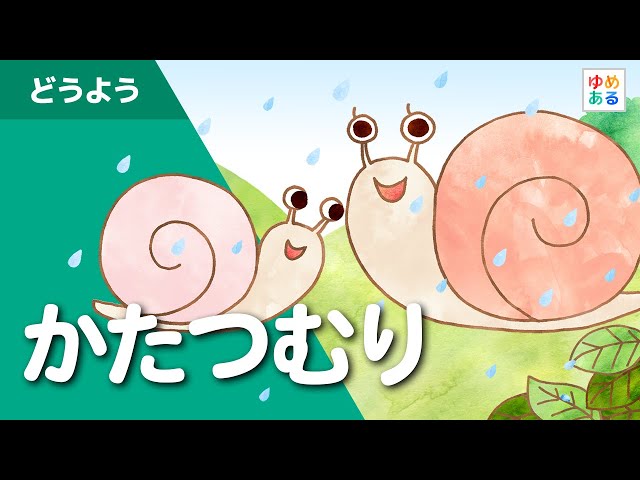
snailSakushi sakkyoku: Monbushō shōka26rank/position
“Elementary School Songs,” compiled in 1911 by the then Ministry of Education.
Until then, translated songs had often been used, but from this time on, melodies and lyrics uniquely Japanese, composed by Japanese composers, began to be adopted.
Well-known masterpieces still familiar today—such as “Hatopoppo,” “Momotaro,” and “Autumn Leaves (Momiji)”—are among them.
The snail is also called denden-mushi, a name said to derive from the classical kyogen play “Kagyū,” which features a snail as its motif.
With its repetitive rhythm and lyrics, it’s a delightful song to sing, so enjoy it with your child and brighten up even rainy days!

rabbitMonbushō shōka27rank/position

A song from the Ministry of Education’s collection that sings of rabbits hopping as they gaze up at the harvest moon.
Since its inclusion in Elementary School Songs, Volume 2 in 1892, it has been cherished by many as a children’s song.
It is characterized by short phrases that convey the atmosphere of moon-viewing culture, and despite its simplicity, it features a melody that lingers in the heart.
This piece is also used as a practice tune for shamisen and koto, and has been recorded in various arrangements, such as King Records’ collection of seasonal school songs and Teichiku’s album “Heart and Mind: The Breeze of Ryukyu Played on the Sanshin.” On long autumn nights, why not line up some dumplings, gaze at the moon, and hum along? The melody is easy to remember, so you can enjoy singing it together with everyone.
carp streamerMonbushō shōka28rank/position

As May approaches, you can hear the children’s song “Koinobori” in many places.
It was a set piece for the 2017 Nursery Teacher Examination.
Since the song depicts carp streamers swimming leisurely in the sky, you’ll want your singing and playing to have a relaxed feel as well! The melody stays within a single octave and there are few chord changes, so with an easy arrangement, even those who feel unsure about piano performance should be able to tackle it without difficulty.
If you’re looking to strengthen your singing-and-playing practice, why not start by trying a simple arrangement of “Koinobori”?
