

![Keiko Fuji Popular Song Rankings [2026]](https://i.ytimg.com/vi_webp/oSJhlPyVqMY/maxresdefault.webp)
Keiko Fuji Popular Song Rankings [2026]

Keiko Fuji, who passed away in August 2013 at the age of 62, is known as “the mother of Hikaru Utada,” but she was a singer who debuted in September 1969 with the song “Shinjuku no Onna.” She drew attention for her husky voice singing songs that depicted nightlife in entertainment districts.
Here is a compilation of rankings of Fuji’s popular songs.
Keiko Fuji Popular Song Rankings [2026]
Keiko’s Dream Opens at NightFuji Keiko1rank/position
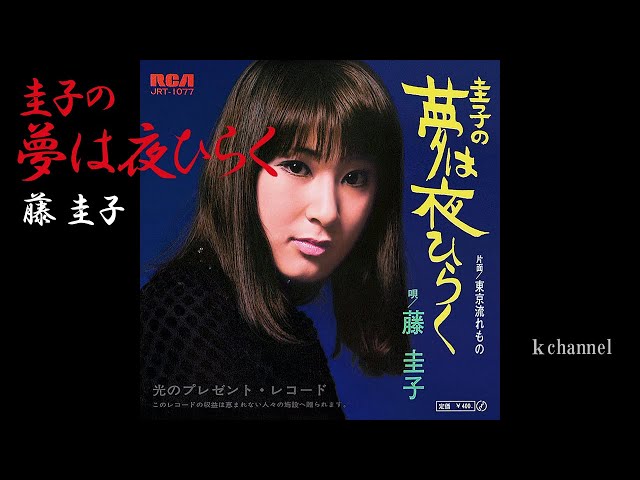
This masterpiece, which paints a stirring portrait of the night, became a turning point in Keiko Fuji’s career.
With a voice steeped in melancholy, it conveys the loneliness and hope of a woman living in the nightlife.
The image of a woman who lives strongly even while wrapped in illusions is unforgettable.
Released in April 1970, it won the inaugural Japan Record Grand Prize that same year and secured her first appearance on NHK’s Kōhaku Uta Gassen, catapulting her to nationwide fame.
If you’re feeling the ache and solitude of life, this song will resonate deeply.
Be sure to listen quietly on a calm night.
Woman’s BluesFuji Keiko2rank/position

Keiko Fuji’s classic “Onna no Blues.” I considered choosing “Keiko no Yume wa Yoru Hiraku” as well, but this one is easier to sing, so I picked it.
The real charm of this song is its fully Showa-era blues vibe with a cool, gritty melody.
There are some sections that sit a bit low, but for women in their 60s, that lower range might actually be easier to sing.
Even without strong vibrato, you can make up for it with dynamics, so it’s recommended for those who aren’t confident in their singing.
Definitely consider adding it to your repertoire.

Woman of ShinjukuFuji Keiko3rank/position

Set in Shinjuku, Keiko Fuji’s song—depicting the feelings of a woman living alone in the big city—is a classic with a fresh sensibility that fuses enka and pop.
Released in September 1969, it quickly became a massive hit, selling over 880,000 copies.
Fuji’s low, velvety vocals leave a strong impression and resonate deeply with listeners.
In 1970, it was also used as a movie’s theme song, highlighting Fuji’s appeal as an idol.
Through the figure of a woman surviving in Shinjuku’s nightlife, the piece conveys the pain of love and the fragility of human relationships.
Why not sing it together and enjoy it along with a sense of nostalgia?
Michinoku Folk SongFuji Keiko4rank/position

Keiko Fuji’s “Michinoku Kouta” is memorable for her sultry singing voice.
It celebrates the six prefectures of Tohoku, including Fukushima, and is loved as a local Tohoku song.
Fukushima Prefecture appears last, as the sixth.
Incidentally, Keiko Fuji was born in Iwate Prefecture.
Her feelings for the familiar Tohoku region may be reflected in this work.
Fire Country Little SongFuji Keiko5rank/position

This is a song by Keiko Fuji, who is also known as the mother of Hikaru Utada.
The lyrics weave in famous tourist spots in Kyushu, and you’re guaranteed to feel like taking a trip around the island after listening! As for Kumamoto, it highlights Aso’s fiery mountains and the gallant spirit of Kumamoto men.
Onnamachi ElegyFuji Keiko6rank/position

This song is set in Ikoma City in the northwestern part of Nara Prefecture, and it sings about the sorrow of living from a woman’s perspective.
It was originally a song by Yoshino Sakura, but it has been covered by various singers.
This video features the version sung by Keiko Fuji.
Lament of ResentmentFuji Keiko7rank/position
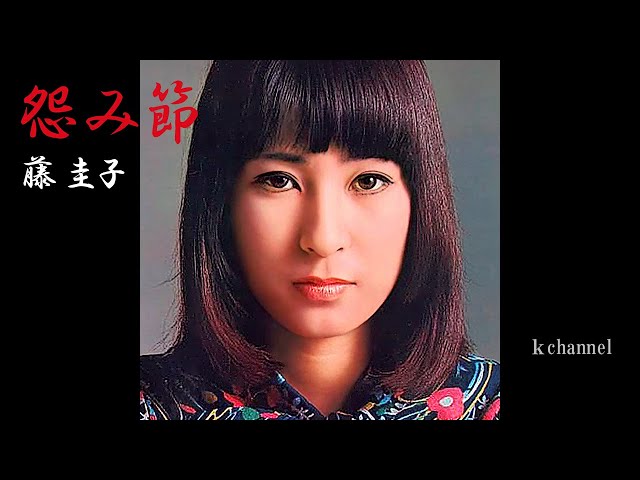
If lately he keeps showing up late to dates and you feel like he’s treating you a bit carelessly, try singing Keiko Fuji’s “Urami-bushi.” The title sounds scary, but the lyrics themselves aren’t that frightening.
If your lover hears this song, he’ll surely find you endearing.
And he’ll go back to being the kind, good person he was before.
Speaking of Keiko Fuji, she was famous as a singer, and in real life she was also Hikaru Utada’s mother.