

![Gabriel Urbain Fauré Popular Songs Ranking [2026]](https://i.ytimg.com/vi/p9Tj4Um2bK4/hqdefault.jpg)
Gabriel Urbain Fauré Popular Songs Ranking [2026]

He is a renowned French composer in the world of classical and vocal music.
Composed after his father’s death, his “Requiem” is one of his most famous and outstanding masterpieces.
Please experience his music, which bridged the 19th and 20th centuries and served as a link to Debussy and Ravel.
Gabriel Urbain Fauré Popular Songs Ranking [2026] (1–10)
SicilianaGabriel Urbain Fauré1rank/position
A chamber work by the French composer Fauré, later repurposed as No.
5 of the incidental music for the play Pelléas et Mélisande.
A “sicilienne” is a 17th–18th century dance originating in Sicily, typically in a gentle 6/8 or 12/8 meter.
Although Fauré originally wrote the piece for cello and piano, it is now performed on various instruments such as flute and trumpet.
It is characterized by a beautiful melody tinged with wistfulness, and despite its simplicity, it possesses remarkable depth.

Hymn to RacineGabriel Urbain Fauré2rank/position

This is the Hymn to Racine composed by the French composer Gabriel Urbain Fauré.
The piece is a choral work accompanied by a harmonium (reed organ) or piano, and it is also known as the Cantique de Racine.
Fantasia, Op. 79Gabriel Urbain Fauré3rank/position
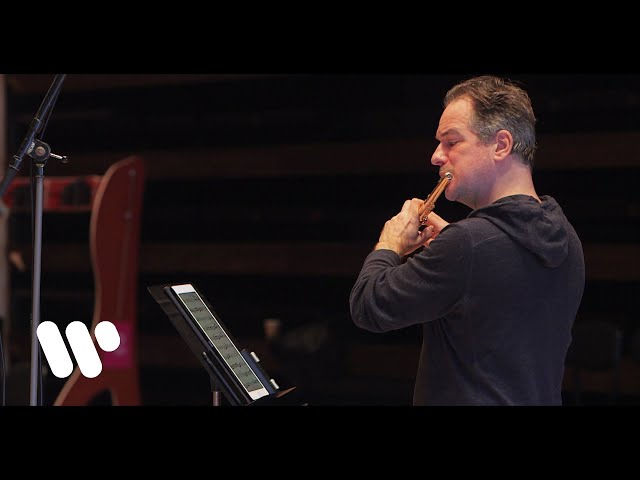
Gabriel Fauré, who opened the door to French modern music.
This work for flute and piano, which he composed as a test piece for the Paris Conservatoire, is widely loved as a masterpiece where a dreamlike melody in the first half coexists with dazzling virtuosity in the second.
The beauty with which the flute sings like a vocalist without words captivates listeners.
The piece was unveiled at a competition in July 1898 and became known to the world through the performance of the student who won first prize.
Its melody was also reused in the incidental music to Pelléas et Mélisande, and the work is known for its close ties to the stage.
When you want to savor the flute’s rich expressiveness and refined sonority to the fullest, be sure to give it a listen.
SicilienneGabriel Urbain Fauré4rank/position

A chamber music piece composed by Fauré in 1898.
The title Sicilienne refers to a dance that originated in 17th–18th century Sicily, Italy.
The work not only features a beautiful melody but is also rhythmic, employing many dotted rhythms.
The piece was later arranged for orchestra as part of the incidental music for the play Pelléas et Mélisande, where it is used as accompaniment when the two protagonists declare their love by a fountain.
Sicilienne, Op. 78Gabriel Urbain Fauré5rank/position

Gabriel Fauré’s Sicilienne, Op.
78.
Composed in 1893, it is one of Fauré’s best-known works.
Originally written for violin, it was later arranged for cello and piano, and for flute and piano, and has become a staple of the flute repertoire as well.
The siciliana (sicilienne) is a dance that originated in Sicily, Italy, characterized by a triple meter; its clear, singable melody combined with moments of harmonically unstable writing creates a dreamlike, evocative atmosphere.
Sicilienne, Op. 78Gabriel Urbain Fauré6rank/position

A holiday morning.
Even though you don’t really have to get up, sometimes you wake up out of weekday habit, right? For times like that, I recommend Fauré’s Sicilienne, Op.
78.
This masterpiece by the great composer Gabriel Fauré is widely used in Japanese media.
While it carries a slightly mysterious, hollow atmosphere, I think it’s perfectly soothing for drifting back to sleep.
If you’ve woken up too early and are at a loss, try listening to this piece and see if you can doze off again.

SicilianoGabriel Urbain Fauré7rank/position

Gabriel Fauré was a French composer who was active in the late 19th century.
At the time, there was a trend in France to create music that was distinctly French.
In response, composers sought to produce new sonorities by incorporating elements of the Baroque era into their works.
This Sicilienne was born in that climate.
A “Sicilienne” is a type of music that was popular from the 17th to 18th centuries, characterized by its pastoral quality and distinctive rhythm.
By drawing on features of Baroque music to create fresh sonorities, this piece fashions a beguiling, dreamlike atmosphere.