

Ranking of Popular Ghibli Songs [2026]

This is a song list featuring popular tracks used in Studio Ghibli films and anime.
From dramatic pieces to warm, gentle instrumental numbers, and cute songs beloved by children, it’s full of tracks that represent Ghibli.
Immerse yourself in the world of Ghibli through its music.
- [Ghibli’s Famous Songs Medley] The soothing world of Studio Ghibli that resonates with the heart
- Joe Hisaishi Popular Songs Ranking [2026]
- Disney Popular Songs Ranking [2026]
- Ranking of Popular Choral Songs [2026]
- [Karaoke] Sing! A Collection of Ghibli Classics
- Songs of Studio Ghibli: List of Theme Songs, Insert Songs, and BGM from Ghibli Music
- [Ghibli] Popular BGM. Enjoy the world of Ghibli through music!
- Ranking of Popular Anpanman Songs [2026]
- Immersive Ghibli Classics! Recommended BGM for Work and Study
- Popular Song Rankings of Monbusho Shoka [2026]
- [For Women’s Choir] A Curated Selection of Moving Recommended Works & Female-Voice Choir Arrangements [2026]
- Shiki Theatre Company's Popular Songs Ranking [2026]
- Anime Songs Karaoke Popularity Rankings [2026]
Popular Ghibli Songs Ranking [2026] (21–30)
againHisaishi Joe29rank/position
It’s a grand and beautiful piece that plays during the climactic, dreamlike flying scene in the film Spirited Away.
Beginning with a quiet melody and gradually building in emotion, it evokes the hope that lies beyond hardship and the strong bonds with those we hold dear.
A later version with lyrics also exists, expressing a bittersweet yet warm longing for reunion.
This piece was included on the album Spirited Away Soundtrack, released in July 2001.
It’s a perfect choice for those who want to bring this sweeping world to life with their own hands.
As you recall the story’s moving moments, aim for a performance that richly shapes dynamics and stirs the hearts of listeners.
Message of RougeMatsutōya Yumi30rank/position

Yumi Matsutoya’s classic “Message of Rouge.” Its nostalgic melody evokes the Showa era and leaves a strong impression.
Released in 1975, the song was used 14 years later, in 1989, as the opening theme for the Studio Ghibli film Kiki’s Delivery Service.
The vocal range spans from mid1 F# to hi D#, which is relatively wide; while the pitch movement becomes fairly intense toward the end of the chorus, the overall tempo is relaxed and the song builds beautifully, making it a great choice for karaoke.

Popular Ghibli Songs Ranking [2026] (31–40)
Ponyo on the CliffŌhashi Nozomi31rank/position
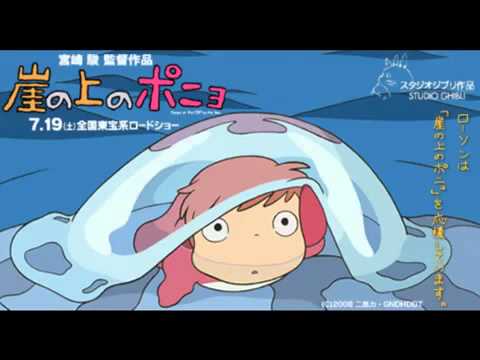
This is a vibrant work where a melody that evokes the dynamism of the sea and life overlaps with an innocent, charming singing voice.
Released as a single in December 2007, before the film’s premiere, it features an unusual pairing: Fujioka Fujimaki and Nozomi Ohashi.
The familiar, repetitive phrases are pleasing to the ear, and before you know it, you’ll want to sing along yourself.
It’s recommended for those who want to sit at their desk with a calm mind.
Try incorporating it into your daily routine.
Sometimes, old storiesKatō Tokiko32rank/position

This work is characterized by a warm tone that gently evokes memories of youth.
The lyrics, woven with both wistfulness and nostalgia, are said to reflect Tokiko Kato’s own experiences in vivid detail.
After its release in February 1987 on the album “MY STORY/Tokini wa Mukashi no Hanashi wo,” it was later chosen as the ending theme for Hayao Miyazaki’s 1992 film Porco Rosso, leaving a lasting impression on many.
With a simple yet powerful folk-song melody, it’s perfect for introducing friends at weddings or for scenes that look back on memories with someone dear.
Embracing listeners’ hearts and resonating with them, this song has continued to be loved across generations.
CatbusHisaishi Joe33rank/position

“Catbus” from Orchestra Stories: My Neighbor Totoro—a suite that reorganizes the beloved music of My Neighbor Totoro into an orchestral work with narration.
This piece selects seven numbers from the film’s score and is arranged by Joe Hisaishi himself as an orchestral work with narration that parents and children can enjoy together.
It opens with playful phrases in the cellos and double basses, and the horn-like dissonances in the woodwinds and brass make the Catbus’s entrance all the more striking.
It’s a cheerful piece that’s perfect as an encore for a pops orchestra, and hearing My Neighbor Totoro performed by a live orchestra is truly moving!

Ashitaka SeikIHisaishi Joe34rank/position
An orchestral, predominantly instrumental piece by Joe Hisaishi that carries both resolve and poignancy within its quietude.
It is part of the score for the film Princess Mononoke and was included as the opening track on the album Princess Mononoke: Original Soundtrack, released in July 1997 prior to the film’s premiere.
The melody line is exquisitely beautiful, allowing you to fully savor the film’s grand worldview through sound alone.
With a deep, prayer-like resonance, this piece is highly recommended for those who want to immerse themselves in work or study in a quiet environment.
Ashitaka and SanHisaishi Joe35rank/position

A classic piece by Joe Hisaishi, one of Japan’s most renowned composers, serves as an insert song in the film Princess Mononoke.
Released in July 1997, the film features Hisaishi’s delicate melodies that portray the relationship between nature and humanity.
Beginning with a gentle piano and gradually unfolding into a grand orchestral arrangement, the piece vividly expresses the film’s themes of coexistence with nature and human conflict through music.
Its lyrical melody also symbolizes the complex relationship between the protagonist, Ashitaka, and the heroine, San, resonating deeply with listeners.
Why not try playing this piece on the piano, which beautifully colors the film’s climactic scenes?