

![Joe Hisaishi Popular Songs Ranking [2026]](https://i.ytimg.com/vi_webp/l0GN40EL1VU/maxresdefault.webp)
Joe Hisaishi Popular Songs Ranking [2026]

Joe Hisaishi, whose melodies truly strike a chord with the Japanese soul, is recognized around the world.No matter when you listen, they always make you feel nostalgic, don’t they?His stage name, Joe Hisaishi, comes from the famous American producer Quincy Jones.This time, I’ve selected some of his popular songs.
Joe Hisaishi Popular Songs Ranking [2026] (1–10)
SummerHisaishi Joe1rank/position
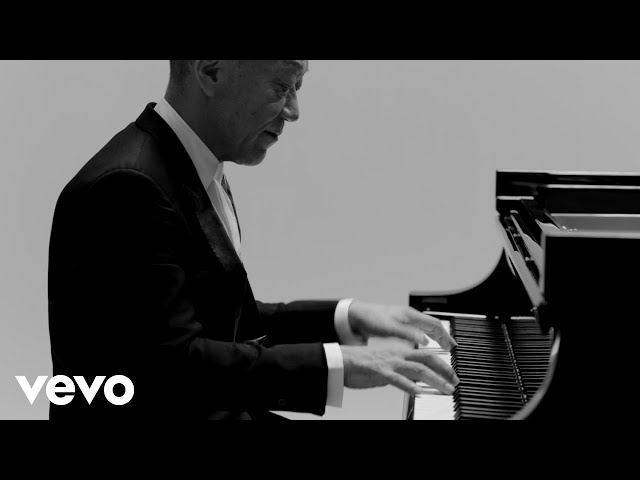
Every time summer draws near, a light yet somehow nostalgic melody comes to mind—many of you have surely felt the same.
Expressing adventure, growth, and longing through the pure eyes of a boy, rendered in beautiful piano lines, this piece brings a warm sense of comfort to its listeners.
Composed by Joe Hisaishi, one of Japan’s most celebrated composers, it was released in May 1999 as part of the original soundtrack for a film directed by Takeshi Kitano.
It later gained wide popularity through appearances in TV commercials for brands such as Toyota and Kirin Beverage.
A piano solo version is also included on the acclaimed album “ENCORE.” This timeless masterpiece is one you’ll want to hear when you’re worn out by busy days or simply wish to rest your heart in quiet.
Merry-Go-Round of LifeHisaishi Joe2rank/position

The main theme used in Studio Ghibli’s masterpiece Howl’s Moving Castle.
It’s a gem of a waltz composed by Joe Hisaishi.
Its triple meter beautifully portrays life’s ups and downs, its joys and its bittersweet moments.
The soundtrack was released in November 2004, and in 2005 it won the Best Music award at the 31st Los Angeles Film Critics Association Awards.
Beginning with a quiet piano solo and expanding into a majestic orchestral arrangement, it powerfully captures the listener’s heart.
It’s a work with a nostalgic warmth that invites audiences into a world of dreams.
Time to Depart ~Asian Dream Song~sakushi: dorian suke kawa / sakkyoku: hisaishi jō3rank/position

It is a gem of a choral work imbued with a message of hope and courage.
The melody, with its nostalgic sound based on the yo-nuki (pentatonic) scale, is beautifully balanced with a modern arrangement, evoking a sense of timeless beauty.
In September 1997, Kazufumi Miyazawa performed this piece as the theme song for the Nagano Winter Paralympics, and an instrumental version is included on the album “Piano Stories II.” Frequently performed at graduation ceremonies and choral competitions, the song is ideal for class- or grade-level ensembles, with scores available for a variety of voicings, including mixed three-part and four-part chorus.
The Pigeon and the BoyHisaishi Joe4rank/position
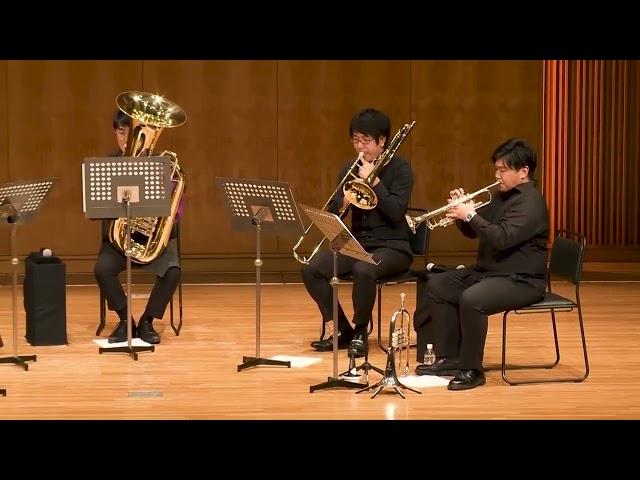
This is the piece that Pazu plays as a morning call on the bugle in Castle in the Sky.
In the film, Pazu plays it alone, but here it’s arranged for a brass ensemble.
It begins with a trumpet solo, then horn, trombone, tuba, and others join to form a fanfare for brass ensemble.
Midway through, the ending theme from Castle in the Sky, “Carrying You,” is woven in, allowing listeners to enjoy a sense of musical storytelling.
Pazu’s trumpet, performed first thing in the morning, has been a hot topic among brass players—professional-level playing that would catch a scout’s ear.
Even pros need to warm up, and many say they envy the ability to hit high notes from early in the day.
Pazu’s performance was played by studio musician Susumu Kazuhara, who is active in film scores, jazz, and karaoke backing tracks, and it is a superb performance.

To That SummerHisaishi Joe5rank/position

You can listen to one of Studio Ghibli’s finest masterpieces, “One Summer’s Day” from the film Spirited Away, performed by the composer Joe Hisaishi himself.
The clear tone of the piano and the melody played in a quiet atmosphere instantly draw you into the film’s world.
Although there is no orchestra visible in the footage, the strings and harp gently enter, stirring emotions that overflow with memories of summer in Japan.
Even on the big screen it is a live performance, but when you can see the musicians playing, their expressions and breathing come through even more clearly, and the expression is conveyed all the more.
Name of LifeHisaishi Joe6rank/position

The works of Joe Hisaishi, one of Japan’s most renowned composers, deliver profound emotion that transcends the realm of film music.
This piece, woven from piano and strings, expresses a journey in search of the sanctity of life and one’s own identity.
Composed for a film by Hayao Miyazaki, it resonates with the story of reclaiming a lost name and invites listeners into a mysterious world.
Since scoring Nausicaä of the Valley of the Wind in 1984, Hisaishi has continued to create works that move countless hearts.
This track is highly recommended for those captivated by wistful melodies and for anyone who wishes to feel the depth of film music.
strollHisaishi Joe7rank/position

This is “Sanpo,” the theme song from the feature-length animation My Neighbor Totoro, a hallmark of Studio Ghibli.
You can hear Azumi Inoue’s bright and lively singing.
Studio Ghibli’s fame has reached overseas, but many Japanese people can probably sing “Sanpo.” As a famous song, it has been arranged in many ways and introduced even for those touching an instrument for the first time.
The demo video is for alto sax, but tenor and soprano sax players should look for B-flat sheet music to practice.
It’s best if you can play it as cheerfully and brightly as the song itself!