

Akira Ifukube Popular Songs Ranking [2026]

Composer Akira Ifukube was active across a wide range of fields, from orchestral works that pursued Japanese ethnic identity to film music.
Because he composed the music for many entries in the Godzilla film series, people of all generations have likely heard his music at least once.
In addition to his composing career, he also served as president of Tokyo College of Music and is known as a music educator.
Here, we present a ranking of Akira Ifukube’s most popular pieces—be sure to check it out!
- Sibelius Popular Songs Ranking [2026]
- Popular Song Rankings of Hisao Itoh [2026]
- Kohei Fukuda Popular Song Ranking [2026]
- Haruo Minami Popular Song Rankings [2026]
- Takayuki Hattori Popular Songs Ranking [2026]
- Joe Hisaishi Popular Songs Ranking [2026]
- Popular Song Rankings of Monbusho Shoka [2026]
- A composer with numerous awards at home and abroad! Ranking of Akira Miyoshi’s popular pieces
- Azumi Inoue Popular Song Rankings [2026]
- Ichiro Mizuki’s Most Popular Songs Ranking [2026]
- Igor Stravinsky Popular Songs Ranking [2026]
- Summary of theme songs and insert songs from the Godzilla series throughout the years
- Masaaki Sen’s Popular Song Rankings [2026]
Akira Ifukube Popular Songs Ranking [2026] (1–10)
Rhapsody in the Style of a Concerto for Violin and OrchestraIfukube Akira8rank/position
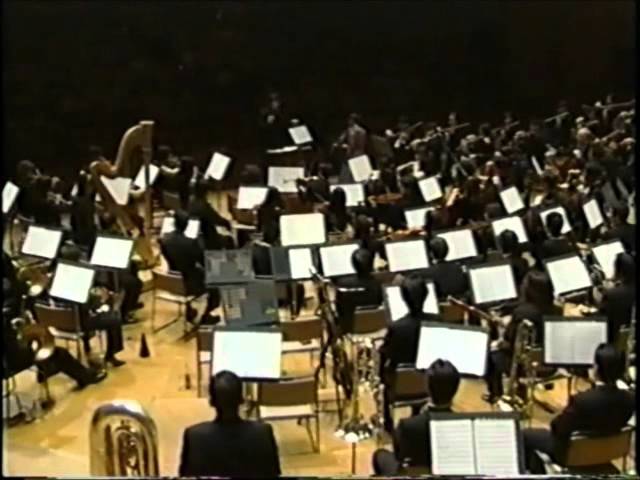
This is an ambitious work completed in 1948 by Akira Ifukube, one of Japan’s leading composers.
Ifukube conceived the piece during his prewar years in Sapporo, and after numerous revisions, the current version was finalized in 1971.
Written in a style close to gypsy violin and composed with an Asian sensibility, it skillfully expresses the fusion of Japanese ethnic character and Western music.
Structured in two movements—the melodic first movement and the rhythmic second—its virtuosic violin writing captivates listeners.
It is highly recommended for those interested in folk music or wishing to explore the appeal of Japanese classical music.
Symphonic Eclogue for 20-String Koto and OrchestraIfukube Akira9rank/position

Symphonic Eclogue for 20-String Koto and Orchestra is a work by Akira Ifukube, one of Japan’s leading composers who pursued a nationalist musical style.
The intertwining of the koto’s lyrical melodies with the orchestra leaves a very beautiful impression.
Trois morceaux pour soldats (1944)Ifukube Akira10rank/position

Composed by Akira Ifukube in 1944 at the age of 30, this piece is a valiant march that opens with a powerful fanfare.
Although it was created at the request of the military, the distinctly Ifukube-esque Eastern melodies and dynamic orchestral sonorities are sure to stir the listener’s spirit.
Long regarded as a “phantom work,” it gained wider recognition when it was included on the 1995 album The Art of Akira Ifukube 3: Dance.
This work is recommended for those interested in Japanese music history, or for anyone who wants to experience the origins of the Ifukube sound that would later inform his film scores.
You’ll surely be moved by the strength born in a time of hardship.
Akira Ifukube Popular Songs Ranking [2026] (11–20)
Monster Zero MarchIfukube Akira11rank/position

Akira Ifukube’s “Monster Zero March” stands out with a unique allure within the Godzilla series.
In the film Invasion of Astro-Monster, Ifukube’s composition is highly regarded as a piece that enriches the stage and draws audiences in.
Its fusion of folk music elements with a powerful orchestra left an important mark on Japanese film music.
The “Monster Zero March” boasts a societal impact significant enough to be performed at Japan Self-Defense Forces ceremonies, and it remains a historic masterpiece beloved by a wide audience.
Rhapsody of JapanIfukube Akira12rank/position

If you’re not very familiar with classical music, you’ve probably encountered Akira Ifukube’s name mainly in connection with film scores.
Starting with the ultra-famous theme from Godzilla—which everyone has heard at least once—Ifukube composed the music for countless Japanese films and is an indispensable figure in film history.
That said, since the purpose of this article is “masterpieces of classical music,” I’d like to introduce Ifukube’s orchestral masterpiece, Japanese Rhapsody, composed by a largely self-taught Ifukube.
Written in 1935, it was his first orchestral work and won first prize in a competition organized by the Russian-born composer Alexander Tcherepnin, marking a milestone that led to his international debut.
It’s astonishing to think that Ifukube, then 21 years old, wrote the piece while working as a forestry officer for the Hokkaido prefectural government.
The percussion-forward ensemble projects a powerful, festival-like energy that transcends nations and cultures, and when you hear its melodies tinged with Japanese poignancy, you can’t help but feel a deep, ineffable nostalgia.

Ying melody “Bintatara”Ifukube Akira13rank/position

This is the work Eikyoku “Bindatara” by Akira Ifukube, one of Japan’s leading composers, known for composing the theme for Godzilla.
Although this piece is not pure gagaku, it is an original work crafted as musical art using traditional Japanese instruments performed in gagaku and bugaku.
It features a wide array of Japanese instruments, including shinobue and ryuteki flutes, Chikuzen biwa, Satsuma biwa, koto, and the 17-string koto.
It stands as a symbol of Japan’s traditions and culture that should be passed down, and it has become an important part of the repertoire for performers of traditional Japanese instruments.
Listening to the piece conveys the beauty of Japan.
