

Best Songs and Popular Tracks by Male Singer-Songwriters: 2026 Rankings

A singer-songwriter who performs their own self-written songs.
Their music expresses a wide range of emotions from the artist’s heart.
Here, we present a ranking of songs by such singer-songwriters that are particularly outstanding for their lyrical expression.
- Ranking of Male J-Pop Singers’ Best-Lyric and Most Popular Songs [2026]
- Male Singer-Songwriters’ Anime Songs: Popular Tracks Ranking [2026]
- Male Singer-Songwriters of the 2000s: Popular Song Ranking [2026]
- Top Male Singer-Songwriter Hits of the 1980s: Ranking [2026]
- Most Popular Songs Among Men Ranking [2026]
- 1990s Male Singer-Songwriters: Popular Song Rankings [2026]
- Top Japanese Pop Karaoke Rankings for Men [2026]
- Male Singer-Songwriter CM Songs, Commercials, and Popular Tracks Ranking [2026]
- Ranking of Heart-Wrenching Songs by Male J-Pop Singers [2026]
- [Men] Popular Karaoke Rankings [2026]
- [Men] Ranking of Easy-to-Sing Karaoke Songs [2026]
- Best Songs and Popular Tracks by Male Singer-Songwriters: 2026 Rankings
- Good songs themed around love, encouragement, and life—tracks with lyrics you can relate to.
Best Male Singer-Songwriter Songs with Great Lyrics: Popular Song Ranking [2026] (71–80)
The End of SummerMoriyama Naotaro76rank/position

“The End of Summer,” the third single by Naotaro Moriyama, released in 2003.
From the intro, his high, cleansing vocals shine, and the song carries a subtle sense of nostalgia.
Every line of the lyrics is imbued with beautiful language, evoking uniquely Japanese scenery and scenes.
It also brings forth that particular melancholy and wistfulness found at summer’s end, welling up from within.
It calls to mind those slightly cooler days when you can hear the insects begin to sing.

I won’t fall in love anymore.Makihara Noriyuki77rank/position
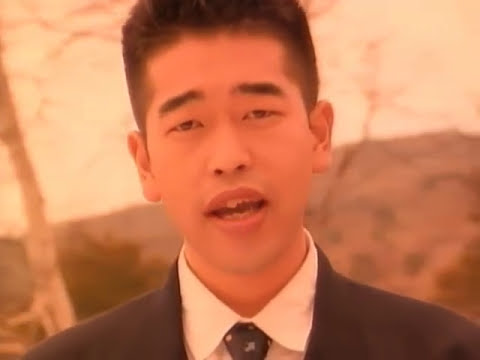
A gem-like ballad that delicately portrays the pain of heartbreak and the hope of taking a new step forward.
Noriyuki Makihara’s gentle vocals tenderly envelop the protagonist’s complex feelings as they struggle to accept a breakup with their lover.
While carefully depicting the loneliness and confusion felt in everyday life, it also resonates with the positive resolve hidden behind the words “I won’t fall in love anymore.” Released in May 1992, the song was used as the theme for the drama “After the Children Are Asleep,” reaching No.
2 on the weekly Oricon chart and No.
7 for the year.
It’s a song that stands as emotional support, accompanying you through the healing process of a broken heart.
Far, far awayMakihara Noriyuki78rank/position

A timeless hit by Noriyuki Makihara that strikes deep in the hearts of those living away from their hometowns.
The lyrics, filled with the resolve to build a new life in a new city to fulfill one’s dreams and a warm message for friends far away, will gently give listeners a push forward.
In fact, this piece wasn’t a single; it was a track included on the album “Kimi wa Boku no Takaramono,” released in June 1992.
Later, when Makihara’s self-cover was used as an NTT East Japan commercial song in 2006, it became a beloved standard known to even more people.
It’s an essential springtime cheer song with a warm power that makes the heart feel close even across great distances.
cherry blossomKawaguchi Kyogo79rank/position
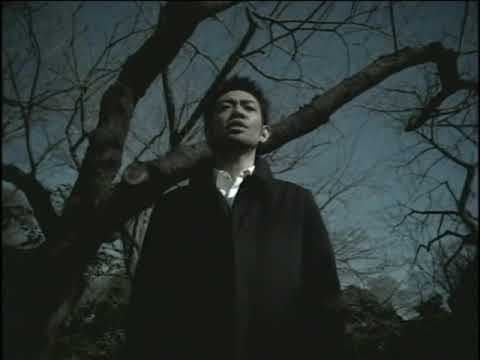
Kyogo Kawaguchi’s song “Sakura” is a soothing ballad that has continued to be loved by many listeners since its release.
Launched in December 2003, it achieved remarkable popularity, reaching No.
4 on the Oricon weekly chart and No.
9 on the year-end chart.
With its warm melody, the lyrics weave a story of eternal bonds through cherry blossoms that herald the arrival of spring, resonating deeply with listeners.
Kawaguchi’s gentle voice envelops the heart, making this piece a perfect song for welcoming a new season in spring.
A heartwarming cherry blossom song that can be recommended to anyone.
FanfareTamaki Kōji80rank/position

This is a rousing anthem powerfully sung by Koji Tamaki, famed for his overwhelming vocal prowess, riding on a melody full of drive and momentum.
Released as a single in November 2025, it was chosen as the theme song for TBS’s Sunday drama “The Royal Family.” Drawing on his childhood experiences in Hokkaido and paralleling life with the growth of a horse, this work was created with those images in mind.
Its message—that life isn’t only about winning or losing, and that it’s important to face forward and move on as your true self—resonates deeply with listeners.
Pick this song when you need that extra bit of courage at a crucial moment.