

![Johann Nepomuk Hummel Popular Song Rankings [2026]](https://i.ytimg.com/vi_webp/5G6hJE1O2qQ/maxresdefault.webp)

Johann Nepomuk Hummel, an Austrian composer of Hungarian origin who, as a child, lived with Wolfgang Amadeus Mozart and studied piano under him.
Even in his teenage years, he studied under many renowned composers and was hailed as a child prodigy.
His career not only as a composer but also as a pianist speaks to his remarkable talent.
This time, we’re introducing a ranking of Johann Nepomuk Hummel’s most popular pieces—be sure to check it out!
- George Frideric Handel Popular Songs Ranking [2026]
- Niccolò Paganini Popular Song Rankings [2026]
- Arnold Schönberg Popular Songs Ranking [2026]
- Johann Burgmüller Popular Song Rankings [2026]
- Scott Joplin Popular Song Rankings [2026]
- Georg Friedrich Handel Popular Songs Ranking [2026]
- Bedřich Smetana Popular Songs Ranking [2026]
- Bartók Béla Popular Song Ranking [2026]
- César Franck Popular Songs Ranking [2026]
- Yamada Kōsaku Popular Song Rankings [2026]
- Pablo de Sarasate Popular Song Rankings [2026]
- Cécile Chaminade Popular Song Rankings [2026]
- Carl Maria von Weber Popular Song Rankings [2026]
Johann Nepomuk Hummel Popular Song Rankings [2026] (1–10)
24 Preludes, Op. 67Johann Nepomuk Hummel1rank/position

Johann Nepomuk Hummel’s masterpiece, 24 Preludes, Op.
67, by the Austrian composer.
A prodigy who studied under Mozart and Haydn from a young age and maintained a close friendship with Beethoven, Hummel is known as a bridge between the Classical and Romantic eras.
This collection comprises 24 short pieces in every major and minor key, each with its own distinctive character.
Its musical richness and writing that draws out the piano’s full potential continue to captivate performers today.
Highly recommended for early to intermediate learners, this set is ideal for cultivating a diverse musical sensibility.
Six Very Easy Pieces, Op. 52: No. 6 “Rondo”Johann Nepomuk Hummel2rank/position

Austrian composer Johann Nepomuk Hummel, a pupil of Mozart who also cultivated friendships with Haydn and Beethoven, served as a bridge between the Classical and Romantic eras.
The sixth piece, “Rondo,” from his Six Very Easy Pieces, Op.
52, is marked by its bright, lively character and showcases Hummel’s technical finesse and musical sophistication.
Being relatively approachable to perform, it offers players an excellent opportunity for expressive music-making.
It is recommended both for those wishing to explore the charm of Classical-era piano music and for intermediate players aiming to improve their technique.
EcosseJohann Nepomuk Hummel3rank/position

The Hungarian-born composer Johann Nepomuk Hummel studied under Haydn and Mozart and gained popularity across Europe as a virtuoso pianist.
Among his Six Pieces, the Ecossaise stands out for its lively rhythm reminiscent of Scottish folk dance.
With a deft blend of powerful and delicate tones, it showcases the piano’s expressive capabilities to the fullest.
It’s an ideal piece for early- to intermediate-level piano students and will make a sparkling impression at recitals.
Variations on a Theme from Gluck’s “Armide,” Op. 57Johann Nepomuk Hummel4rank/position

One of the popular works by Hungarian composer Johann Nepomuk Hummel, Variations on a Theme from Gluck’s “Armide,” Op.
57.
Hummel studied piano with none other than Mozart and was on friendly terms with Beethoven, and this piece distills his unique musical refinement and dazzling virtuosity.
Across ten variations, a beautiful theme symbolizing a tragic love story unfolds in diverse ways at the crossroads between the Classical and Romantic styles.
Although it demands advanced performance technique, its expressive richness showcases the possibilities of piano music.
ScherzoJohann Nepomuk Hummel5rank/position

The brilliantly gifted Austrian composer Johann Nepomuk Hummel lived through the transition from the Classical to the Romantic era, exquisitely blending the characteristics of both periods.
Having studied under great masters and cultivated close friendships with Beethoven and Schubert, his music brims with refinement and passion.
His Scherzo is one of his representative works—a superb piano piece in which pure melodies and virtuosic technique are perfectly balanced.
Its lively rhythms and dazzling ornamentation are sure to set listeners’ hearts in motion.
It is a masterpiece that everyone who loves classical music should experience.
Trumpet Concerto in E majorJohann Nepomuk Hummel6rank/position
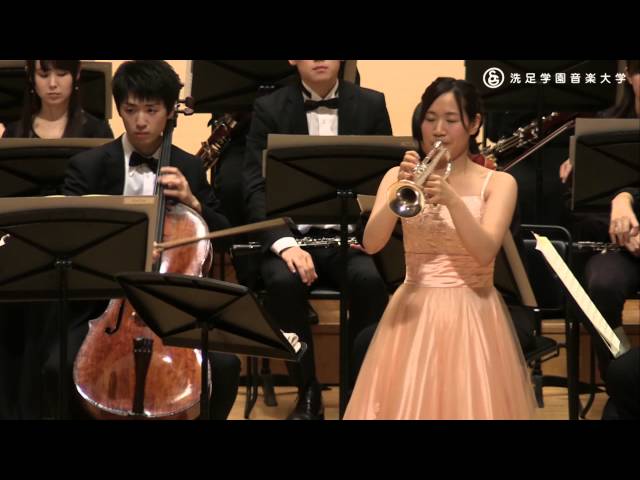
This is the Trumpet Concerto in E major by Johann Nepomuk Hummel.
Like Franz Joseph Haydn’s Trumpet Concerto in E-flat major, Hob.
VIIe:1, it was written in 1803 for Anton Weidinger, the inventor of the keyed trumpet.
Although the original key is E major, it is often performed in E-flat major today to make it easier to play on modern trumpets.
Nocturne in F major, Op. 99Johann Nepomuk Hummel7rank/position

Johann Nepomuk Hummel was a composer who lived between the Classical and Romantic eras.
While maintaining friendships with Haydn, Mozart, and Beethoven, he established a musical style uniquely his own.
His Nocturne in F major, Op.
99, composed for piano four hands, is a refined masterpiece that blends a gentle, romantic atmosphere with both technical and expressive sophistication.
As the variations unfold, virtuosic passages and lyrical moments are woven together with exquisite balance, keeping the listener fully engaged.
It’s a highly recommended piece not only for piano students but also for anyone who wants to enjoy ensemble playing.