



From before the war through the postwar era, singer Shizuko Kasagi, known as the “Queen of Boogie,” released numerous hit songs.
Drawing influence from Black music—rare at the time—and delivering flamboyant dance performances, she became a revolutionary figure in Japan’s popular music scene.
Her impact on today’s J-pop is significant as well, and because her songs are often covered, many of you have likely heard them at least once.
This time, we’re introducing a ranking of Shizuko Kasagi’s most popular songs.
We hope you’ll listen while imagining the scenes of that era.
- Kou Shibasaki’s Most Popular Songs Ranking [2026]
- Yuzu’s greatest and most popular songs
- Naoko Kawai’s Popular Songs Ranking [2026]
- Shishido Kavka’s Most Popular Songs Ranking [2026]
- Shishido Kavka’s classic and popular songs
- Ranking of Popular Jazz Songs
- Chiyoko Shimakura’s Most Popular Songs Ranking [2026]
- Kiyoko Suizenji’s Popular Songs Ranking [2026]
- Ranking of popular songs for senior citizens
- 7th President of the Japan Singers Association! What are Peggy Hayama’s most popular songs ranked?
- Shibugakitai Popular Song Rankings [2026]
- A cover of the genre-defying classic “Konya wa Boogie-Back.”
- Showa-era nostalgic songs: Popular ranking
Ranking of popular songs by Shizuko Kasagi, who enjoyed immense popularity as the Queen of Boogie
Tokyo Boogie-WoogieKasaogi Shizuko1rank/position

When it comes to the rhythmic, boogie-woogie-style songs of Shizuko Kasagi, a singer who represents postwar Japan, everyone knows these classics.
The hope-filled melodies are exhilarating, and the simple, rhythmic lyrics are easy to hum along to, making them fun for everyone to sing.
Released by Nippon Columbia in January 1948, this work was a massive hit, selling 270,000 copies.
It’s also interesting that Ryoichi Hattori is said to have taken inspiration for the rhythm from the swaying of a train.
The song appears in the film Drunken Angel and has been beloved across generations.
Singing it together with older adults can spark lively conversations about memories from that time.
Clapping along naturally gets the body moving and helps develop a sense of rhythm.
With its blend of nostalgia and fun, this classic offers a wonderful moment to enjoy.
Shopping BoogieKasaogi Shizuko2rank/position
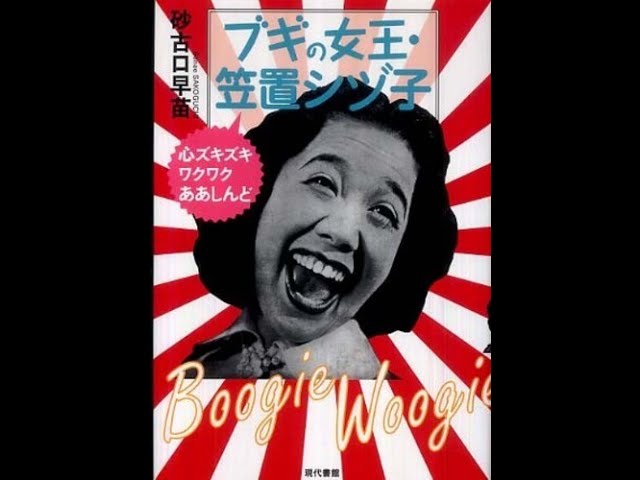
This is one of Shizuko Kasagi’s signature songs, brightly portraying the everyday lives of ordinary people during Japan’s postwar recovery.
Released in 1950, the boogie-woogie number humorously depicts a housewife out shopping.
It’s a masterpiece born from her collaboration with lyricist-composer Ryoichi Hattori.
The song was also featured in the film “Boogie-Woogie Girl,” and it became beloved for showcasing Kasagi’s distinctive vocals and expressive power.
Because it captures the true-to-life experiences of women amid the turmoil of the postwar era, it’s recommended for those seeking a bit of cheer in daily life or wanting to savor the nostalgic atmosphere of the Showa period.
Osaka Boogie-WoogieKasaogi Shizuko3rank/position

A number released in 1948 by Shizuko Kasagi following the huge hit “Tokyo Boogie-Woogie.” The lyrics are packed with Osaka place names like Shinsaibashi and Semba, and even include depictions comparing Osaka to New York.
For Shizuko Kasagi, who grew up in Osaka, this may have been an easier song to sing.
She went on to release many other “local boogies,” such as “Nagoya Boogie” and “Hakata Boogie-Woogie.”
I’m counting on you.Kasaogi Shizuko4rank/position
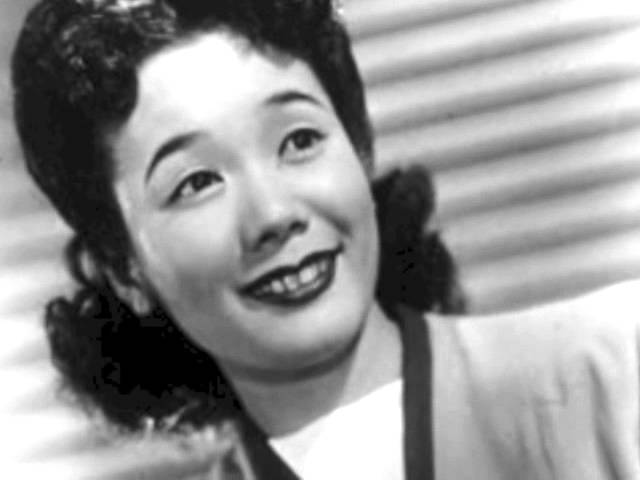
Ms.
Shizuko Kasagi, the legendary singer who kept scattering the treasure of “songs” across Japan before and after the war.
She broke away from the prevailing norm of singing stock-still, unveiling her numbers with dynamic, spirited choreography.
The effort she put in—and the backlash she faced—may well be beyond what we can imagine.
Her hit song “Tayori ni Shite Masse” is a fun track that blends in Kansai dialect.
When you hear the lyrics, which feel like a pep talk—“I trusted you and followed you, so please, get it together!”—you can’t help but think that even at 88, it’s hardly time to grow old.
A perfect pick to liven up a celebration party!
Hakata Boogie-WoogieKasaogi Shizuko5rank/position
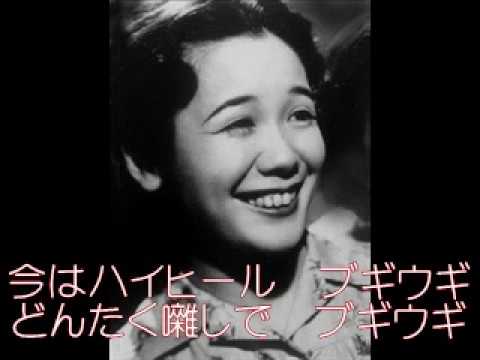
One of the many “local boogies” sung by Shizuko Kasagi, the Queen of Boogie.
The lyrics are filled with Hakata-related motifs such as Dontaku and Hakata dolls, yet there’s an unmistakably modern feel—perhaps a reflection of the city’s unique character.
Set to a lively, cheerful piano accompaniment, the words can even be heard as a progressive love song between a man and a woman for its time.
Modern Golden DemonKasagi Shizuko / Sakai Shunji6rank/position

This song is an unconventional collaboration between Shizuko Kasagi, the “Queen of Boogie” who epitomized the postwar music scene, and Shunji Sakai, a hugely popular comic actor.
Released in the early 1950s, it was also chosen as the theme song for the film “Zakuzaku Musume.” Set to a lively boogie-woogie rhythm, it humorously portrays views on love and money, offering a unique piece that expresses the world of classical literature through the popular music of the time.
Kasagi’s vibrant vocals and Sakai’s comedic banter blend into a perfect harmony.
Sung as a duet, it’s sure to brighten the atmosphere wherever it’s performed.