


7th President of the Japan Singers Association! What are Peggy Hayama’s most popular songs ranked?

Peggy Hayama is a singer who made her record debut in 1952 and later became the 7th president and honorary president of the Japan Singers Association.
In 1958, she received the Arts Festival Individual Encouragement Award, and in 1959, the massive hit of “Leaving Nangoku Tosa Behind” brought her widespread fame.
She was also highly active overseas; in 1960, for example, she appeared as a regular on an Australian TV program for a month—testament to her vitality.
This time, we’ll be introducing a ranking of Peggy Hayama’s popular songs, so if you haven’t listened to her music yet, don’t miss it!
7th President of the Japan Singers Association! What are Peggy Hayama’s most popular songs ranked?
school daysPegī Hayama1rank/position

Some people may be wondering, “Is Peggy Hayama half-Japanese?” but she was fully Japanese.
Peggy Hayama is a stage name, inspired by a friend she met through a crossed telephone line who said, “Your voice feels like ‘Peggy.’” It’s funny how inspiration can come from anywhere.
Her hit song “Gakusei Jidai” (“Student Days”) was originally titled “Daigaku Jidai” (“College Days”), but the title was reportedly changed after Peggy said, “I didn’t attend college.” It’s a song filled with nostalgia and many fond memories of youth.
Leaving sunny Tosa behindPegī Hayama2rank/position

The famous song that sings of Tosa’s beautiful nature and deep love for one’s hometown remains beloved as one of Peggy Hayama’s signature works.
It weaves in Kochi landmarks such as Harimaya Bridge, Katsurahama, and Cape Muroto, and, together with the melody of the Yosakoi-bushi, conveys a feeling rich with nostalgia.
Released by King Records in May 1959, the song was a massive hit, selling about two million copies.
A film of the same title was also released that year, with Peggy Hayama herself appearing in it.
It’s perfect for those who have lived away from their hometown or when you want to recall the beautiful scenery of the countryside.
If you sing it together at a recreation event, it’s sure to spark a lively sharing of fond memories.
Melody of DawnPegī Hayama3rank/position

This song is striking for its beautiful yet powerful vocals.
It’s a piece by the female singer Peggy Hayama, who debuted in 1952.
It was released as a single in 2010.
The lyrics express feelings for cherished days that have passed, making it a masterpiece that tightens your chest just by listening.

Que Sera, Sera (Whatever will be, will be)Pegī Hayama4rank/position

Que Sera, Sera is a classic beloved for Peggy Hayama’s singing.
Its optimistic message—“whatever will be, will be”—really resonates.
When you feel anxious about the future, these lyrics can give you courage.
Peggy Hayama’s version was released in 1956 and was performed at the 7th NHK Kohaku Uta Gassen.
It’s a song you’ll want to listen to at many moments in life.
Sing it together at karaoke, and you’re sure to spark fond memories.
It’s a perfect song to enjoy with older adults.
Why not join your voices and sing it as a celebration of life?
Women’s War Service SongPegī Hayama5rank/position

This is a song by a Japanese Red Cross military nurse.
Sung from the perspective of a nurse, its concrete lyrics make the wounded soldiers feel all the more pitiful.
Peggy’s calm singing seems to soothe the wounded, and it carries a quietly enveloping, heartfelt persuasiveness.
March of BreadPegī Hayama, Tōkyō Shōnen Shōjo Gasshōtai.6rank/position
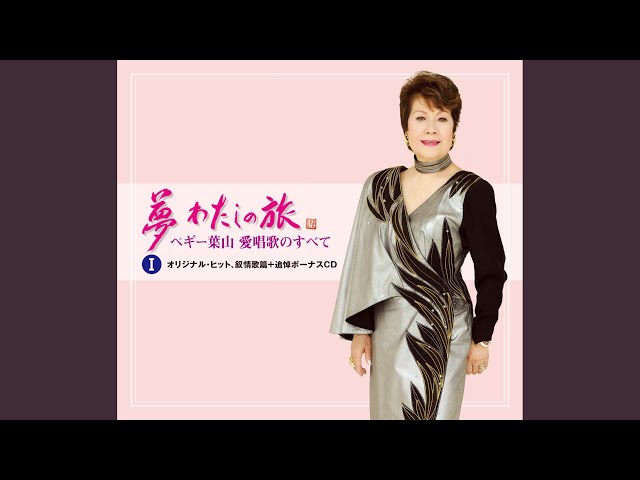
Set to a lively march rhythm, this delightful song feels like setting off on a round-the-world trip of bread.
It’s sung by Peggy Hayama, whose warm, embracing voice shines, together with the exuberant Tokyo Boys and Girls Chorus.
From the history of bread’s birth in ancient Egypt to lyrics that introduce all kinds of breads from around the globe one after another, it’s as if you’re reading a musical picture book.
First broadcast on NHK’s Minna no Uta in December 1969, the piece was later included on the single “Midori no Hoshi / Pan no March” and the album “Peggy Hayama no Minna no Uta.” You can almost see children clapping along as they sing with energy—a heartwarming song that makes you want to listen together around the family table.
Song of Circumnavigating Lake BiwaPegī Hayama7rank/position

A classic song that sings of travel and the bittersweetness of youth against the backdrop of Shiga’s beautiful nature.
Peggy Hayama’s warm, wistful vocals resonate with many listeners.
Covered in 1962, this piece gained popularity second only to the big hits by Yukio Hashi and Sayuri Yoshinaga.
The lyrics, which trace a clockwise journey around Lake Biwa, vividly portray the lakeside scenery and a lovestruck young woman.
Conveying a sense of unity with nature and the romance of travel, the song evokes the beauty and culture of Japan.
It’s a perfect choice for those who want to savor the nostalgic Showa-era atmosphere or seek a gentle, soothing melody.