

Popular Songs Ranking of Saburo Kitajima [2026]

He must be one of the most difficult Japanese singers to rank by popular songs.Yes, Saburō Kitajima.His track record since starting as a traveling singer and making his record debut in 1962 is nothing short of remarkable.His hit songs are works that continue to be sung across generations and eras.
- Popular Enka Singers Ranking [2026]
- Mitsuhiro Mihashi Popular Song Rankings [2026]
- Hiroshi Itsuki Popular Songs Ranking [2026]
- [Sub-chan] A Collection of Easy-to-Sing Songs by Saburo Kitajima [2026]
- Kohei Fukuda Popular Song Ranking [2026]
- Ichiro Toba’s Most Popular Songs Ranking [2026]
- Yoshi Ikuzo Popular Song Rankings [2026]
- Classic enka songs you’ll want to sing at karaoke: recommended popular tracks
- Shinichi Mori’s Most Popular Songs Ranking [2026]
- Enka Karaoke Popularity Rankings [2026]
- Harumi Miyako Popular Songs Ranking [2026]
- Haruo Minami Popular Song Rankings [2026]
- Karaoke Popular Song Ranking of Ikuzo Yoshi [2026]
Saburo Kitajima Popular Song Rankings [2026] (21–30)
Five Chivalrous Men of the Blue CloudsKitajima Saburō29rank/position

Saburo Kitajima’s song “Seiun Gonin Otoko,” released in 1966, has the feel of traditional enka, with a notably relaxed tempo.
Precisely because the tempo is laid-back, the vocal line is quite intense, with pitch moving up and down at a somewhat brisk pace.
That might sound difficult, but the pitch movements where the kobushi (melismatic ornament typical of enka) appears are relatively gentle, so the kobushi itself isn’t especially hard.
However, because there are many long sustained notes and few rests, it’s important to steady your breathing well before you start singing.

Hakata WomanKitajima Saburō30rank/position
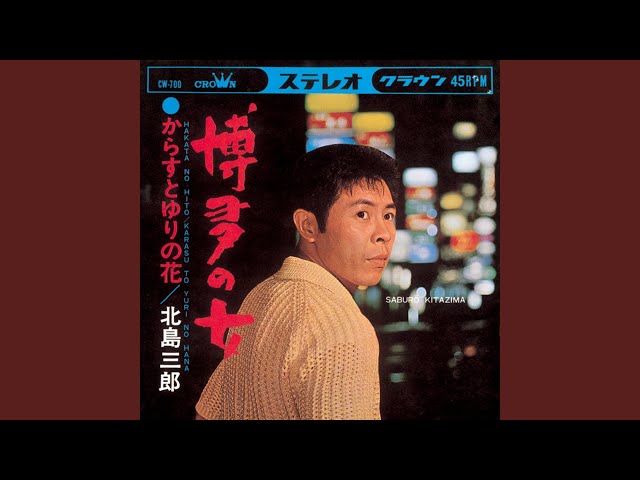
One of Saburo Kitajima’s “Woman Series,” Hakata no Onna (The Woman of Hakata).
It tells of a man who, unaware that the woman he loves is married, goes to Hakata to see her and pours out his pain.
Hakata seems to be a city where many come seeking someone and then move on, as so often sung.
It’s a song that expresses a pure, earnest feeling, different from Kitajima’s usual rugged, masculine image.
Saburo Kitajima Popular Song Rankings [2026] (31–40)
Ah, Mito RōshiKitajima Saburō31rank/position
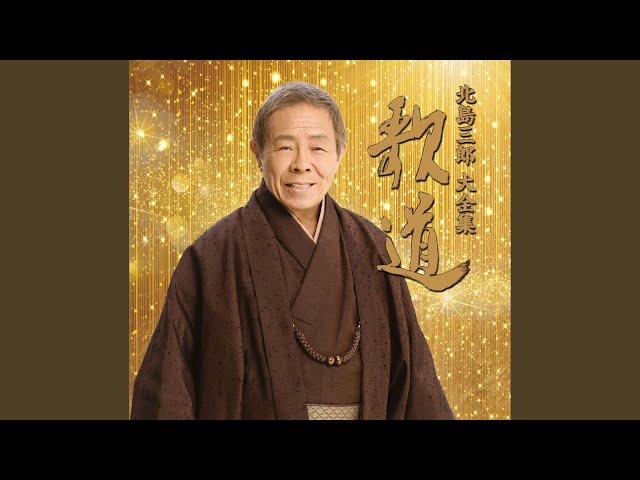
This is a celebrated song that sings of Mito’s history, delivered with the soul-stirring voice of Saburo Kitajima, a giant of the enka world.
The piece takes the late-Edo “Tengu Party Rebellion” as its theme, depicting the grim resolve and pride of the Mito loyalists who rose out of concern for their country.
Kitajima’s powerful yet heartrending vocals feel as if the spirits of those warriors have possessed him.
Listening to his voice, you can vividly picture their arduous journey toward snowy Tsuruga and the fiery convictions they held close to their hearts.
Created to commemorate the sister-city partnership with Tsuruga City in Fukui Prefecture, this song profoundly conveys the spirit of righteousness that lives on in Ibaraki’s history.
It is a weighty work that will captivate anyone who loves historical narratives and refuse to let go.
If I don’t do it, who will?Kitajima Saburō32rank/position

Here I’d like to introduce a song that’s relatively easy to sing yet a bit on the challenging side: “Ore ga Yaranakya Dare ga Yaru” (“If I Don’t Do It, Who Will?”).
Among Saburo Kitajima’s masculine songs, this one in particular brings together a wide range of techniques, featuring from the very beginning a powerful vibrato with a shouted edge.
As for kobushi (ornamental pitch turns), they appear frequently, but you’ll rarely encounter ones that shift more than three scale degrees, so the difficulty there is on the lower side.
If you sing with an awareness of strength and of contrasts between stillness and motion, your vocal line will have sharper definition, so try to keep those aspects in mind as you perform.
Brothers!Kitajima Saburō33rank/position

A powerful anthem celebrating brotherly love has arrived from Saburo Kitajima, a towering figure in the enka world.
Depicting the courage to face life’s hardships and the bonds with one’s comrades, this piece is included on the 2011 single “Sadame-michi / Kyōdai-tachi yo.” Released to commemorate Kitajima’s 50th anniversary in the performing arts, it was later reissued on albums and as a karaoke version.
Its appeal lies in his richly resonant vocals and lyrics filled with an uplifting message.
It’s recommended listening when you’re struggling in life and need encouragement—you’re sure to find courage in it.
Woman of KagaKitajima Saburō34rank/position

Saburo Kitajima’s song “Kaga no Onna” features a memorable melody with a Latin essence.
While it firmly inherits the hallmarks of enka, the piece also strongly reflects elements of kayōkyoku throughout.
As a result, the characteristic kobushi ornaments typical of enka appear less frequently.
The vocal range is wide, which limits who can sing it, but aside from that there aren’t many difficult aspects, making it one of the more approachable songs among Kitajima’s works.
Consider adding it to your repertoire.
Northern BrothersKitajima Saburō35rank/position

This is a moving song performed by Saburo Kitajima, a towering figure in the enka world.
It powerfully portrays the bond between brothers living in the harsh northern lands, stirring the hearts of listeners.
Included on the single “Kita no Otokobune / Kita no Kyodai,” released in January 2003, this piece showcases Kitajima’s signature, weighty enka style, expressing deep feelings for one’s hometown and family.
With lyrics by Yoko Nakamura and music by Joji Hara, the two elements blend beautifully, and Kitajima’s vocal prowess further elevates the song’s appeal.
It’s a recommended track for those who cherish bonds with family and friends.