

Kudo Shizuka’s Most Popular Karaoke Songs Ranking [2026]

When you go to karaoke, many people probably sing Shizuka Kudo’s songs, don’t they? I think there are plenty that are easy to sing even for younger people.
Here are recommended popular karaoke songs by Shizuka Kudo, presented in a ranking format.
Hope you find it helpful!
- Shizuka Kudo’s Most Popular Songs Ranking [2026]
- [Karaoke] A roundup of easy-to-sing songs by Shizuka Kudo
- Shizuka Kudo’s famous and popular songs
- Toshinobu Kubota Karaoke Hit Songs Ranking [2026]
- Kohmi Hirose’s Most Popular Karaoke Songs Ranking [2026]
- [For People in Their 40s] Karaoke Songs That Are Easy to Sing: 2026 Ranking
- [Women in Their 40s] Even If You’re Tone-Deaf, You Can Sing! Karaoke Songs That Fit a Woman’s Vocal Range
- Seiko Matsuda Karaoke Popular Song Ranking [2026]
- Sayuri Ishikawa Karaoke Hit Songs Ranking [2026]
- [For People in Their 50s] Ranking of Easy-to-Sing Karaoke Songs [2026]
- Aimyon songs that are easy to sing. Songs you can score high with at karaoke.
- [Glamorously Cool] A Collection of Easy-to-Sing Songs by Ayako Fuji [2026]
- Kobukuro’s Most Popular Karaoke Songs Ranking [2026]
Shizuka Kudo Karaoke Popular Songs Ranking [2026] (1–10)
MUGO… so sexyKudō Shizuka8rank/position

Shizuka Kudo, known as a member of Onyanko Club.
When it comes to her solo songs, isn’t “MUGO… Uhn… Iroppoi” the one that comes to mind? It’s memorable for having been performed on the Kōhaku Uta Gassen and used in a Kanebo commercial.
Since the song makes extensive use of long tones, let’s focus on practicing that aspect.
By the way, the title was inspired by Kanebo’s product catchphrase, “Uhn… sexy.” Be sure to share that bit of trivia when you sing it.

What you gave meKudō Shizuka9rank/position
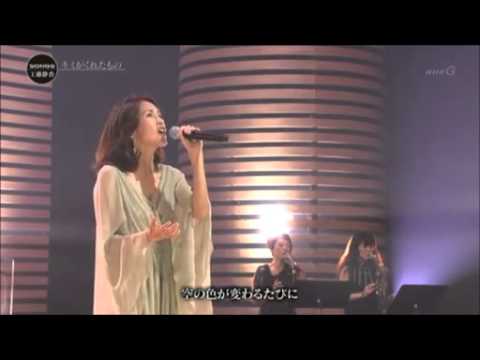
This single was released in October 2012 to commemorate Shizuka Kudo’s 25th anniversary as a solo singer, with lyrics and composition by Ayaka.
It was used as an ending theme for the TV anime FAIRY TAIL and reached No.
50 on the Oricon chart.
Snow, Moon, and FlowersKudō Shizuka10rank/position

Right after going solo, Shizuka Kudo also incorporated a pop style, but as her career progressed, her songs increasingly took on a sharp, stylish edge.
“Yuki, Tsuki, Hana” falls into the latter category: while it retains a touch of Showa-era flavor, it maintains a stylish atmosphere throughout.
The song generally sits in a lower range, and the vocal line is calm with little fluctuation, but be mindful of the brief falsetto that appears in the chorus.
Rather than forcing a falsetto, the key is to adjust your pitch so the voice flips naturally.

Shizuka Kudo Karaoke Popular Songs Ranking [2026] (11–20)
AgainKudō Shizuka11rank/position

The group’s second single, Again, was used as the ending theme for the two-part show combining a school drama and variety segments, Peach-Colored Academy City Declaration!!.
Its brisk synth sound and lyrics—evoking the image of someone stepping back for the sake of a loved one—give it a touch of melancholy, don’t they? The melody is intricate with lots of pitch movement, so it isn’t easy, but since the overall vocal range isn’t wide, it should be manageable if you sing calmly.
Also, having a friend add call-and-response parts will make it more fun and give you some breathing room, so definitely give it a try.

FU-JI-TSUKudō Shizuka12rank/position

“FU-JI-TSU,” the fourth single to reach No.
1 on the Oricon charts and the first song to feature lyrics by Miyuki Nakajima.
Its story—being bewildered by an ex-partner’s behavior—may resonate with listeners whose own experiences overlap with the lyrics.
The melody is relaxed and the vocal range isn’t wide, making it easy to sing at karaoke.
However, because the melody moves in small steps, be mindful of each note to avoid going off pitch.
in the skyKudō Shizuka13rank/position

Released on July 17, 1998, “in the sky,” the second track on the 32nd single Kirara, was written and composed by Ryuichi Kawamura and was also featured as an insert song in the drama God, Please Give Me More Time.
It’s a poignant ballad with a soundscape that unfolds on a grand scale, and vocals that send wishes into that vast world, permeating it with longing.
Wishes, resignation—yet the wishing repeats…
It’s a song that reminds you of the precious feelings you’ve kept hidden somewhere amid your busy daily life.
Aphrodisiac from the lipsKudō Shizuka14rank/position

This is Shizuka Kudo’s massive hit that vividly colored the exuberant Bubble Era.
It confronts the push-and-pull of adult romance and dangerous temptation head-on, perfectly matching a retro pop band sound reminiscent of Group Sounds with her sultry vocals.
Released as a single in January 1990, it was later included on the album “rosette.” Despite having no specific tie-in, it achieved the remarkable feat of debuting at No.
1 on the weekly charts.
Portraying a slightly grown-up love affair, this song is perfect for those who want to look back nostalgically on their youth.
Sing it at karaoke with close friends, and the glamorous atmosphere of the time will come rushing back, guaranteeing a great time.