

Shinpei Nakayama Popular Songs Ranking [2026]

Shinpei Nakayama composed roughly 1,700 pieces from the Meiji through the Showa era.
His representative works include the children’s song “Soap Bubbles” (Shabondama) and the popular song “Tokyo March.” In this article, we’ll introduce his songs in a ranked list, including those pieces as well!
- Shinpei Nakayama Popular Songs Ranking [2026]
- Ranking of Popular Nostalgic Songs and Classics [2026]
- Miho Nakayama Popular Songs Ranking [2026]
- Yamada Kōsaku Popular Song Rankings [2026]
- [2026 Edition] Songs Loved by People in Their 60s: Classic Hits from Their Youth
- Popularity Ranking of Rentaro Taki’s Songs [2026]
- Fun Song Rankings [2026]
- Popular Song Ranking of the Suginami Children’s Choir [2026]
- Yuzo Kayama’s Most Popular Songs Ranking [2026]
- Miho Nakayama’s Most Popular Karaoke Songs Ranking [2026]
- Hibari Children's Choir Popular Song Rankings [2026]
- Miho Nakayama’s Love Songs: Popular Song Rankings [2026]
- Popular Song Rankings of Monbusho Shoka [2026]
Shinpei Nakayama Popular Songs Ranking [2026] (11–20)
rice plantingSakushi: Inoue Takeru / Sakkyoku: Nakayama Shinpei15rank/position
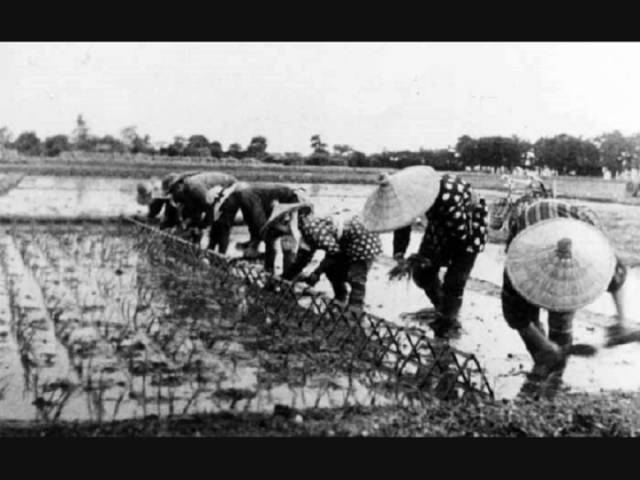
For Japanese people, rice is an indispensable food.
Not only the autumn harvest but also the rice-planting in early summer is an important event.
This song, set against the backdrop of rice-planting scenes, powerfully expresses how essential rice is.
It conveys a sense of uplift, suggesting that by earnestly facing the task of planting, we take the first step toward delicious rice.
The light, buoyant singing is also memorable, evoking a joyful engagement with the planting.
Carefully reading the lyrics can deepen our gratitude and affection for being able to eat rice.

Chikuma Ko-utaSakushi: Masaki Fujokyu / Sakkyoku: Nakayama Shinpei16rank/position

This is an evocative kouta (short traditional song) with lyrics by Fuyokyu Masaki and music by Shimpei Nakayama, born in the hot spring region along the Chikuma River.
Created in the early Showa era to convey the charms of Togura-Kamiyamada Onsen, the piece is a masterpiece that exudes Nakayama’s distinctive “Shimpei-bushi,” imbued with love for his hometown of Nagano.
Its Japanese-style melody, using the yonanuki scale, beautifully expresses the atmosphere of the hot-spring town and the flow of the Chikuma River.
Beloved at local events and in tourism promotions, the song is also presented at the Shimpei Nakayama Memorial Museum along with his achievements.
Through the steam of the baths, nostalgic scenes are sure to come to mind.
shoulder tapSakushi: Saijō Yaso / Sakkyoku: Nakayama Shimpei17rank/position

“Katatataki” (Shoulder Tapping) is a song sung from a child’s perspective about a child giving their mother a shoulder massage.
The song was released in 1923, during the Taisho 12 era.
The lyrics were written by Saijō Yaso, and the music was composed by Nakayama Shimpei.
You can picture a child tapping their busy mother’s shoulders from behind, chatting about what they’ve noticed while thinking of her daily busyness.
Although it’s a very short song, it has five verses.

The Ball and the LordSakushi: Saijō Yaso / Sakkyoku: Nakayama Shinpei18rank/position

Published in January 1929 in magazines such as Kodomo no Kuni, this piece seems like a delightful New Year’s song that conjures the image of a bouncing handball following a lord’s procession.
However, a closer reading of the lyrics reveals an absurd metamorphosis tale in which the handball that set out on a journey ultimately transforms into an orange and can never return to its original shape.
Created by Yaso Saijo (lyrics) and Shimpei Nakayama (music), a record featuring Chiyako Sato’s vocals was released around February 1929, and the work has been widely loved by the public ever since.
It is a children’s song that nearly everyone has heard at least once, hiding a mysterious and slightly chilling ending that one would never imagine from its cute melody.
Rainy moonSakushi: Noguchi Ujō / Sakkyoku: Nakayama Shinpei19rank/position

“Amefuri Otsuki,” which depicts a bride going off to be married alone on a rainy night, is a children’s song with a hauntingly melancholy atmosphere.
When you read the lyrics closely, the image of a bride setting off by herself evokes a curious, slightly mysterious feeling.
Some say that behind it lies a poignant theory: the song as a requiem for a departed daughter.
On the other hand, a heartwarming anecdote survives that the author modeled it on his own wife, who came to him as a bride in the rain.
As you listen, try to imagine the different possibilities and let your thoughts wander through the world the lyrics create.
That Town, This TownSakushi: Noguchi Ujō / Sakkyoku: Nakayama Shinpei20rank/position

This song is the work of the golden duo of the children’s song world: lyrics by Ujō Noguchi and music by Shimpei Nakayama.
The buoyant rhythm, known as the “Pyonko-bushi,” naturally lifts your spirits as you listen.
The piece depicts the slightly lonely yet somehow nostalgic feeling of looking back at your home growing distant on the way back at dusk.
It was published in a magazine in January 1924, and some say the poem was influenced by the sadness and isolation felt after the Great Kanto Earthquake the previous year.
There’s also an anecdote that composer Shimpei Nakayama would hum this song in his later years, which speaks to its profound appeal.
It’s a moving classic, perfect for listening to on an autumn evening while gazing at the crimson sky.
Why not share it with someone dear and let it stir thoughts of each of your hometowns?
Shinpei Nakayama Popular Song Rankings [2026] (21–30)
soap bubbleSakushi: Noguchi Ujō / Sakkyoku: Nakayama Shinpei21rank/position

A classic adorned with a gentle melody that resonates in children’s hearts and lyrics that are fragile yet beautiful.
Created hand in hand by Ujo Noguchi and Shinpei Nakayama, this work left a profound mark on the history of Japanese children’s songs and continues to be loved by many today.
In a 2003 survey conducted by the NPO “Japan Doyo Association,” it was ranked ninth among favorite children’s songs and was also selected for the Agency for Cultural Affairs’ “100 Best Songs of Japan.” At Yumoto Station in Iwaki City, Fukushima Prefecture, it is even used as the departure melody.
Why not enjoy a hand-play game while singing it with your child on Children’s Day? You’re sure to have a heartwarming time.