

![Atsurō Okamoto Popular Song Rankings [2026]](https://i.ytimg.com/vi/_9Aqn2xtEew/sddefault.jpg)
Atsurō Okamoto Popular Song Rankings [2026]

Atsuo Okamoto was a singer who gained popularity in postwar Japan’s pop music scene, known for his resonant, beautiful voice and classic, orthodox singing style.
Nicknamed “Mr.
Radio Kayō,” he is recognized for producing numerous hit popular songs.
He also served as the chairman of the Japan Singers Association and, alongside his musical career, worked as a music teacher.
Today, his granddaughter Shiho Sakai is active as a singer-songwriter.
In this article, we’ll introduce a ranking of Atsuo Okamoto’s most popular songs—enjoy listening and feeling the breeze of the era!
Atsurō Okamoto Popular Song Rankings [2026]
The Highland Train GoesOkamoto Atsurō1rank/position
A song that gracefully celebrates the natural beauty of the highlands and the romance of train travel evokes heartwarming memories of family trips and brings to mind wonderful moments with loved ones.
Its sweeping scenery and romantic spirit are sure to soothe anyone’s heart.
Carried by Atsuro Okamoto’s comforting vocals, the pastoral landscapes gently resonate within.
Since its release in 1954, this work has continued to be beloved by many and was featured in the 2020 NHK morning drama series “Yell,” moving audiences across generations.
It’s perfect for a time of sharing old memories over tea with everyone.
Settle in, relax, and enjoy a peaceful moment.
When the lilacs bloomOkamoto Atsurō2rank/position

Atsuro Okamoto’s “Lilacs in Bloom” is a classic that beautifully sings of nostalgia for days gone by through the lilac, a harbinger of spring.
Its melody, carried on a faint fragrance, quietly resonates in the listener’s heart.
Released in 1951, the song remains one of Okamoto’s signature works, beloved by many.
Wrapped in the “subtle scent of dreams” that drifts on nights when lilacs bloom, one can sink into distant memories.
It’s recommended for older adults who wish to spend such a gentle spring evening.
We hope you enjoy a heartwarming moment while listening to the nostalgic singing voice.
When the white flowers bloomOkamoto Atsurō3rank/position

Atsuro Okamoto’s “When the White Flowers Bloom” is a classic that blends nostalgia with bittersweet emotion.
The lyrics beautifully depict the scenery of one’s hometown, touching the heart.
Through images of white flowers, white clouds, and a white moon, the song delicately portrays a farewell to a loved one.
Released in 1950, it has remained a memorable piece for many.
Listening to it with older adults may spark lively conversations about their youth.
As you feel the arrival of spring, why not take some time to gently reflect on cherished memories?
Where does the morning begin?Okamoto Atsurō4rank/position
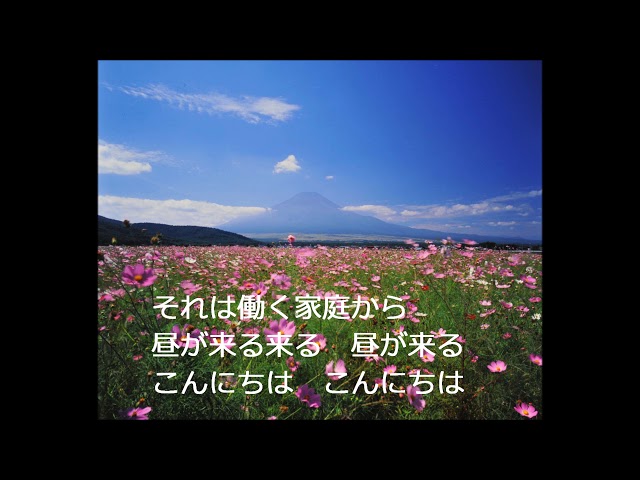
This song, which sings of the start of a refreshing morning, is a masterpiece that wonderfully captures the atmosphere of hope during the postwar reconstruction era.
Atsuro Okamoto’s warm vocals gently embrace both the anticipation for a new day and the beauty of nature.
Composed by Yoshinao Nakada with lyrics by Hiroshi Yokoi in the early 1950s, the piece was also beloved as the opening theme of the NHK radio program “Uta no Ehon” (Song Picture Book).
Its bright, light melody is perfect for recreational activities at facilities and for morning exercises.
It’s sure to invite everyone to hum along while reminiscing about days gone by.
Shiga Prefecture Residents’ SongOkamoto Atsuo, Nara Mitsue5rank/position

The Shiga Prefectural Anthem, “Shiga Kenmin no Uta,” was established in 1954 (Showa 29).
The lyrics were written by Ryo Tadezawa, and the music was composed by Yuji Koseki.
The lyrics were based on selected prize-winning entries from a public contest.
In the same year it was adopted, a record was released featuring Atsuro Okamoto and Mitsue Nara with the Columbia Chorus.
When you think of Shiga, Lake Biwa naturally comes to mind first—along with the surrounding nature and the beauty of the four seasons.
This prefectural song vividly conveys those scenes, allowing the region’s beautiful natural landscape to rise clearly before your eyes.
