

Popular Okinawan Songs Ranking [2026]

We’re excited to present the latest comprehensive ranking of popular Okinawan songs, showcased in order of most views!
Okinawan music—whether traditional folk songs or bands—often feels nostalgic and is full of soothing tracks that are a joy to listen to.
Close your eyes and listen to this ranking, and you just might feel the warm atmosphere of Okinawa.
The playlist is updated every week.
- Popular Okinawan Songs: Artist Rankings [2026]
- Fun Song Rankings [2026]
- Popular Tearjerker Song Rankings [2026]
- Kariyushi58 Popular Song Rankings [2026]
- Popularity Ranking of Songs by Generation: 60s [2026]
- From J-pop to folk songs! Popular and classic Okinawan tunes
- Enka Karaoke Popularity Rankings [2026]
- Popular Japanese music. Latest rankings [2026]
- A classic song in the Okinawan dialect, Uchinaaguchi
- Popular Summer Songs / Summer Music Ranking [2026]
- Popular Enka. Latest Rankings [2026]
- Kariyushi58’s Most Moving Songs and Popular Tracks Ranking [2026]
- Saddest Songs Ranking [2026]
Popular Okinawan Song Rankings [2026] (71–80)
Tōfun Doirinken bando78rank/position

This is a representative Kachāshī song.
It is performed almost without fail at events such as Eisa dances during the old Bon festival, banquets, and folk music taverns.
In the past, it was enjoyed as a fast-picked tune during ke-asobi, the leisure activities of young men and women.
It is also the departure melody at Tsubogawa Station on the Okinawa Urban Monorail.
Akata Shuriden79rank/position

This song is said to be a children’s tune that was sung during the Miroku-Umuke (Mīrukū Unkee) festival in Akata, Shuri, Naha City, Okinawa, a ceremony centered around the Ishikawa family since the Ryukyu Kingdom era.
Although it died out in the early Showa period, it began to be sung again in 1994.
It was also broadcast on NHK Educational TV as one of the children’s songs known nationwide, so some of you may have heard it.

Be Nankuru-kunBEGIN80rank/position
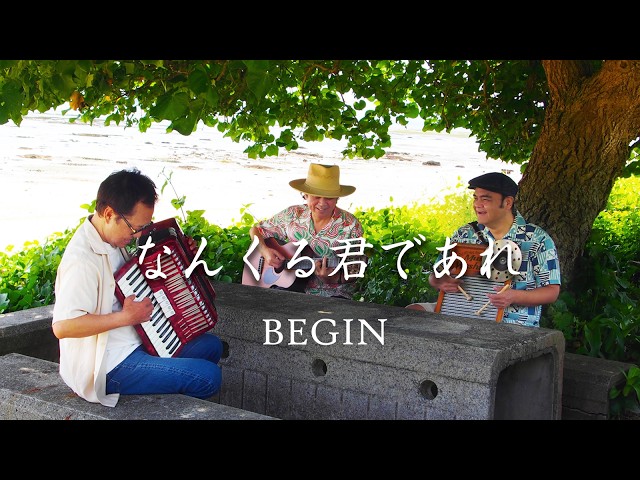
BEGIN captivates with a warm yet powerful sound that only three musicians from Ishigaki Island, Okinawa could create.
This piece, which closes their first masterful album in seven years, Taiyo (The Sun), is a song that deeply evokes the spirit of the island songs at their roots.
The Okinawan phrase “nankuru nai sa,” which carries the profound meaning, “If you keep doing the right thing without losing heart, a good day will come,” resonates gently through the melody.
Even as we are buffeted by the waves of life and bear the sorrow of losing what we hold dear, these lyrics softly encourage us to keep facing forward, warming the heart as they do.
When your heart feels a little tired, why not let yourself be wrapped in the kindness this song offers?
Popular Okinawan Songs Ranking [2026] (81–90)
Seibumon-bushiChimei Sadao & Miyazato Yasuko81rank/position

Seibumon refers to the entrance to the Tsuji district, where a red-light quarter once existed.
In the Tsuji area, prostitution and social gatherings took place, and at that time human trafficking also occurred, with children from poor rural areas being sold there.
These girls were called “juri,” and they trained in the performing arts of song and sanshin, developing new songs and advancing their sanshin techniques.
The song Seibumun-bushi is about a Shuri official and a courtesan.
FamreutaShin Ara Yukito82rank/position

This is the Okinawan lullaby “Famureuta.” It’s sung by Yukito Ara, a musician from Ishigaki Island, who is also well-known as the lead vocalist of the band Parsha Club.
His deep, resonant voice really touches the heart.
It’s a song you’ll want to listen to leisurely at night.

Kunigami JintōyōKadekaru Rinshō83rank/position

This is a duet-style song between a man and a woman set in the nature-rich region of Yanbaru.
At the time, Kunigami was deep in the mountains, so life must have been difficult.
The song carries a message that no matter how harsh the environment or how poor the living conditions, everyone should help one another and cherish their mindset and appearance.
Ase-mizu FestivalOshiro Misako84rank/position

With its very rhythmic melody, it has been loved by many and continues to be sung today as a didactic song.
Reflecting a time of poverty, it conveys the greatness of work, the importance of providing children with an education, and the significance of working for the benefit of others.