

Richard Wagner Popular Songs Ranking [2026]

A German composer and conductor born on May 22, 1813.He was also one of the central cultural figures who influenced not only the music world but Europe at large.Many people may be familiar with him from The Valkyrie.We’ve compiled a ranking of his popular pieces.Whether you’re a longtime fan or learning about him for the first time, take a look.
- A masterpiece by Richard Wagner. Popular classical music.
- Mozart: An Introduction to His Signature and Popular Works
- Oskar Merikanto Popular Song Rankings [2026]
- Brahms's masterpieces. Popular classical music.
- Jacques Ibert Popular Song Ranking [2026]
- A comprehensive introduction to the piano works left by the ‘King of Music Drama,’ Richard Wagner!
- Gustav Mahler Popular Songs Ranking [2026]
- Carl Maria von Weber Popular Song Rankings [2026]
- Robert Schumann Popular Song Ranking [2026]
- Anton Bruckner Popular Songs Ranking [2026]
- Giuseppe Verdi Popular Songs Ranking [2026]
- Johannes Brahms Popular Songs Ranking [2026]
- Franz Liszt Popular Song Ranking [2026]
Richard Wagner Popular Songs Ranking [2026] (21–30)
Bridal ChorusRichard Wagner29rank/position
Anji Ikebata and Takumi Nishigaki appear in the ad, introducing the appeal of the Zexy Consultation Counter with parody lyrics.
The song used as the basis for the parody is the “Bridal Chorus,” known as a wedding march.
When it comes to wedding marches, there are two well-known pieces—one by Mendelssohn and one by Wagner—but the one used this time is Wagner’s composition.
In the commercial, it’s arranged at a relatively up-tempo pace, but the original piece is slower, calmer, and has a more solemn atmosphere.

Fantasia in F-sharp minor, Op. 3, WWV 22Richard Wagner30rank/position
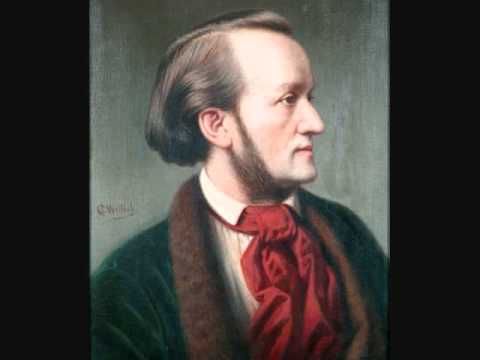
Composer Richard Wagner, emblematic of German Romanticism and best known for his sophisticated operas, reveals a different side in his piano piece Fantasy in F-sharp minor, Op.
3, WWV 22.
Composed in 1831 and only published many years later in 1905, this work offers a glimpse into Wagner’s rich musical talent in the realm of piano music.
The piece is characterized largely by a delicate, gentle tone, setting it apart from the passionate musicality typically associated with Wagner.
It’s a must-listen for piano enthusiasts and anyone interested in exploring another facet of Wagner’s artistry.
Richard Wagner Popular Songs Ranking [2026] (31–40)
Overture “Polonia” in C major, WWV 39 (1836)Richard Wagner31rank/position

This overture embodies the feelings of a composer who sympathized with Poland’s independence movement.
It is characterized by a bright, powerful melody in C major and enriched by a national color that incorporates the rhythm of the polonaise.
Lush harmonies and orchestration lend the music depth and grandeur.
Premiered in Magdeburg on March 29, 1836, the work symbolically expresses Polish national passion and the longing for independence.
It is recommended for music enthusiasts interested in political and social themes, as well as those intrigued by 19th-century European history.
Overture ‘Rule, Britannia’ in D major, WWV 42 (1837)Richard Wagner32rank/position

A grand overture resounds.
Completed in 1837, this piece showcases the talent of the 24-year-old Richard Wagner, built on the British patriotic song “Rule, Britannia!” With a performance time of about 12 minutes, it is distinguished by its brilliant orchestration.
Its bright key of D major and Romantic orchestral techniques are superbly fused.
The premiere took place in March 1838 in Riga, conducted by Wagner himself.
This work conveys the passion and creativity of Wagner’s youth.
It is recommended not only for those interested in classical music but also for anyone who wants to enjoy majestic music.
Liebestod (Love-Death) from the music drama Tristan und IsoldeRichard Wagner33rank/position

This is the famous climactic scene that concludes Richard Wagner’s representative music drama Tristan und Isolde.
Known as a piece that portrays the union of love and death, it is sung by Isolde beside Tristan’s lifeless body.
Through chromatic harmonic progressions and rich orchestration, the characters’ profound emotions are expressed with remarkable vividness.
Premiered in Munich in June 1865, the work had a profound impact on later generations with its innovative musical language.
It is a highly recommended piece for those captivated by grand narratives themed on love, death, and redemption, and by the compositional techniques that so brilliantly render them in music.
Prelude to Act I from the music drama ‘Tristan und Isolde’Richard Wagner34rank/position

Prelude to Act I from the music drama Tristan und Isolde.
It is based on the Tristan legend, widely told throughout medieval Europe—the tragic love of the knight Tristan and Isolde, who became the wife of King Mark.
Performed by the Bavarian State Opera Orchestra, conducted by Zubin Mehta.
Music drama The Mastersingers of Nuremberg, Act I, Scene 3: “Begin!” And spring leads us into the forest (Walther)Richard Wagner35rank/position

From Act 1, Scene 3 of the music drama ‘Die Meistersinger von Nürnberg.’ At the signal ‘Begin!’, the scene where the ‘trial song’ starts.
Featuring Siegfried Jerusalem, Hermann Prey, and Bernd Weikl, conducted by Horst Stein.