

![Sibelius Popular Songs Ranking [2026]](https://i.ytimg.com/vi/5uNaSOAGMps/sddefault.jpg)

Sibelius was a composer from Finland, and over the course of his life he left behind many works, including symphonies and incidental music.
Many of his pieces are very famous, and there are plenty of opportunities to hear them in Japan, such as on television.
This time, we will introduce a ranking of some of Sibelius’s most popular pieces.
- Jean Sibelius Popular Songs Ranking [2026]
- Sibelius’s famous piece. Popular classical music.
- [Piano Works of Sibelius] Exquisite Music Crafted by a Nordic Finnish Composer
- [Masterpiece Classics] A special showcase of gem-like masterpieces so beautiful they’ll move you to tears
- Oskar Merikanto Popular Song Rankings [2026]
- Johannes Brahms Popular Songs Ranking [2026]
- [Orchestra] Introducing famous and popular pieces
- Alexander Scriabin Popular Songs Ranking [2026]
- Masterpieces for Harp: A curated selection of distinguished works featuring noble and delicate tones
- Erik Satie Popular Songs Ranking [2026]
- Sergei Rachmaninov Popular Songs Ranking [2026]
- J.S. Bach Popular Songs Ranking [2026]
- Edvard Grieg Popular Song Rankings [2026]
Sibelius Popular Songs Ranking [2026]
“The Spruce” from “The Trees Suite”Sibelius1rank/position
The original title is “Five Pieces for Piano,” but because each piece is named after a tree, it is affectionately known in Japan as the “Suite of Trees.” The “Spruce” is an evergreen, and since its leaves do not wither and remain lushly green, it is regarded as a symbol of “eternal life” and is also used as a Christmas tree.
However, rather than conveying a festive Christmas mood, this piece depicts the powerful image of the spruce standing firm, keeping its green leaves through the long, harsh Finnish winters of composer Sibelius’s homeland.

Symphony No. 2, First MovementSibelius2rank/position

After taking an extended several-month trip to Italy with his family, Sibelius began composing his Symphony No.
2 in the summer of 1901.
The brilliant sonorities found throughout the symphony are thought to reflect sketches he made during that journey, capturing the atmosphere of Italy and the Mediterranean and incorporating it into the work.
FinlandiaSibelius3rank/position

At the time this piece was composed, Finland was suffering under Russian oppression, and an independence movement had begun.
Sibelius wrote this piece to inspire patriotic feelings for Finland, and its original title was “Finland Awakens.”
Symphonic Poem “Finlandia”Sibelius4rank/position
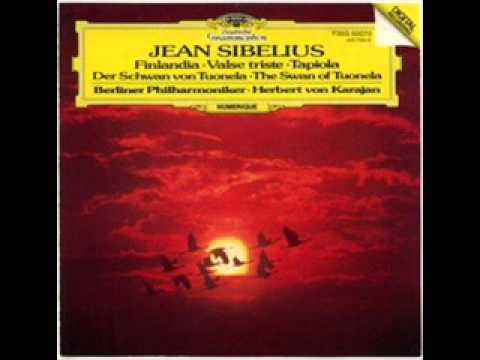
It is a symphonic poem composed in 1899 by Finnish composer Jean Sibelius.
It is perhaps one of the most famous pieces among his works.
At the time this piece was written, Finland was suffering under the oppression of Imperial Russia, and an independence movement was underway.
The imperial Russian government banned performances of the piece on the grounds that it stirred patriotic feelings toward Finland.
That shows just how effectively the piece expressed Finnish patriotism, doesn’t it?

fir treeSibelius5rank/position

It is by a Finnish composer and is one piece from the Suite of Trees.
The piece is based on the spruce, a symbol of Finland.
You can feel the strength of the spruce, which lives robustly even in the snow.
It’s a very beautiful piece, and the flowing melody in the middle section is elegant and deeply moving.
Sorrowful WaltzSibelius6rank/position

Sibelius composed incidental music called Valse Triste for the play Kuolema (Death), written by his brother-in-law, the playwright Arvid Järnefelt.
He revised one of the numbers and published it as an independent piece—this very work.
The waltz depicts a scene in the play in which a mother, lured by a vision of Death, rises from her sickbed and dances.
The sorrow and dreamlike quality of one facing death, along with a touch of madness, are portrayed through Sibelius’s distinctive techniques.
Symphony No. 5Sibelius7rank/position

It is a commemorative symphony that Sibelius composed for himself for the celebratory concert in the year he turned fifty.
When composing this work, Sibelius left the following words: “The day is dim and cold.
But spring is gradually approaching.
Today I saw sixteen swans.
God, what beauty! The swans circled above me for a long time and disappeared into the dull sunlight.
The mystery of nature and the melancholy of life—these are the themes of the Fifth Symphony.” These words encapsulate the entire essence of the piece.