

[For People in Their 60s] Ranking of Easy-to-Sing Karaoke Songs [2026]

The key to choosing songs for karaoke is whether they’re easy for the singer to perform, right?
This time, we’ll introduce easy-to-sing karaoke songs that have been popular among people in their 60s.
We hope you find it helpful!
It’s sure to get everyone excited.
- Recommended for women in their 60s! Easy-to-sing Japanese karaoke songs
- [For People in Their 60s] Karaoke Songs That Get the Crowd Going: Ranking [2026]
- [Men in their 60s] Even if you're not good at singing, it's okay! Easy-to-sing songs for karaoke
- Recommended for women in their 60s! Songs that get the crowd going at karaoke
- [2026 Edition] Songs Loved by People in Their 60s: Classic Hits from Their Youth
- [60s] Karaoke Popularity Rankings by Generation [2026]
- Japanese karaoke songs that are easy for men in their 60s to sing
- Popularity Ranking of Songs by Generation: 60s [2026]
- [For People in Their 50s] Ranking of Easy-to-Sing Karaoke Songs [2026]
- Recommended Japanese karaoke songs for men in their 60s
- Best Karaoke Songs and Popular Band Rankings for Lively Fun in Your 60s [2026]
- Karaoke songs that are easy to sing even if you’re not confident in your pitch (for women in their 50s)
- Karaoke songs that are easy to sing even for tone-deaf beginners, recommended for women in their 60s
[60s] Karaoke Easy-to-Sing Song Rankings [2026] (21–30)
StoryAI22rank/position

A signature work by AI released in May 2005, known for its gentle, comforting melody and striking lyrics that portray life’s precious moments.
It’s a warm song that honestly expresses gratitude to a loved one and the joy of walking together.
The simple melodic line and heartfelt lyrics create a calm atmosphere, making it a tune you’ll want to hum along to with someone special.
It’s also perfect for karaoke—singing it together naturally brings out smiles from everyone.
MelodyTamaki Kōji23rank/position

Released in May 1996, this work is Koji Tamaki’s 10th single.
It’s a moving ballad themed around memories of the past, partings, and a blend of sadness and tenderness.
The simple yet emotionally rich melody line highlights Tamaki’s excellent vocals.
It was used as the ending theme for TBS’s “Tetsuya Chikushi NEWS23,” peaked at No.
49 on the Oricon Singles Chart, and sold around 60,000 copies.
With a not-too-wide vocal range and a relaxed tempo, it’s an easy song to sing at karaoke.
Hold your loved ones and cherished memories close, and try singing it in your own voice.
The Future Projection IIDREAMS COME TRUE24rank/position

Many of you may have been captivated by DREAMS COME TRUE’s songs during your youth.
This ballad, which depicts the future of a couple in love, was included on the album “LOVE GOES ON…” released in November 1989.
Miwa Yoshida’s warm vocals and the gentle melody resonate deeply in the heart.
Created as the second entry in the “Mirai Yosouzu” series, this song has been cherished by many for years.
It was also featured in a SONY Handycam commercial.
When you feel like looking back on memories with someone special, be sure to sing it.
Ruby RingTerao Akira25rank/position

Mr.
Akira Terao, who has left behind numerous masterpieces as a renowned actor.
For those in their 60s, his image as a singer may be even stronger than his image as an actor.
Many were likely surprised that he wasn’t just a one-hit wonder, but kept releasing hits with an unwavering, cool musical style.
Ruby no Yubiwa is his biggest hit.
While the lowest note drops to a very low low G, there are solid moments of lift within its cool, understated mood—such as a key change toward the end.
Despite the modulation, the piece has a narrow vocal range, so you might even try raising the key on purpose and experimenting with a more powerful delivery different from the original.

365 Days’ Paper AirplaneAKB4826rank/position
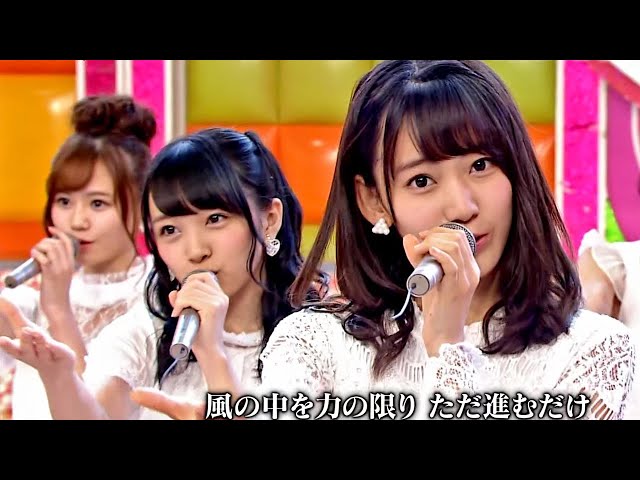
Although it’s also an idol group, I think the songs are easy to sing.
Let’s layer our own voices and enjoy the melody.
They used to be played often on TV and elsewhere.
Now I feel they’re really well-crafted songs.
I thought the remarkable thing is that they can be enjoyed across generations.
Door of LifeTakeuchi Mariya27rank/position

A song by Mariya Takeuchi released in 2007.
In the context of her overall career, it’s a mid-period work, so it might not be from the generation of women in their 50s, but it is extremely popular among fans.
Its appeal lies in lyrics whose depth becomes clearer with age, paired with a warm melody crafted to match.
The vocal range is slightly wide at mid1E to hiC#, but the pitch movement is gentle, making it a relatively easy song to sing overall.
There’s an English lyric section in the middle, so if you’re unsure about pronunciation, make sure to drill the linking beforehand.
North TavernHosokawa Takashi28rank/position

Set in a northern country tavern, this heartwarming enka classic captures the very moment a romance begins.
It richly portrays everything from the fateful encounter in a bar district to the deepening of their relationship.
Takashi Hosokawa’s powerful yet delicate vocals brilliantly convey the thrill of a man whose heart leaps at a chance meeting in a tavern.
After its release in March 1982, the song became a huge hit when it was performed on the TV show “Kin-chan no Doko Made Yaru no?” That same year, it won the 24th Japan Record Award and was also performed on the 33rd NHK Kōhaku Uta Gassen.
Blending a light, poppy melody with the emotive depth characteristic of enka in perfect balance, this piece is ideal for singing at a relaxed pace while soaking in the tavern’s atmosphere.
Why not try it as the perfect finale to a fun night out with friends?