

Koichi Sugiyama’s Most Popular Songs Ranking [2026]

It’s not widely known, but Koichi Sugiyama originally worked in television as a director and similar roles.
The legendary music show “The Hit Parade” was a project conceived by Koichi Sugiyama.
He later left the company to focus on composing, and since then he has been involved in numerous commercial jingles, anime, and video game music up to the present.
This time, we present a ranking of Koichi Sugiyama’s most popular songs.
- Top Songs Ranking of Kiyotaka Sugiyama [2026]
- Popular Love Songs & Romance Tracks Ranking [2026]
- Joe Hisaishi Popular Songs Ranking [2026]
- Nobuo Uematsu Popular Songs Ranking [2026]
- Saddest Songs Ranking [2026]
- [Dragon Quest BGM] Iconic and popular tracks from the Dragon Quest series
- Takao Horiuchi Popular Song Ranking [2026]
- Ichiro Mizuki’s Most Popular Songs Ranking [2026]
- Yamada Kōsaku Popular Song Rankings [2026]
- Teruhiko Saigō’s Most Popular Songs Ranking [2026]
- Soshi Sakiyama Popular Song Ranking [2026]
- Hironobu Kageyama Popular Songs Ranking [2026]
- A composer with numerous awards at home and abroad! Ranking of Akira Miyoshi’s popular pieces
Koichi Sugiyama Popular Songs Ranking [2026] (21–30)
face it boldlysugiyama kouichi22rank/position

Dragon Quest VI: Realms of Revelation boasts immense popularity, even seeing a remake release.
When it comes to memorable characters from this game, Murdaw surely stands out—the green one, you know.
The BGM that heightens the excitement of the battle against him is Daring to Defy.
It’s a tense track that perfectly suits a showdown with a formidable foe.
Incidentally, this piece is also used for the Murdaw battle in Dragon Quest X: Awakening of the Five Tribes.
The track often appears in other titles where Murdaw shows up as well, so be sure to check those out.

Fanfare for GI (Kanto)sugiyama kouichi23rank/position

Among the fanfares played before horse races, this is the piece used for G1 races at the Kanto tracks—Tokyo Racecourse and Nakayama Racecourse.
It’s a famous fanfare also known for being composed by Koichi Sugiyama, the composer of the main theme for the game Dragon Quest.
As pre-race music, it’s a short piece, but it vividly conveys the anticipation for the start of the race and the gallant presence of the racehorses within its brief length.

Searching for a Love Songsugiyama kouichi24rank/position
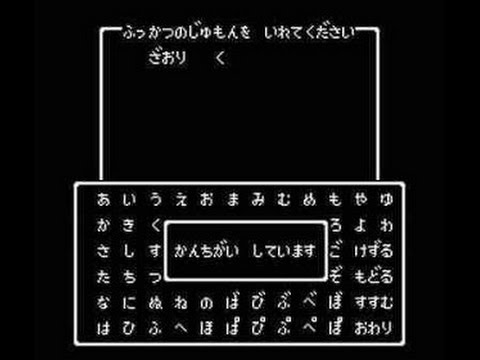
“Love Song Sagashite” was the BGM that played on the screen where you entered the “fukkatsu no jumon” (resurrection spell) in Dragon Quest II.
Back then, there were no save files, so you had to revive using a 52-character password.
Many people who wrote the resurrection spell down by hand ended up listening to this song over and over due to misreading or transcription errors.

Wandering Theme ~Drifting in Silence~ Another Worldsugiyama kouichi25rank/position

It’s the field theme from Dragon Quest VI.
Among the series, it’s especially fantastical—perfectly fitting as the main theme for VI, which carries an overall mysterious atmosphere.
I think it’s a superb composition: grand in scope yet retaining a certain strangeness.
It’s written for the heroes traveling a vast world, but it seems to embody VI’s setting, which is more than just wide-open; there’s a delicate sense of unease woven in, making it a very nuanced piece.
Chromatic Marchsugiyama kouichi26rank/position

From 1987 to 2009, the piece “Chromatic March” was used for GII and GIII races at racecourses in the Kanto region.
It is also a work by Koichi Sugiyama, known as a composer of racecourse entrance themes.
Compared to Shiro Sagisu’s “Dramatic One,” which was used in Kansai and Hokkaido during the same period, this one is a traditional fanfare-style march that conveys the warmth of live instruments.
It’s a superb classic that makes you want to imagine the excitement at the racecourses of the time, picturing the great horses making their entrances to this music.

Torneko’s Themesugiyama kouichi27rank/position

The main theme from “Torneko’s Great Adventure,” a game starring Torneko, a character from Dragon Quest IV.
The piece evokes Torneko’s personality—comical, easygoing, and generous.
It features a friendly, approachable, and pleasant-sounding melody and instrumentation that anyone can warm to.
Finalesugiyama kouichi28rank/position

The very first game in the series, Dragon Quest.
The piece that plays during the end credits after you clear the game is Finale.
Since it’s used in the most rewarding end credits, many people probably remember it well.
It’s a fresh yet glamorous tune that lets you finish the game on a bright note.
It isn’t used as an end-credits theme in other titles, though it’s used a little in Dragon Quest Walk.