

![Jun Togawa Popular Songs Ranking [2026]](https://i.ytimg.com/vi_webp/cWlugvcnuSA/maxresdefault.webp)
Jun Togawa Popular Songs Ranking [2026]

A female artist who also worked as an actress, singer, and lyricist, whose mysterious allure won her a devoted cult following.
Those who lived through that era will remember just how popular she was, but now more than ever, we want people who don’t yet know her to discover her—she’s that compelling.
In this article, we researched her most acclaimed songs based on fan feedback sent to our site and picked out the most popular tracks in a ranked list.
We hope both die-hard fans and newcomers alike will enjoy it.
Now, please take a look!
Jun Togawa Popular Songs Ranking [2026]
I like you, I like you—I love you.Togawa Jun1rank/position
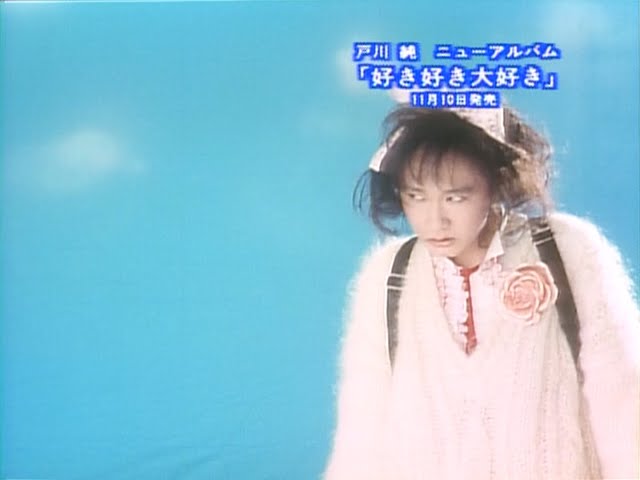
A shocking work that fuses overwhelming expressions of love with violent imagery.
It’s the title track of an album released in November 1985, produced by Jun Togawa herself.
Featuring distinctive vocals and a unique world view, the title—also notable—was inspired by the works of R.
D.
Laing.
In 2021, the full music video was released, helping to attract a new audience.
Highly recommended for those drawn to intense declarations of affection.
The Punk Pupation GirlTogawa Jun2rank/position

The category of “idiosyncratic female singers with a distinctive worldview” is no longer unusual, but Jun Togawa can be considered a pioneer of it.
This “Punk Insect Metamorphosis Girl” is also included on her 1984 solo album “Tamahime-sama,” and is, remarkably, a punk-style arrangement of Pachelbel’s Canon.
You can strongly feel her uniqueness, which has influenced many musicians.
BremenTogawa Jun (Gerunika)3rank/position

A track that opens the first album by Guernica, Jun Togawa’s music project that became known nationwide through a commercial for a certain company’s warm-water bidet toilet seat.
Within its short runtime, it packs in her distinctly strange and eccentric character.
Teach me how to say goodbyeTogawa Jun4rank/position

This song is like the epitome of a stalker—chasing you to the ends of the earth—even after death: Jun Togawa’s “Sayonara wo Oshiete.” When you listen to it, it gives you a sense of “I’ve heard this somewhere,” and in fact there’s an original American song, “It Hurts to Say Goodbye.” It’s a piece that has been sung in many countries by many people, with changes to the title and lyrics.
Although the title says “Teach Me Goodbye,” the word “goodbye” never quite sits right; it’s a song that makes you feel the fear that even if you teach it, it won’t be understood.

Lady TamahimeTogawa Jun5rank/position

She is a singer and actress born on March 31, 1961.
While in elementary school, she joined the Himawari Theatre Group and was active as a child actress.
In June 1982, she released an album as a vocalist.
In May 1983, she made her live debut with the band Togawa Jun and Yapoos.
Her eccentric fashion and lyrics create a morbid world.
Clear skies at the mountaintopHirasawa Susumu, Togawa Jun6rank/position

When you listen to it for the first time, you might find yourself thinking, “What is this? What kind of song is it?” It’s a curious feeling, isn’t it? This is Yama no Itadaki Hararete (“Clear Skies at the Summit”), a song by Susumu Hirasawa and Jun Togawa, used as the theme for the anime DETONATOR Orgun, which aired from 1991 to 1992.
It has an Asian flair and also conveys a grand sense of scale! By the end, it’s a track that makes you feel as if you’ve climbed a mountain yourself.
Raja MaharajaTogawa Jun7rank/position

The lyrics were written by Mitsuko Fukuda and the music composed by Yoichiro Yoshikawa, and it was first broadcast on Minna no Uta in 1985.
The song features an Indian maharaja as the protagonist, humorously depicting the luxurious and extravagant life of the maharaja set to a lively, exotic melody.