

Joji Yamamoto Popular Song Rankings [2026]

Joji Yamamoto is an enka singer who, in his student days, even played at Koshien as a high school ballplayer.
After enduring an unfavorable apprenticeship period, he began his path as a star singer when Michinoku Hitori Tabi, released at age 30 as his last chance, became a massive hit.
He is also known for writing lyrics and composing under the pen name “Kotogorō.”
This time, we present a ranking of Joji Yamamoto’s most popular songs—please enjoy the voice of a performer who has become a leading figure in the enka world!
- Michinoku Solo Journey: A Collection of Easy-to-Sing Songs by Joji Yamamoto [2026]
- Joji Yamamoto Popular Song Rankings [2026]
- Classic enka songs you’ll want to sing at karaoke: recommended popular tracks
- Men’s enka: a collection of classic songs portraying the way men live and their fighting spirit
- Fuyumi Sakamoto’s famous and popular songs
- [Men] Enka Songs That Can Score High in Karaoke
- [2026] A Collection of Classic Enka Masterpieces Featuring Ships
- Kasuga Hachiro Popular Song Rankings [2026]
- Cool masterpieces of enka, the heart of Japan
- [Japan’s Best Vocalist] Fukuda Kohei’s Easy-to-Sing Karaoke Songs
- [Sub-chan] A Collection of Easy-to-Sing Songs by Saburo Kitajima [2026]
- [2026] Representative Famous Enka Songs: A Compilation of Classic Favorites [Beginner-Friendly]
- Miyako Otsuki Popular Songs Ranking [2026]
Joji Yamamoto Popular Songs Ranking [2026] (11–20)
I want to give you happiness.Yamamoto Jōji15rank/position

While it’s a classic enka rooted in a minor key, rather than a tale of tragic love, it’s a Yamamoto Joji–style masterpiece brimming—just as the title suggests—with a man’s gentleness and affection for someone dear.
Composed by Tetsuya Gen and arranged by Toshiaki Maeda—the duo behind many of Joji’s enka classics—it was released in 2004.
Beyond techniques like kobushi and vibrato, the melody actually ranges widely and features fairly sharp rises and falls in pitch, which may make it feel challenging for enka beginners.
In particular, clearly articulating the words in the lowest notes is trickier than you might expect, so it’s worth giving that area focused practice.

On the day of farewellYamamoto Jōji16rank/position
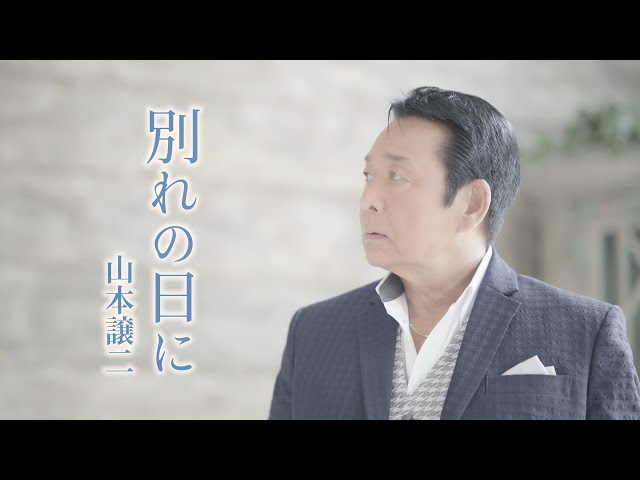
A love song by Joji Yamamoto that resonates deep in the heart.
Released in July 2025 as the second single commemorating his 50th anniversary, this work is a cover of a renowned song by Masato Sugimoto.
It is said to be the first time in 43 years that Yamamoto has sung a Sugimoto piece.
It portrays the deep, gentle love of a man who feels gratitude toward the partner who has walked a long road by his side, while contemplating the day when they must inevitably part.
Within its restrained words, you can sense emotions too profound to be fully expressed.
When you want to reaffirm the bond with someone precious, the sincerity of this song’s vocals is sure to be a comforting presence.
A journey of a thousand milesYamamoto Jōji17rank/position

With the quintessential atmosphere of classic enka, “Senri no Michi mo,” powerfully yet tenderly sung by Joji Yamamoto, is a single released in 2009 that truly touches the heart.
The lyrics are a warm hymn to life—awkward yet sincere—seemingly reflecting Yamamoto himself, who is also known as a devoted husband.
Composed by Tetsuya Gen, it’s pure, straightforward enka with a simple structure and three verses, so anyone reasonably accustomed to singing enka should be able to handle it without trouble.
Its characteristically enka melody moves between very low and slightly higher notes, making it excellent practice material for beginners—so do give it a try.
A toast to the nameless flowerYamamoto Jōji18rank/position

This is a superb masterpiece whose melody, crafted by the renowned composer Tetsuya Gen—who has provided many songs for Joji Yamamoto since the 2000s—radiates a universal appeal! Released as a single in 2005, it also features excellent lyrics by Rei Shirooka, who brilliantly depicts the image of a clumsy man.
Although the song is in a major key, it somehow carries a hint of wistfulness and melancholy, and Yamamoto’s performance—fully embodying the protagonist and delivering it flawlessly—is nothing short of remarkable.
While the fundamental techniques of enka appear throughout, it isn’t overly idiosyncratic; the vocal range is average and the overall key is low, making it perhaps an ideal practice song for beginners to enka.
Producing low notes like Yamamoto’s is surprisingly more difficult than the higher parts, so be sure to focus on vocalization that keeps the lyrics clearly intelligible!
Melancholy CanalYamamoto Jōji19rank/position

The title “Aishū Unnga” (Melancholy Canal) has a really nice vibe, doesn’t it? Composed and arranged by heavyweights Tetsuya Gen and Toshiaki Maeda—both familiar names from George Yamamoto’s repertoire—and with lyrics by Tsubasa Kazu, also known for Hikawa Kiyoshi’s “Kiyoshi no Dodonpa,” this single was released in 2010.
It’s a masterpiece steeped in wistful travel sentiment, depicting the parting of a man and woman set in Otaru.
Rather than Mr.
Yamamoto’s usual masculinity and vigor, aim for a delivery imbued with longing and sadness, and try singing while feeling the plaintive resonance of the acoustic guitar.
Dream HighwayYamamoto Jōji20rank/position

Released in 1994, this is a popular up-tempo number with a strong Showa kayō vibe and a flashy, fiery ensemble that’s seriously cool! “Yume Kaidō” was written and composed by Jōji Yamamoto under the name Kotogorō.
As you can tell from the lyrics, it’s a song that enjoys tremendous support from truck drivers.
If you’re used to singing only laid-back, classic enka, the brisk tempo might throw you off, but for enka beginners, the catchy groove might actually make it easier to get through.
The melody is straightforward, yet it features quintessential enka techniques throughout.
The key is to really study the original and practice until you can deliver it with the same powerful presence as Yamamoto.
Joji Yamamoto Popular Songs Ranking [2026] (21–30)
water lilyYamamoto Jōji21rank/position

Even after entering the 2020s, Jōji Yamamoto has continued his energetic activities, and his 2022 single drew attention for featuring the song that won the Grand Prix in the joint project by the Japan Composer’s Association and the Japan Lyricists’ Association, “Song Contest Grand Prix 2022.” Yamamoto’s powerful vocals, which seem to convey a worldview shaped by overcoming serious illness, are truly encouraging.
When singing it at karaoke, note that while the overall key of the melody is low, the vocal range is somewhat broad.
Aim to clearly contrast the high notes and low notes in the chorus, and sing each word of the lyrics with care.