
I want to play it on the recorder! Carefully selected classic pieces and popular songs recommended

The recorder you learn in elementary school.
It’s one of those instruments that just about everyone has played, right?
At first, your fingerings might not go smoothly and the notes might crack, making it hard to play well.
But as you gradually learn to produce more notes, the range of songs you can play expands, and it becomes a lot more fun.
In this article, we’ll introduce recommended songs you’ll want to play on the recorder.
We’ve selected a variety of pieces across genres—from classic, relatively simple tunes that are easy to play to the latest popular hits—so pick up your recorder and read along!
- [Brass/Wind Band] Recommended for Beginners! A Collection of Classics and Popular Pieces Perfect for Practice
- [April 2026] Trending songs: A roundup of the hottest, viral tracks right now
- Kids will love it! A collection of dance song ideas with easy-to-follow rhythms
- [Relaxed & Gentle] A calm track with an easy, unhurried tempo
- Masterpieces you’ll want to play on the harmonica. Popular songs that look cool if you can play them.
- [Let's Dance to Popular Hits!] Recommended Dance Songs for Elementary School Students
- [For Kids] Play Piano with One Finger! Recommended Songs Collection
- Whistling Classics: Lovely Whistle Songs That Make You Happy and Want to Practice
- [For Upper Grades] Easy-to-sing songs for elementary school students. Popular karaoke hits that get everyone excited
- [Piano Pieces] Easy for Children to Play! A Roundup of Simple Classical Works
- Popular songs used in lyric videos trending on TikTok
- [Tearjerker] Songs that make your heart tremble with tears & moving tracks with lyrics that touch the soul
- Popular songs that are easy to sing at karaoke. Recommended classics and hit songs.
I want to play it on the recorder! A carefully selected list of classic favorites and popular songs (21–30)
swallowYOASOBI with Midorīzu

A heartwarming piece by YOASOBI sung together with children about the importance of small acts of kindness.
Released in October 2021 as the theme song for NHK’s children’s SDGs program “Hirogare! Irotoridori,” the work came to life through a collaboration with Midories, a group featuring children aged 6 to 19.
While retaining YOASOBI’s signature pop elements, it beautifully blends a classical, expansive sound with the pure vocals of Midories.
It’s a recommended track for moments when you want to feel hope for the future or gently warm your heart.
Sakura, sakura

Originally composed in the late Edo period as a koto piece for children, this song has a simple yet beautiful melody and has long been cherished by the Japanese.
It has blended into daily life—for example, it’s used as the departure melody at JR Yamanote Line Komagome Station and JR Chuo Line Rapid Musashi-Koganei Station—and it resonates beautifully on the recorder as well, offering a unique atmosphere.
It would likely make a lovely performance if played by two people in a staggered, round-like manner or with an added obbligato.

I want to play it on the recorder! Carefully selected classic pieces and popular songs (31–40)
My Heart Will Go OnCéline Dion

Celine Dion’s hit song, known as the theme for the film Titanic.
This ballad, which symbolizes the timelessness of love, has moved countless hearts with its powerful vocals and emotional melody, becoming a worldwide smash hit since its release in November 1997.
It garnered numerous honors, including the Grammy Awards and the Academy Awards.
When played on the recorder, its gentle, bittersweet tone should beautifully enhance the song’s appeal.
Why not perform it with your feelings for someone special in mind?
majestic and dignifiedEdowādo Erugā

Pomp and Circumstance by Edward Elgar, familiar from award ceremonies and graduations.
The part we often hear in various settings comes from the middle of Pomp and Circumstance March No.
1.
Although it’s a march, the tempo is relaxed, so you can play it calmly without rushing.
If you play it in C major, you’ll only encounter a few sharps in a couple of spots, making it easy.
The latter half has sustained high notes, but if you play slowly, you can produce a solid sound—so keep practicing.
Be careful not to blow so forcefully that the notes crack or flip.

The Pigeon and the BoyHisaishi Joe
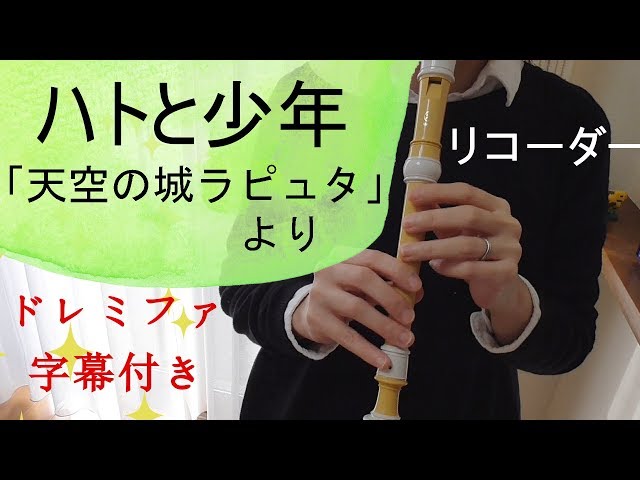
An insert song from the film Castle in the Sky, known as one of Joe Hisaishi’s masterpieces.
Its simple, beautiful melody is distinctive and symbolizes the pure spirit of adventure and hope of the film’s protagonist, Pazu.
Beloved by Studio Ghibli fans, this classic is perfect for the recorder too! It’s compact and doesn’t have too many notes, so even beginners can enjoy playing it.
Why not perform it at a relaxed pace while picturing the world of the film?
Please give me wingsMurai Kunihiko

Composed by Kunihiko Murai, this song is beloved by many as a classic that sings of a powerful longing for freedom.
Its simple yet touching melody and lyrics expressing the wish to soar across the sky like a bird captivate listeners and won’t let go.
Since its release in 1971, it has continued to be sung at school graduation ceremonies and various events, and in 2007 it was selected for the “100 Best Japanese Songs.” Brimming with the charm of folk music, this piece is also perfect for recorder performance.
Played with a gentle tone, it’s sure to become a wonderful rendition that resonates with listeners’ hearts.
hometownOkanoteiichi

This song is a Ministry of Education shoka first released in 1914 as a song for ordinary elementary schools, and it’s one of those pieces that somehow evokes a nostalgic feeling just from hearing the melody—something worth cherishing.
It’s often used in commercials and as train departure melodies, so we hear it from time to time.
The lyrics are familiar too—so much so that most people have them memorized—but it might be nice to deliberately perform it on the recorder with plenty of emotion.
The recorder’s simple tone suits the beautiful melody very well.