

[Karaoke] A Collection of Japanese Songs for Women in Their 70s to Sing [2026]

From the 1960s to the mid-1970s, when today’s people in their seventies spent their teenage and young adult years, Japanese music produced many different kinds of hit songs that are still loved today.
There are surely many people who still keep songs from that era in their karaoke repertoire.
In this article, we’ve gathered hit songs from back then that we’d love women currently in their seventies to sing at karaoke.
With a richly varied lineup—from enka and folk to kayōkyoku and rock—you’re sure to have a great time.
If you’re a younger person planning to go to karaoke with someone in their seventies, please use this as a reference!
- [For women in their 70s] A collection of songs that are easy to sing even for people who are tone-deaf
- [2026] Recommended karaoke songs for women in their 70s: from enka to Showa-era pop
- Sing-Along Hits! Karaoke Songs That Get Women in Their 70s Excited
- Easy-to-sing songs recommended for women in their 70s: A collection of classic hits perfect for karaoke
- Recommended love songs for women in their 70s: A collection of nostalgic love songs
- Recommended heartbreak songs for women in their 70s. A collection of classic Showa-era breakup masterpieces.
- [For Seniors] Crowd-Pleasers! A Collection of Classic Karaoke Songs
- Tear-jerking songs for women in their 70s: from Showa-era classics to Heisei hits
- A roundup of recommended Japanese songs for karaoke that will excite men in their 80s
- [Karaoke] 70-Something Women Will Get Fired Up! A Collection of Nostalgic Western Songs [2026]
- [Recommended for people in their 70s] Songs that get everyone excited. Songs you’ll want to sing at karaoke.
- Easy-to-sing songs recommended for women in their 90s: A roundup of tracks to try at karaoke
- [Recommended for people in their 70s] Songs that really move you. Beloved classic Japanese hits of the past.
[Karaoke] A Collection of Japanese Songs for Women in Their 70s to Sing [2026] (11–20)
Shiretoko Ryojo (Shiretoko Travel Sentiment)Katō Tokiko

Born in 1943 and raised in Kyoto, Tokiko Kato has carved out a special place in Japan’s music scene.
This song was originally released in 1965 by Hisaya Morishige, and Kato’s 1970 cover became a major hit, securing the song’s place in the annals of Japanese music history in both name and substance.
The piece masterfully weaves together the grandeur of Shiretoko’s natural landscape with the emotions of farewell, resonating deeply with listeners.
Thanks to Kato’s clear, expressive voice and emotive performance, the song has left an indelible mark on many hearts and continues to be loved today.
Choosing this song for karaoke with people in their seventies can create a wonderful shared experience, fostering a bond that transcends time.
Forbidden LoveMoriyama Ryoko

Ryoko Moriyama, who debuted in 1967 and was active in the early years of that era, is one of the indispensable singers in Japan’s music industry.
Her signature song Forbidden Love was released on March 25, 1969, reached No.
1 on the Oricon Singles Chart, and had a major impact on the Japanese music scene at the time.
The song portrays the emotions of a person torn between intense passion and forbidden love.
It especially resonates with those who harbor deep feelings for someone and possess the strong will to overcome opposition from those around them.
The season the sun gave usaoi sankakujougi

Aoi Sankaku Jōgi (The Blue Triangle Ruler) is a leading Japanese folk group formed in 1971.
The trio—Kumiko Nishiguchi, Shigeru Iwahisa, and Mari Takada—drew significant attention in the Japanese music scene.
Their single “Taiyō ga Kureta Kisetsu,” released on February 25, 1972, was a major hit, selling one million copies and winning the New Artist Award at that year’s Japan Record Awards.
The song captures universal themes such as youth, its bittersweetness, and friendship, and it still feels moving and fresh today.
For many in their 70s, it’s a memorable anthem of their youth and a perfect pick to enjoy at karaoke along with fond memories.
Morning of PartingMaeno Yoko

A classic song portraying the pain of a parting romance.
Yoko Maeno’s clear, transparent voice resonates deeply with listeners.
Released in October 1971, it topped the Oricon weekly chart for four consecutive weeks and became a major hit, selling about 557,000 copies in total.
The lyrics, which depict the morning when a farewell is announced, struck a chord with many.
If you sing it at karaoke, it’s recommended to hold memories of someone special in your heart as you sing.
Through this nostalgic song, memories from that time may come back to life.
Drinks for twoAzusa Michiyo

Micho Azusa, a singer who represents the Showa era, is known for this masterpiece that portrays the complexities of adult romance.
Released in March 1974, it ranked 18th on the Oricon year-end chart and earned her a spot on that year’s NHK Kouhaku Uta Gassen.
The lyrics express a desire to share loneliness while accepting a parting.
Azusa’s distinctive voice and expressive delivery further enhance the song’s appeal.
This work is perfect for those with rich experiences in love.
Why not sing it at a relaxed pace while reminiscing about someone special? It’s sure to resonate with your heart.
Angel’s TemptationMayuzumi Jun

Jun Mayuzumi is a singer-songwriter who debuted in 1964.
In particular, her 1968 release “Angel’s Temptation” is known for reflecting on a lost love and portraying its poignancy.
The song weaves a beautiful melody with an emotionally rich vocal performance that deeply captivates listeners.
Mayuzumi’s voice conveys an unforgettable, profound love even as it accepts a farewell, resonating across generations.
Perfect for when you want to sing a bittersweet love song.
[Karaoke] A Collection of Japanese Songs for Women in Their 70s to Sing [2026] (21–30)
Keiko’s Dream Opens at NightFuji Keiko
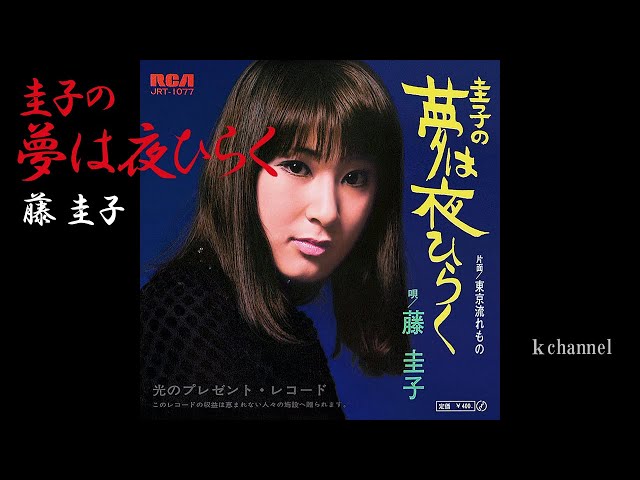
Keiko Fuji was a singer born in Iwate Prefecture in 1951 who became a star in the enka world after debuting with “Shinjuku no Onna.” Her signature song “Keiko no Yume wa Yoru Hiraku,” released on April 25, 1970, is a work whose message still resonates deeply today.
With moving lyrics by Masao Ishizaka and music by Kōmei Sone, the song portrays the symbolic figure of a woman who continues to pursue her dreams and hopes amid the social backdrop of the time in Japan, including the Anpo protests and the anti–Vietnam War movement.
Fuji’s distinctive husky voice evoked empathy and emotion in many listeners.