

Songs that start with the letter “Shi.” Perfect for shiritori or karaoke!

Introducing songs whose titles start with “shi”! When you’re playing song-title shiritori or deciding to do karaoke using only songs that start with “shi,” it can be hard to think of examples on the spot, right? In those moments, please use the songs starting with “shi” introduced here as a reference.
There are many words that begin with “shi,” such as “shiro” (white), “shin” (new), “shōnen” (boy), “shōjo” (girl), and “Shinderera” (Cinderella).
Likewise, many song titles use these kinds of words, so let this article be your cue to explore lots of “shi”-starting songs!
- A roundup of Vocaloid songs with titles starting with “Shi”
- A roundup of songs that start with “So.” Perfect for word-chain games or picking karaoke tracks!
- Songs with titles that start with “Su.” A collection of tracks useful for shiritori.
- Songs whose titles start with “Do” – Solo Karaoke / Song-Title Shiritori
- Songs that start with “se”. Use them as references for shiritori or choosing tracks for karaoke!
- No worries even if you’re not confident in your singing! Simple, easy-to-sing songs for karaoke.
- Mutual-love songs that are easy for women to sing at karaoke
- A compilation of Vocaloid songs with titles that start with 'Su'
- A roundup of songs that start with “ku.” Perfect for shiritori or picking karaoke tracks!
- Songs with titles that start with “Sa”: a roundup you can use for shiritori or karaoke
- Songs with titles that start with “Chi.” Useful as hints for word-chain games!
- A compilation of Vocaloid songs with titles that start with 'Sa'
- Songs with titles that start with a number. Useful for karaoke or playlist selection.
Songs whose titles start with “Shi.” Great for shiritori or karaoke! (491–500)
Showa-style (old-school, traditional) dispositionTendō Yoshimi

Showa Katagi, a masterpiece by Yoshimi Tendo released in February 2024.
Among her recent songs, this one has been a particularly big hit, so those who regularly listen to enka will likely find it familiar.
While the melody follows the classic enka style, it doesn’t feature the kind of vocal ornamentation with repeated complex pitch rises and falls.
The vocal range is narrow and centers on the mid-to-low register throughout, so even those who can’t sing high notes can perform it without issue.

Showa spiritTendō Yoshimi

Speaking of Yoshimi Tendo, she’s not only renowned for her overwhelming vocal power but also for the emotional richness of her singing.
Among her works, “Showa Gokoro” stands out as especially full of emotion and, moreover, easy to sing.
While many people may find it powerful, its range is surprisingly narrow, so even those with a lower or limited vocal range can sing it comfortably.
The kobushi (ornamental vocal turns) are also relatively easy, making it a great addition to the repertoire of enka beginners.
Shirake Bird OndoKomatsu Masao

That nostalgic song born from the TV show “Migoro! Tabegoro! Waraigoro!” Released by Masao Komatsu in 1977, this unique ondō-style tune comically shifts through the directions—south, west, north, east—while he sings.
Its lyrics satirize the then-popular notion of the “apathetic generation,” blending social irony with plenty of humor.
Known as one of Komatsu’s signature songs, it was also included on the album “Komatsu no Ooyabun.” Originating from a sketch on the show, it was promoted as a tie-in with “Migoro! Tabegoro! Waraigoro!” It’s perfect for livening up parties or karaoke.
Perhaps it’s a song that gives you the composure to laugh off life’s bitter moments.
Shapes Of HappinessMatsuda Seiko

A pop song produced by Noriyuki Makihara that gently sings about the individuality and forms of happiness everyone possesses.
It’s included on the commemorative album celebrating the 45th anniversary of Seiko Matsuda’s debut, “Eternal Idol, Eternal Youth, Seiko Matsuda ~45th Anniversary Ultimate All-Time Best~.” Matching the current era that values diversity, the song delivers warm hope to listeners through Matsuda’s emotional vocals.
It’s perfect for when you want to feel positive or take a fresh look at your true self!
New WorldMoriyama Naotaro

This is a ballad that weaves together feelings for one’s father and mother.
It was created as the theme song for Naotaro Moriyama’s documentary film “Where Is This Wonderful World?” and released in March 2025.
The song, which reflects on feelings for a mother lost in early childhood, is marked by a gentle melody carried by acoustic guitar and piano, and a delicate vocal performance.
Describing heaven as a “new world” is such a beautiful sensibility.
Why not give it a listen when you want to reflect on the bonds and love of family?
Girl Ashiina mota

The anxiety, regret, and lingering attachment trapped in the lyrics shake my heart.
“Shoujo A” by Powapowa-P, a.k.a.
Mota Shiina, was released in 2013.
It lays backward-looking emotions over a light, band-driven sound, and that contrast draws you in.
I can’t help but listen to it while overlaying it with my own life.
There are key changes, but none of the chords themselves are particularly difficult.
I think it’s great practice for making quick chord changes at a fast tempo.

Because I’m only gonna be happy, you know.Kishidan
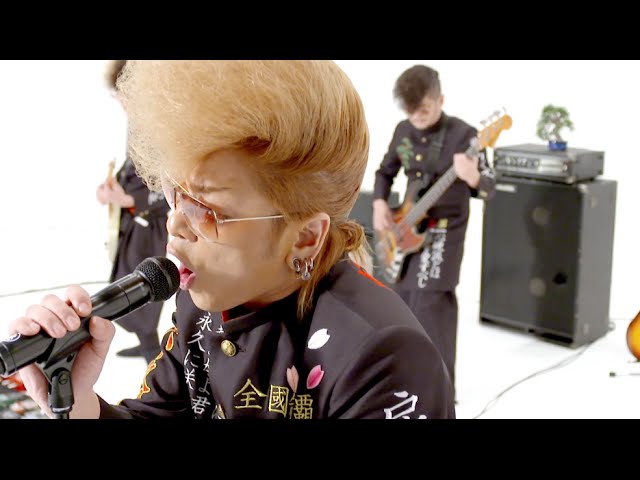
A gem of a love song by Kishidan that passionately conveys eternal love with manly spirit.
The lyrics, which pledge nothing but to make the other person happy and straightforwardly depict a future with the one you love, deeply resonate with couples in love.
The resolve to uphold unchanging love—even with gray hair or baldness—is expressed at times powerfully, at times humorously.
Released in February 2015 as their 18th single, this piece was reportedly written by Show Ayanokoji on a Shinkansen, based on his experience at a friend’s wedding.
It’s ideal for celebrating anniversaries, wedding performances, or as proposal background music—a song that gives voice, through music, to feelings that are hard to express honestly.