

Songs by Showa-era idols that you’ll want to listen to now, in the Reiwa era!

In the Showa era, many hit songs were released by singers known as “idols.” At the time, music genres weren’t categorized as finely as they are today.
From quintessential “Showa kayō” numbers to rock-influenced tracks and techno-tinged sounds, the scene was a bit of a genre melting pot—but that eclecticism is part of what makes Showa pop music so appealing to listen to.
Many artists who are now respected, full-fledged singers also came from this scene.
We hope you’ll enjoy the unique atmosphere of the Showa period through footage and vocals from their youthful, fresh days.
It can also be fun to pay attention to their fashion and hairstyles as seen in the videos!
- Thrilling to Cool Showa-Era Tunes! Classic Songs from Female Singers and Artists of the Showa Period
- [Revisited] A roundup of popular and classic Showa-era songs that are trending now [2026]
- Popular Showa-era pop. Timeless hit songs.
- Revival hits driven by social media! Classic Showa-era songs popular with Gen Z
- Classic and hit songs by nostalgic Japanese idols from the 1970s
- Classic and hit Japanese pop songs from the nostalgic 80s
- A collection of nostalgic hit songs and classics from the 70s
- Showa-era love songs: A roundup of timeless love songs cherished across generations
- Popular 80s hits for karaoke. Sing kayōkyoku and pop songs!
- A Showa-era song that had a revival hit on YouTube Shorts
- Cool songs from the Showa era. Masterpieces from Showa that shine with sensuality, passion, and rugged charm.
- Songs of Summer from the Showa Era: A comprehensive introduction, from nostalgic Japanese hits to timeless favorites still popular today
- A collection of iconic, cool Showa-era kayōkyoku classics sung by male vocalists
Male (1–10)
As long as the sun is in the skynishikino akira

Akira Nishikino, whose nickname “Star Nishikino” has really taken hold, often steals the show—even more than some comedians—on variety programs, whether he’s being dropped into trapdoors or gliding across snowy fields on a bicycle.
His signature song is ‘As Long as There’s a Sun in the Sky.’ The easy call-and-response in the A-melody makes it a karaoke favorite.
Its straightforward lyrics, themed around ‘a love that never changes,’ are quintessential Showa-era pop.
Of course, it’s also a must-recommend track that’s bound to resonate in the Reiwa era too!
Boys and girlsGō Hiromi

Hiromi Go has been running at the forefront of the Japanese pop scene for over 50 years.
When he debuted, his catchphrase was “the younger brother of Four Leaves,” and now he’s like an older-brother figure in the entertainment world.
This song, Otoko no Ko Onna no Ko (Boys and Girls), was released in 1972, and the following year, 1973, he made his first appearance on the Kouhaku Uta Gassen stage with it.
Even the title “Boys and Girls” now carries a nostalgic Showa-era ring in the Reiwa era, as society moves toward gender neutrality.
The electric guitar chasing after Go’s youthful, sweet vocals is brimming with nostalgia!
A Boy Riding a DolphinShiro Michiru

When Michiru Jō appears on variety shows, he often shows up together with a stuffed dolphin.
That’s how big of a hit his 1973 debut single “The Boy Riding a Dolphin” was.
The song starts off slowly and then shifts to an up-tempo groove, flowing straight into a catchy chorus—a structure that may have been uncommon at the time.
If you listen to it in our somewhat gloomy Reiwa era, it’s sure to lift your spirits.
By the way, Jō was known as one of the “New New Big Three,” alongside Shinya Aizaki and Makoto Toyokawa.
Subtly flashy (bling-bling, but nonchalant)Kondō Masahiko

Released in 1981, this was the fourth single by Masahiko “Matchy” Kondo, who was hugely popular at the time as part of the Tanokin Trio.
Its momentum is evident from the many awards it received, including the Best New Artist Award at the 23rd Japan Record Awards and the Best New Artist Award at the 10th FNS Music Festival.
The lyrics by Ayumu Date—who also teamed up with him on another signature song, “Orokamono” (“Fool”)—are outstanding, and the eye-catching title is just what you’d expect.
The lyrics cleverly use many contrasting words, which makes them really interesting.
Also worth noting is Matchy’s fresh energy as he rides the driving rhythm and delivers a powerful performance from start to finish!

Male (11–20)
Love Dial 6700Fingā 5
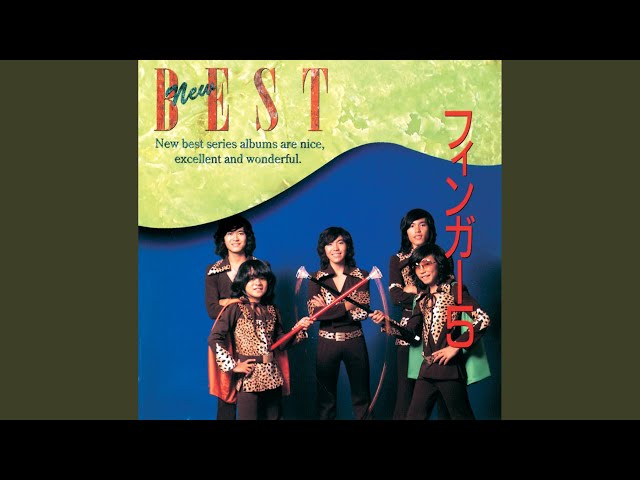
As you know, this Okinawa-born idol group was formed by five siblings, including one girl.
Their mother chose the group’s name, apparently inspired by the Jackson 5, who were at the height of their popularity in America at the time.
What feels nostalgic about their 1973 release “Koi no Dial 6700” is, quite simply, the “dial.” In the Reiwa era, it’s rare to even see a rotary-dial phone anymore.
The high tenor voice of the fourth son, Akira, who served as the lead vocalist, also brings back memories, and the shouted lines in the song were all the rage back then.
Alongside “Gakuen Tengoku,” it’s a Finger Five track we’d love to hear in the Reiwa era.