

Showa-Era Mutual Love Songs: Heart-Pounding! Timeless Classics Depicting Pure Romance

Have you ever felt your heart flutter when you suddenly hear an old song? The straightforward expressions of love and beautiful melodies of Showa-era songs still move us with a fresh sense of wonder even today.
In this article, we introduce “mutual-love” songs from the Showa period that are brimming with that charm.
You can have fun in many ways—sing them at karaoke to liven things up, listen closely while thinking of someone special, or even overlay them with a love you’re experiencing right now.
Why not lose yourself in the blissful scenes of love along with a favorite tune?
- Showa-era love songs: A roundup of timeless love songs cherished across generations
- Just listening makes you feel happy! Heisei-era mutual love songs
- Unrequited love songs from the Showa era. Those nostalgic classics.
- Mutual love songs that are easy to sing at karaoke
- [Mutual Love Songs] Romance tracks that make you feel happy—recommended for women
- Mutual love songs recommended for women in their 20s: classic and popular Japanese hits
- [Mutual Love Songs] A curated selection of sweet and bittersweet love songs about mutual affection!
- Today's Mutual Love Songs: Full-on Happiness Aura! A Collection of Exquisite Love Songs
- Mutual-love songs that are easy for women to sing at karaoke
- Mutual Love Songs Recommended for Men
- Mutual Love Songs: Recommended for Middle Schoolers! Popular Tracks that Portray Bittersweet Romance
- Recommended for couples! Reiwa-era love songs that warm the heart
- Recommended mutual-love songs for teenage girls: classic and popular Japanese hits.
[Mutual Love Songs of the Showa Era] Heart-Pounding! Timeless Masterpieces Depicting Pure Love (1–10)
Blue Coral ReefMatsuda Seiko

It’s a masterpiece with a breezy, poppy melody that conjures up dazzling summer scenes! Words that evoke southern islands and the sea line up, and the pure thrill of love comes straight through, making your heart flutter.
This was the second single, released in July 1980.
It was later included on the album “SQUALL,” and in 2008 it also drew attention as a commercial song featuring Kyoko Fukada.
The piercing high notes feel fantastic, making it perfect for livening up karaoke with a spirited performance! It’s also recommended for those who want to think of someone they love and bask in the feeling of a happy, mutual romance.
A Love Game Between a Man and a WomanHino Mika, Niinuma Kenji

Otoko to Onna no Love Game, featuring an enticing duet by Mika Hino and Kenji Niinuma.
The song originally gained attention in 1986 when it was used in a commercial sung by Tetsuya Takeda and Yoshimi Ashikawa, and it became widely known in 1987 through performances by Mika Hino and Shiro Aoi.
This version was re-recorded in 2014 with Kenji Niinuma as a new partner.
The love story unfolds in a conversational, back-and-forth style, drawing listeners into its intimacy and dramatic flair.
The mature, seasoned vocals suggest a sophisticated battle of wits between adults, making it perfect for those who want to sing and enjoy it at karaoke or in a snack bar setting.
A Love Story in GinzaYūjirō Ishihara · Junko Makimura

Set against a neon-lit, sophisticated cityscape, this quintessential Showa-era duet song portrays a sweet romance.
The captivating vocals of Yujiro Ishihara and Junko Makimura intertwine, beautifully conveying the urban night atmosphere and the subtle distance between the two.
Released in January 1961, it became a massive hit, officially selling over three million copies.
After being featured as an insert song in the film “Kaze ga Tsuyoi Hibi” (From Town to Town) released the same month, it later became the theme song of a film of the same name in March 1962.
This Showa classic makes listeners’ hearts race with the pure thrill of love.
[Showa Era Mutual Love Songs] Heart-pounding! Timeless masterpieces that depict pure love (11–20)
Hymn to LoveKoshiji Fubuki

When it comes to chanson masterpieces known as global standards, this is the one.
Made widely beloved in Japan through performances by Fubuki Koshiji, she cemented her status as the “Queen of Chanson.” It carries an ultimate vow of love: needing nothing as long as one is with the beloved.
Released in March 1954, it’s also known for having lyrics adapted into Japanese by her close collaborator Tokiko Iwatani.
Brimming with profound affection and resolve, this piece is perfect as wedding BGM to express the determination of two people about to walk through life together.
Love without meetingUchiyamada Hiroshi to Cool Five

A number by Hiroshi Uchiyamada and the Cool Five that portrays the love of two people who cannot meet.
Precisely because there is a distance that keeps them apart, their love blazes even more fiercely.
That bittersweet yet passionate longing is sung through Kiyoshi Maekawa’s rich, resonant low voice.
Tears, dreams, and flowers—all sway violently like a life burning crimson, despite never being able to meet.
The contradictory feeling of continuing to love without seeing each other presses on the heart alongside the sounds of saxophone and piano.
Although released in December 1969, the song topped the Oricon Weekly Singles Chart for three consecutive weeks in February 1970, becoming the group’s only number-one hit.
Why not listen to it when you’re in the midst of that frustrating kind of love where you want to meet but just can’t?
Love MemoryMatsuzaki Shigeru
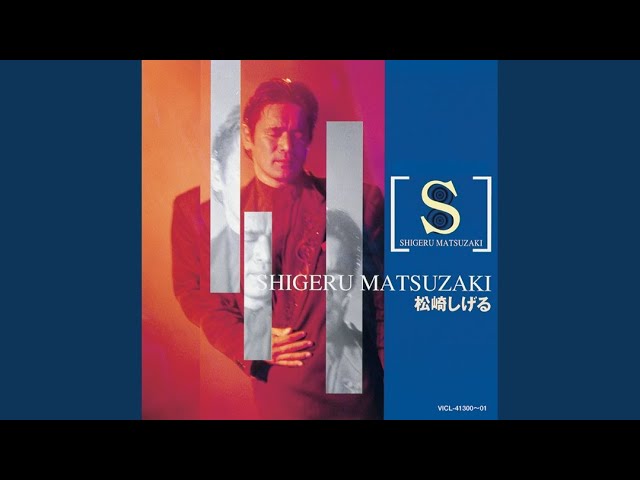
This is a gem of a love ballad sung by Shigeru Matsuzaki.
The lyrics, celebrating deep affection and the joy of life, overflow with a pure vow of eternal love.
Released in August 1977, it became a major talking point as the theme song for Glico Almond Chocolate, starring Tomokazu Miura and Momoe Yamaguchi in the commercial.
That same year, Matsuzaki made his first appearance on NHK’s Kōhaku Uta Gassen, and the following year the song was selected as the entrance march for the 50th National High School Baseball Invitational Tournament.
It’s a piece you’ll want to listen to while reflecting on those irreplaceable memories of love that everyone experiences at least once.
The Day Love Was BornFujitani Miwako, Ouchi Yoshiaki

The duet song by Miwako Fujitani and Yoshiaki Ouchi, released in February 1994, was produced as an insert song for the Nippon TV drama series “Sono Uchi Kekkon Suru Kimi e.” The lyrics by Yasushi Akimoto beautifully express the moving moment when love blossoms and an everlasting vow.
Depicting a special night for just the two of them lit by candlelight, the song is striking for its tone that conveys mutual support and the strength of love.
It has also become popular as a karaoke duet.
It’s a perfect song not only for couples to listen to together but also for moments when you want to reaffirm your feelings for the one you love.
In conclusion
The timeless Showa-era classics that sing of straightforward love still gently fill our hearts without losing their luster. Those mutual-love songs you find yourself humming in unguarded moments are full of weighty words and rich scenery. Accompanied by melodies that embrace the pure feeling of thinking of someone, may you enjoy a calm and happy moment.