

Popular Showa-era pop. Timeless hit songs.

Even when we say “the Showa era” in a single breath, it actually spanned more than 60 years—a long stretch during which, just off the top of my head, countless classics were born: folk songs of the ’70s, Group Sounds, the New Music of the ’80s, and of course kayōkyoku (Japanese pop) as well.
In this feature, we’ll be introducing plenty of those nostalgic Showa pop songs!
For those who experienced the Showa era in real time, we hope this brings back memories from those days.
And for those born in or after the Heisei era, we’ve tried to curate a selection broad enough to let you savor the flavor of Showa.
The genres are admittedly all over the map, but that, too, was part of the charm of the Showa music scene, I believe.
Please enjoy this collection of captivating Showa-era classics!
- A collection of nostalgic hit songs and classics from the 70s
- [Classic Showa Kayō Hits] The captivating Showa-era pop songs beloved even by younger generations
- Classic and hit Japanese pop songs from the nostalgic 80s
- [Revisited] A roundup of popular and classic Showa-era songs that are trending now [2026]
- Popular 80s hits for karaoke. Sing kayōkyoku and pop songs!
- Just listening to it purifies the heart... A healing song born in the Showa era.
- Heart-touching, tear-jerking masterpieces from the Showa era
- A collection of iconic, cool Showa-era kayōkyoku classics sung by male vocalists
- Nostalgic yet fresh!? Classic masterpieces of Japanese rock from the 1970s and 1980s
- Showa-era nostalgic songs: Popular ranking
- Memorable Youth Songs: Looking Back on New Music Masterpieces from the 1970s–80s
- Thrilling to Cool Showa-Era Tunes! Classic Songs from Female Singers and Artists of the Showa Period
- [Nostalgic Hits] Smash Hits with the Showa Generation! Classic and Popular Songs Sung by Female Vocalists
Popular Showa-era pop songs. Timeless hits (1–10)
Forever with youKayama Yūzō

The singer Yuzo Kayama, affectionately known as “Wakadaisho,” never ceases to amaze us with his youthful looks and boundless energy.
When it comes to his classic songs, many people probably think of “Kimi to Itsumademo.” Released in 1965, the song was not only a major hit but also gave rise to one of Kayama’s most famous lines: “Man, I’m so happy.” It feels like, compared to today, the Showa era had more things like this—memorable elements beyond just the music itself.

Seaside BoundZa Taigāsu

This is The Tigers’ second single, released in 1967.
Less than three months after their debut, it became a massive hit, selling 400,000 copies and cementing the band’s popularity.
With its cheerful shouts and light, breezy guitar sound, it’s an irresistibly upbeat track that makes your body start keeping time before you know it.
Haven’t you ever tried to show off a little in front of some girls with a blue sky and white sandy beach right before your eyes? Why not listen to it while basking in the glittering memories of summers past?

interaction; friendly contact; bondingNakamura Masatoshi

Masatoshi Nakamura has produced numerous masterpieces as an actor.
He also began working as a singer in the 1970s and released several hit songs.
Fureai here is an insert song from the youth drama Ware Ra Seishun!, which centers on rugby and in which he stars; it was also his debut single.
If you know the drama, you might picture the club members deepening their bonds through rugby.
The song is also used in Hitoshi Matsumoto’s film Big Man Japan, but despite being the same track, the atmosphere there is quite different.
Perhaps one of this song’s unique charms is how dramatically its mood can change depending on the part that’s used.
Popular Showa-era pop songs: Timeless hits (11–20)
A Good Day to Set Out on a JourneyYamaguchi Momoe

It was Momoe Yamaguchi’s 24th single, released in November 1978.
Selling over one million copies in total, it became her biggest hit.
The composer was Shinji Tanimura, who at the time was riding high with his own group Alice’s massive success, and the song was created as a travel promotion anthem for the then-JNR (now JR).
With a melody and lyrics that evoke a touch of melancholy, listening to this song somehow makes you feel like setting off on a journey.

Light Blue RainYagami Junko

Junko Yagami is known for her strikingly clear voice that seems to soar endlessly.
Her fifth single, “Mizuiro no Ame” (Sky-blue Rain), released in 1978, became a huge hit, selling 600,000 copies.
Covered by numerous artists—including Tatsuya Ishii of Kome Kome Club, Aya Matsuura, and actress Mone Kamishiraishi—it has become a timeless classic loved across generations.
The song portrays a lover who gently accepted her without reproach, and the crushing regret that wells up only after that precious person has gone, all sung over a melancholic, wistful melody.
The Day the Seagulls FlewWatanabe Machiko
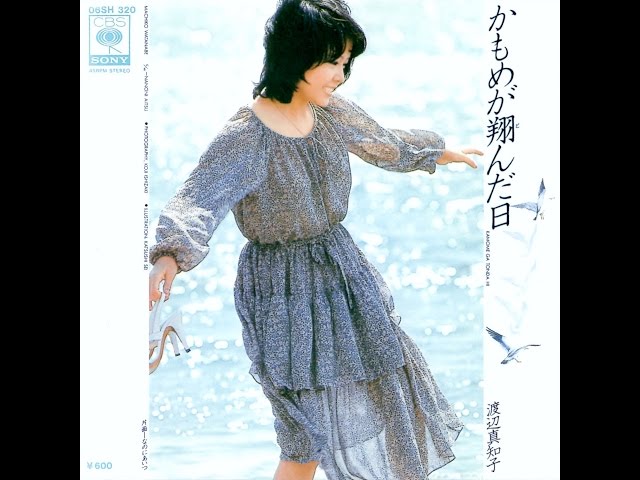
When you hear the word “Harbor Light,” there’s only one song that comes to mind! It’s Machiko Watanabe’s big hit, released in 1978.
The composition is by Machiko Watanabe herself.
It was only her second single after debut, and she finally received lyrics from a professional lyricist—a dream come true.
She says the melody came to her the moment she read the poem.
In the song, a woman who can no longer endure her loneliness goes to the sea alone, and a single seagull glides leisurely past her.
As she watches it, thinking of the man she parted with, she murmurs, “You don’t feel lonely even when you’re alone, do you?” The poignant scene unfolds before your eyes.
Some listeners might find themselves tearing up as they recall their own sad romances from the past.
Blue ChateauJakkī Yoshikawa to Burū Komettsu

In the Showa era, many genres like folk and disco music became hugely popular.
Among them, Group Sounds might be the genre that most strongly conveys the musical character of the 1960s Showa period.
Of all the Group Sounds tracks, a work I especially recommend is Blue Chateau.
It’s a signature song by Jackey Yoshikawa and His Blue Comets, and it even won the Japan Record Award.
It was originally intended to have musical qualities on par with Western pop, but due to various circumstances, it ended up with a distinctly Japanese melody.
Although it became a hit, its composer, Tadao Inoue, apparently regards the song as a blemish on his career (lol).