

[Snake Quiz] Surprisingly fascinating once you know! Snake ecology & characteristics

Snakes have often been worshiped as messengers of the gods.
You don’t see them much in everyday life, but some people keep them as pets.
Some find their big, bright eyes and slithering movements cute, while others are put off by their distinctive scales—so they can be a creature people either love or dislike.
In this article, we’re introducing a quiz about snakes!
Because they’re rarely seen, many people may not know much about them.
We’ve turned snake biology and characteristics into a quiz, so give it a try and deepen your knowledge of snakes!
- [Snake Trivia] Things you actually don’t know about snakes. Packed with astonishing facts!
- [For Elementary School Students] 3-Choice Quiz to Deepen Knowledge of Living Things
- [Animal Quiz] Learn about animals through quizzes!
- Surprisingly unknown? Trivia Quiz [Multiple Choice: 3 Options]
- [Dog Biology] Things You Might Not Know? Dog Trivia
- [For Elementary School Students] Animal Quiz to Learn Knowledge and Fun Facts
- A collection of trivia quizzes about penguins: little-known facts about their ecology and fun tidbits.
- Trivia Quiz About Cats: Things You Think You Know but Don’t?
- Trivia quiz with useful tips to know: fun facts that come in handy at school or at home [for kids]
- [Trivia] Do you know the answers? A roundup of animal quizzes
- Insect trivia quiz: A collection of fun facts and questions about bugs for children.
- Can you solve it if you love cats? A 3-choice cat trivia quiz
- [Interesting] Compilation of Trivia Quiz Questions
[Snake Quiz] Surprisingly Fun to Learn! Snake Ecology & Features (1–10)
Are snakes carnivores or herbivores?

Just as people are sometimes told to eat vegetables as well as meat, humans are considered omnivores that eat both meat and plants.
However, not all animals are omnivores; many species eat only meat or only plants.
When considering whether snakes are carnivores or herbivores, it’s easy to tell not only from our image of snakes but also by thinking about the food sold for snakes in pet shops.
The answer is carnivores.
What they eat varies by size and species, but all snakes around the world are considered carnivorous.

“Sternum,” “ribs,” and “spine”: which of these bones do snakes not have?
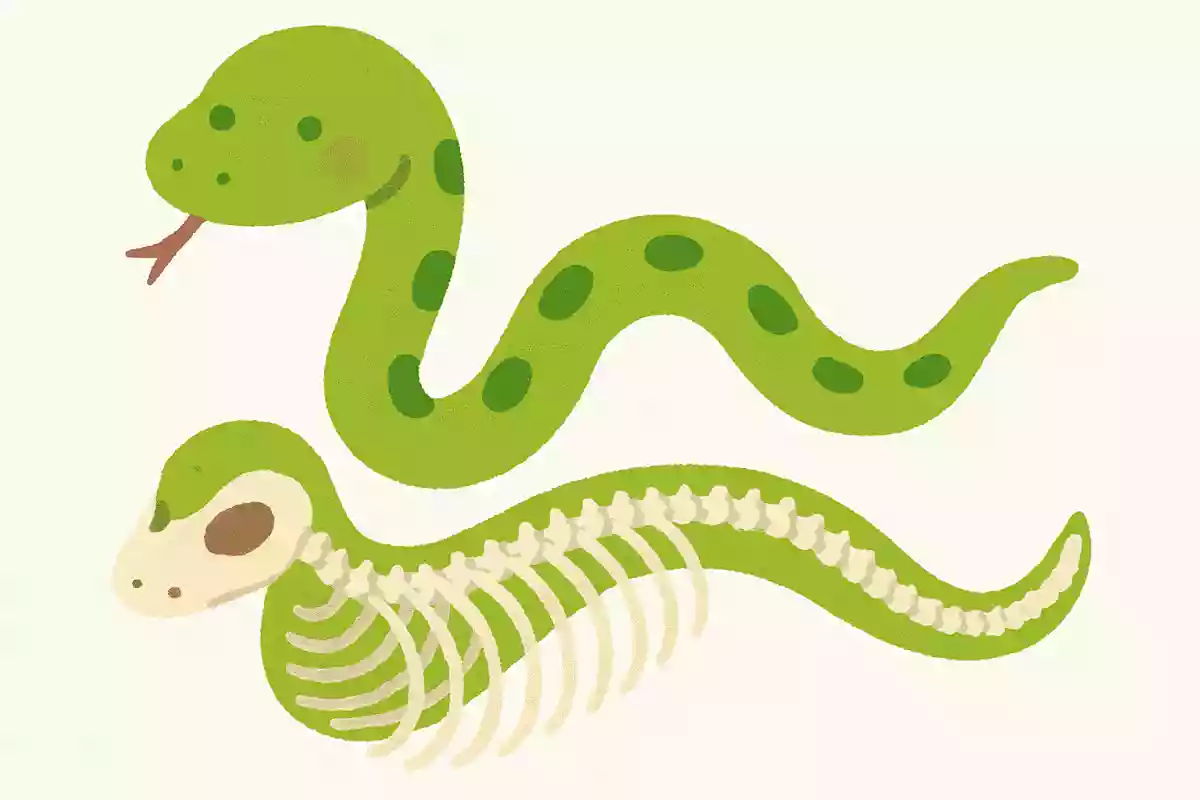
A snake’s appearance—a long body extending from its head—seems completely different from a human’s body structure.
Even so, snakes and humans share some bones, and learning their similarities and differences helps us understand snake biology.
Among bones that humans have but snakes do not, which is it: the sternum, the ribs, or the vertebrae? The answer is the sternum, which is located at the front of the chest.
Because snakes lack a sternum, they can cope with swallowing large prey by expanding their ribs.
What is the name of the longest snake in the world?
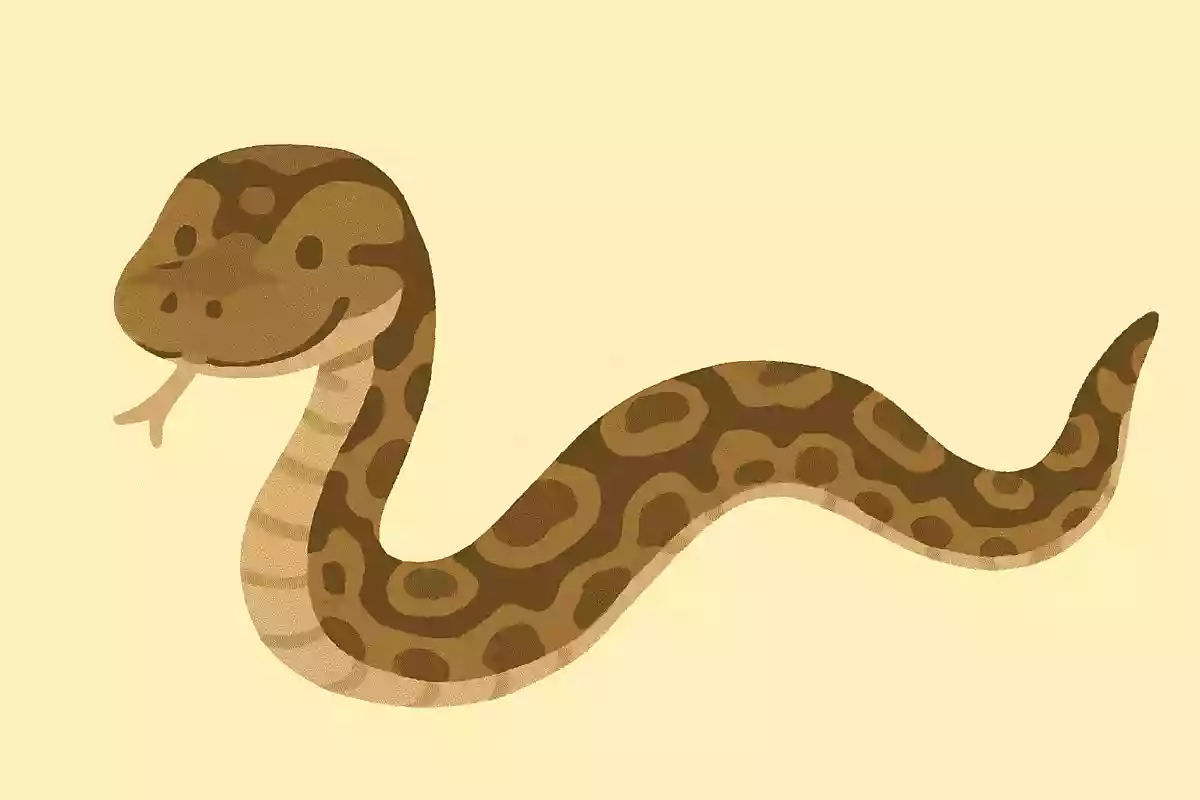
When it comes to snakes, their most notable feature is their long bodies.
Their length varies not only over their lifetime but also by species.
Among these long snakes, which species is considered the longest in the world? As a hint: it mainly inhabits tropical regions, and it’s not just long but also very thick—some might guess from that.
The answer is the reticulated python, a species that holds the record as the longest among snakes at 10.1 meters.
Although it is nonvenomous, there have been cases of deer and even humans being preyed upon—truly a snake that can be called a monster.
[Snake Quiz] Surprisingly fascinating once you know! Snake ecology & characteristics (11–20)
Where do snakes hibernate?
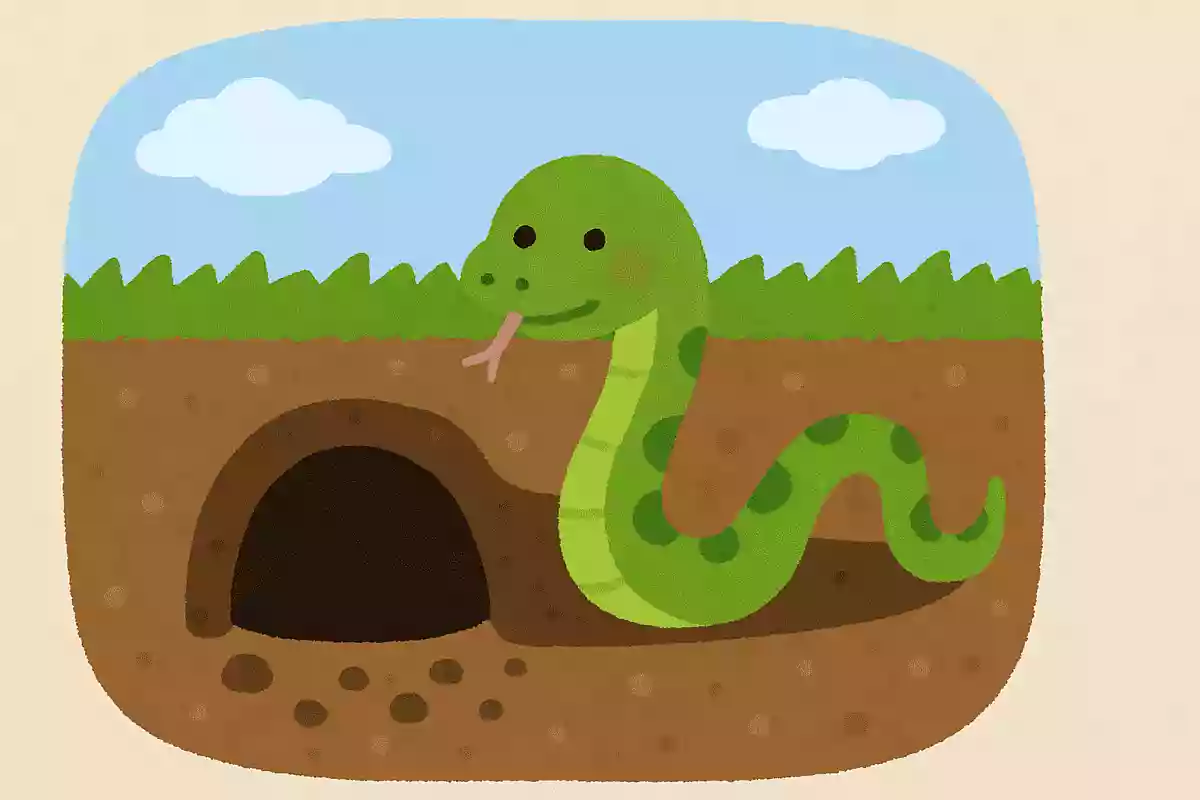
There are animals that spend the cold winter hibernating to get through a season that doesn’t agree with their bodies.
Taking snakes as an example, where do they hibernate—given that hibernation is a habit humans don’t have? If you think about what kind of place can block the cold winter winds, or what environments offer even a little protection from the cold, you might figure it out.
The answer is underground.
Rather than a warm place, it’s more about a place with minimal temperature fluctuation.
Besides soil, it’s said they may also burrow into sunless spots or even the bottoms of bodies of water.
Do snakes have good vision, or do they not see well?

As the saying “a frog being stared at by a snake” suggests, the eyes of a snake fixated on its prey evoke fear and power.
This raises a question about snake eyes: what are a snake’s eyesight and vision actually like? If you think carefully about where their eyes are positioned and whether they blink, you might figure it out.
The answer is that they don’t see well; compared to other reptiles, their visual acuity is inferior, and instead it’s said they have developed the ability to detect infrared.
Why don’t snakes have limbs?

Regardless of their size, many animals have limbs.
That’s why seeing a legless snake slithering around feels so mysterious.
Snakes don’t have limbs, but they possess structures that serve a similar function, allowing them to move and advance.
So, did they never have limbs to begin with? There are various theories about snake limbs, but it’s said that snakes evolved from lizards and that they did have limbs in the past.
It’s believed the limbs disappeared because they got in the way when moving through leaf litter or over the ground.

How many main types of snake locomotion are said to exist?
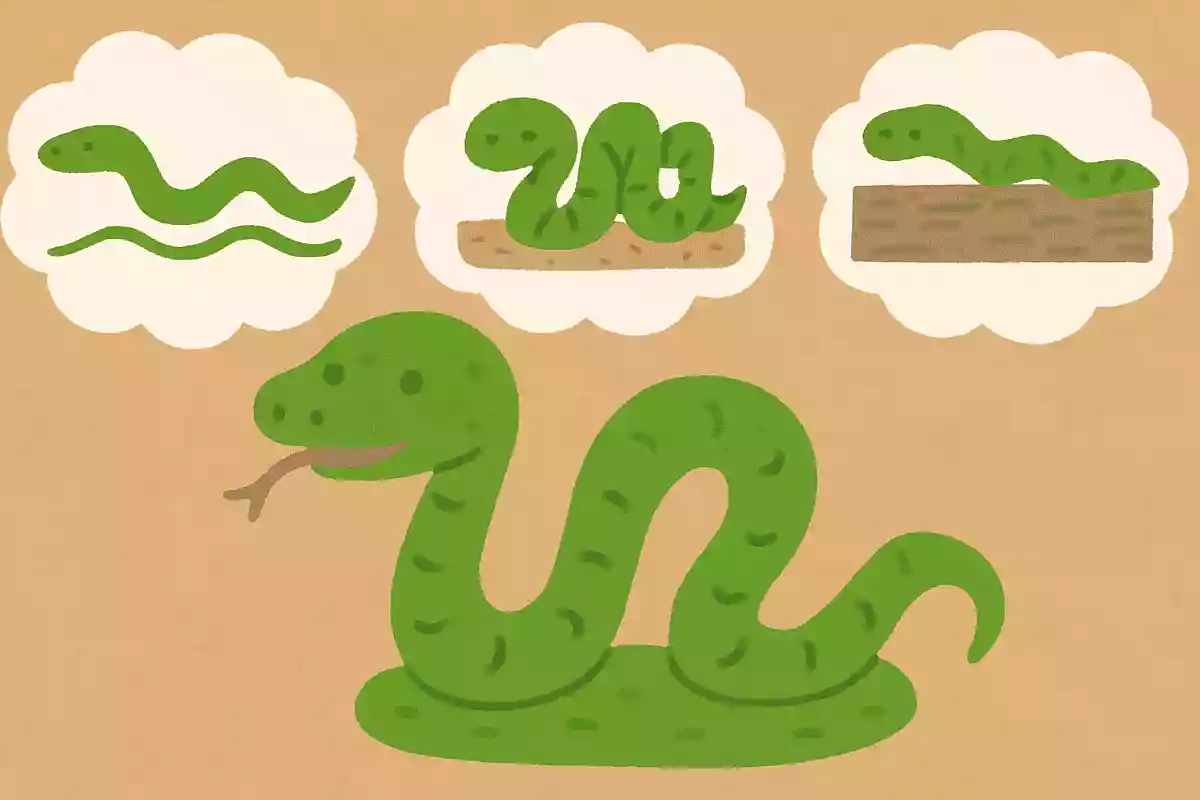
There are many kinds of snakes, and we tend to picture their appearance in motion as varying by species.
So, into how many types are the ways snakes move—methods that differ by species—classified? Even when they look similar, different mechanisms may be at work inside their bodies, so judging by appearance alone can be tricky.
The answer is four types: primarily serpentine (lateral undulation), along with rectilinear (straight-line), sidewinding, and concertina (accordion-like) locomotion.