
A must-see for beginner composers! A roundup of classic chord progressions

In music, the term “chord” (waon in Japanese) broadly refers to the sound produced when two or more musical tones of different pitches are played simultaneously.
The music you listen to every day is also composed based on various types of chord progressions, where multiple chords unfold over time.
Of course, there are songs that consist of just a single chord, and the more you learn, the deeper the world of chord progressions becomes.
In this article, we’ll introduce a roundup of classic chord progressions frequently used in J-pop and Western music alike!
If you’re thinking of starting to compose but aren’t confident about chord progressions yet, be sure to use this as a reference.
- [Composition] A roundup of famous songs that use classic chord progressions [by ear]
- [J-Pop] List of Popular and Famous Songs That Use the Canon Progression [2026]
- Playable with easy chords! A collection of practice songs for acoustic guitar beginners
- [Japan] A collection of J-pop with a traditional Japanese (wa) vibe and Japanese-style taste
- [Rock] Easy Band-Style Vocaloid Songs for Beginners [Simple]
- [For Beginners] Play on the Piano! A Collection of Songs Using the Canon Progression
- [Guitar] Easy Chord Progressions! A Compilation of Recommended Japanese Songs for Singing and Playing
- [Children’s Song] Easy Even for Piano Beginners! Introducing Nursery Rhymes with Simple Chords
- [Piano Beginners] J-POP That Looks Hard but Is Surprisingly Playable [2026]
- Songs that use the Canon progression that I want to try playing on the piano
- A must-see for anyone who wants to try piano-and-vocal performances through code! From nostalgic oldies to the latest hits, all introduced at once.
- From rock numbers to dance tunes! Cool songs of the Reiwa era
- [Easy Chords] A collection of popular Japanese songs that are easy to play on guitar
A Must-See for Beginner Composers! A Roundup of Classic Chord Progressions (11–20)
justicezutto mayonaka de ii no ni.
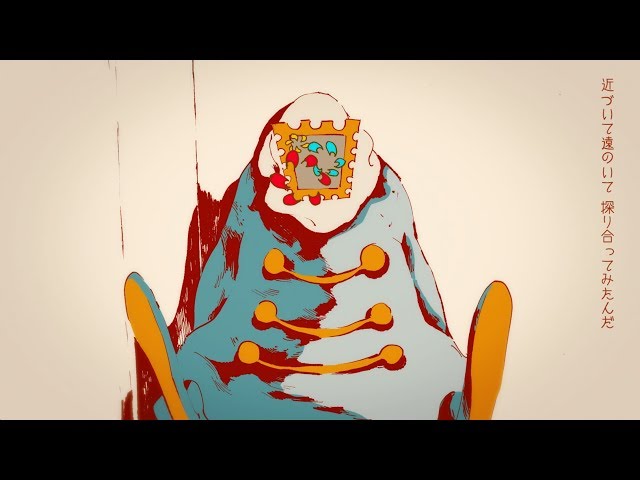
The chorus of ZUTOMAYO’s 2019 digital single “Seigi” uses the “4563 progression.” What’s distinctive and emotional is that the final “3” is replaced with the substitute for “1,” the C/E chord.
The same chord progression is used in the intro to BUMP OF CHICKEN’s “Sharin no Uta.” Also, Yorushika’s “Dakara Boku wa Ongaku o Yameta” uses a plain “3,” i.e., Em instead of C/E, featured in its piano-melody-driven intro.

In conclusion
Even if you don’t know music theory, by comparing the sounds of the songs introduced this time, you may have realized that songs sharing the same chord progression pattern also share a similar vibe. Of course, it’s also fascinating that sometimes, even with the same pattern, a song can feel completely different. Try analyzing your favorite tracks from the perspective of what kinds of chords the artists use in their composing process!