

Songs that use the Canon progression that I want to try playing on the piano

The chord progression of the piece commonly known as “Pachelbel’s Canon” is called the “canon progression,” and it’s been used in many hit songs.
Even if you’re not well-versed in chords, if you compare several songs that use the canon progression—even just in part—you’ll likely sense a shared sound.
Because the canon progression has a very beautiful resonance, it fits perfectly in piano arrangements as well.
In this article, we’ve compiled songs that use the canon progression—both Japanese and Western—that you’ll want to try playing on the piano!
Songs Using the Canon Progression You’ll Want to Try on Piano (1–10)
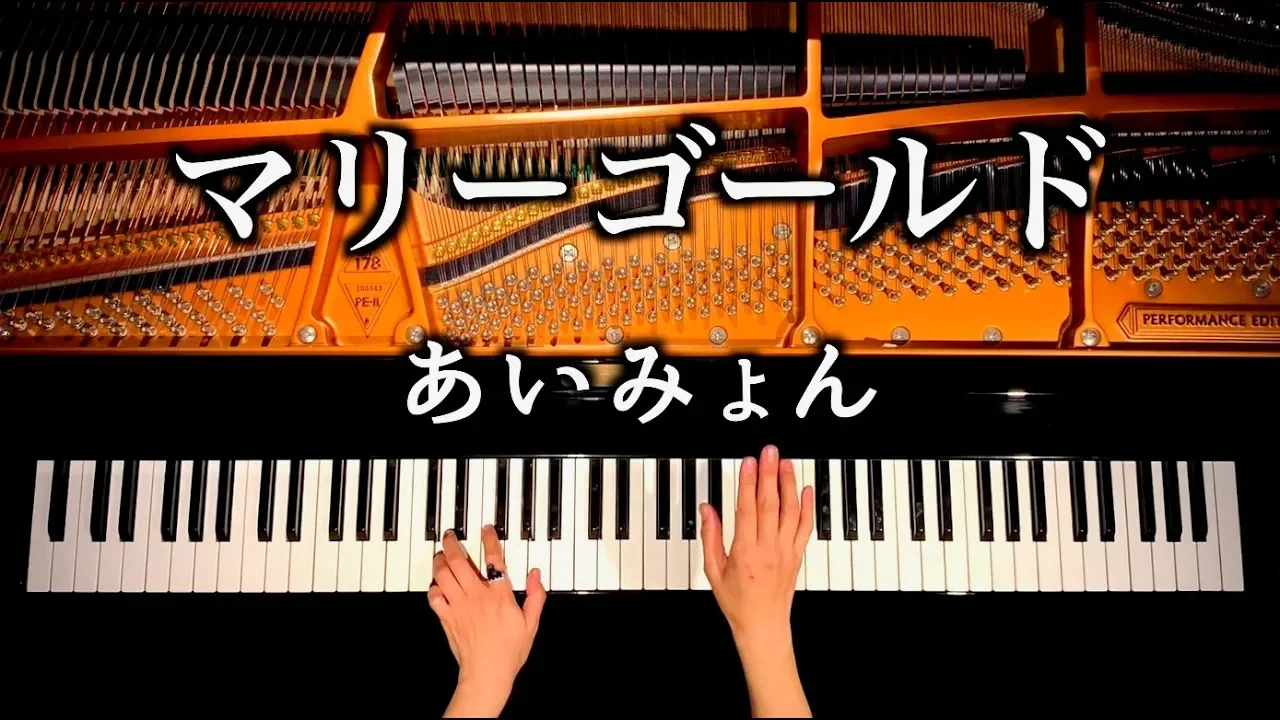
Marigoldaimyon

Aimyon’s hit song “Marigold” has captured the hearts of many young people.
While the tender, heart-tugging lyrics and Aimyon’s unforced, rustic vocals often draw attention, the truth is that the intro and the first verse use a Pachelbel’s Canon progression! Because the same chords repeat and the chord changes are relaxed, it should be approachable even for beginner pianists.
Once you’ve mastered the left hand and can layer the right-hand melody, try adding more chords or incorporating rhythm into the accompaniment to bring it closer to the original track.

The Door to TomorrowKawashima Ai

Born in 2003 as the theme song for a romance reality show, this track captured many hearts with Ai Kawashima’s clear, pure vocals and emotionally resonant lyrics.
It’s a song that could be called the very origin of Kawashima, who made her debut after performing on the streets.
The gentle, comforting melody and lyrics that give you the courage to take a new step make the most of the beauty of the canon progression.
It’s also perfect for a piano arrangement, so it’s recommended for those in love or anyone about to embark on something new.
Played with a tender touch, it’s sure to become a lovely performance that truly speaks to the listener’s heart.
dogwood (flowering dogwood)Hitoto Yo

Released in February 2004, this song has long been loved as one of Yo Hitoto’s signature works.
Born in the wake of the September 11 attacks in the United States, it features lyrics imbued with a prayer for peace.
Its gently flowing melody and deeply expressive words are captivating, and it is known as a classic J-pop ballad.
It is also very popular for karaoke and became one of the most frequently sung songs of the Heisei era.
In addition, it was used on Nippon TV’s “Tuesday Suspense Theater” and in commercials, reaching the ears of many listeners.
The verse section employs the Canon progression, and the calmly shifting chords may contribute to a musical atmosphere that resonates with prayers for peace and profound feelings toward loved ones.
Play it with a spirit of peace.
BelieveSugimoto Ryuichi

Here’s one famous piece that uses the Canon progression.
Released in 1998 as the ending theme for NHK’s “Ikimono Chikyū Kikō” (A Journey of Life on Earth), the work was composed by Ryuichi Sugimoto, who completed graduate studies at the Tokyo University of the Arts and also studied at the University of Music and Performing Arts Vienna.
It is well known as a choral piece often sung at graduation and preschool ceremonies.
The lyrics convey the importance of supporting one another in difficult times and believing in the future.
Its beautiful melody and heartwarming message have resonated with many people and inspired numerous cover versions by various artists.
It’s wonderful as a choral piece, and it would also make a lovely arrangement for solo piano.
Christmas EveYamashita Tatsuro

Tatsuro Yamashita’s “Christmas Eve,” a staple Christmas song, is actually one of those pieces that features the canon progression! Throughout the song, repeated patterns of the same chords are interwoven.
The sense of comfort and calm you feel when listening may come from the stability of the canon progression.
Because the accompaniment follows a patterned progression, it’s relatively easy to play with both hands on the piano.
Beginners can start with just the bass and melody, while intermediate and advanced players can try various accompaniment arrangements.
Sakura (Solo)Moriyama Naotaro

The music of Naotaro Moriyama, one of Japan’s leading singer-songwriters, uses cherry blossoms—a symbol of spring—as its theme.
This work is a poignant ballad centered on graduation and parting, expressing life’s farewells and new beginnings through the transience of sakura.
Released in March 2003 with an initial pressing of about 1,200 copies, it became an exceptional hit, reaching No.
1 on the Oricon chart in its ninth week.
Its gentle, piano-driven melody and Moriyama’s distinctive vocals resonate deeply with listeners.
It was also used as the ending theme for TBS’s Sekai Ururun Taizaiki and is beloved by many.
The chorus’s chord progression is a classic Pachelbel-style canon progression, a device often used effectively in hit songs.
Even played on piano alone, it’s enough to bring a tear to your eye!
MemoriesMaroon 5

Maroon 5’s “Memories” faithfully reproduces the chord progression of Pachelbel’s Canon.
Because it also contains phrases that are very similar in the melody, some of you may have felt it sounds somewhat alike.
Since the same chords are repeated endlessly, performances can easily become monotonous and dull.
Try playing it while bringing out the beauty of the melody, adding plenty of variation through rhythm, dynamics, and ornamentation!