

Recommended Table Magic Summary [Cards, Coins, etc.]

Table magic is a type of magic that serves as a counterpart to stage magic, which is performed for large audiences on big stages.
As the name suggests, it refers to magic that can be performed on a tabletop, with card magic and coin magic being prime examples.
In this article, we’ll introduce a wide range of table magic.
We’ll cover not only tricks using cards and coins, but also number tricks using paper and pen, money magic, and many other kinds of magic.
Find your favorite tricks, practice them, and perform them for everyone!
- [Easy Magic] Special Feature: Big Collection of Smartphone Magic Tricks
- With Explanations: Easy Magic Tricks for Lower-Grade Elementary School Children — How to Do Simple Tricks
- A roundup of finger tricks: magic you can do using just your fingertips.
- Hilarious magic! Crowd-pleasing tricks perfect for parties and performances
- Cool playing card magic. Card tricks of various difficulty levels.
- [For Elementary School Students] Simple and Amazing! Magic Tricks You Can Do with a Handkerchief
- A roundup of difficult coin magic: coin tricks that use a variety of techniques.
- How to Perform Coin Magic: Revealing the Secrets and Techniques of Simple Tricks
- [Easy] Magic tricks that will liven up the classroom: Recommended tricks you can do even during recess
- A fun number-guessing magic trick! A collection of easy ideas
- Magic tricks to liven up a birthday party: Recommended illusions for entertainment and performances
- A showcase of magicians from around the world! Breathtaking performances by masters of the craft.
- A simple summary of coin magic: beginner tricks where palms and gimmicks are easy to try.
Recommended Table Magic Roundup [Cards, Coins, etc.] (11–20)
Magic using the snap change

A snap change is a technique where an object held with the thumb, index finger, and middle finger changes into a different object when you snap your fingers.
To do it, you hide the object that will appear behind the one you first show, then use your middle finger to pull back the first object.
Practice repeatedly in front of a mirror so you can hide the initial object cleanly from the audience’s view.
Once you master this, you can apply it to many tricks, such as changing a 500-yen coin into a 10-yen coin or turning a playing card into a lighter.
It’s a technique with virtually limitless possibilities depending on your ideas.

Spoon bending

Spoon-bending magic is a surprising performance that uses everyday items.
The keys are subtle hand movements and a keen sense of timing.
It’s important to carefully choose your spoon before the act and capture the audience’s attention.
With refined technique, you’re sure to become the center of attention at friendly get-togethers or parties! Magic skills are built on layers of small tips and tricks.
Practice to find the perfect accent for the moment the spoon appears to bend.
While savoring the joy of showing people the “impossible” created by delicate movements, keep polishing your presentation.
The toothpick moves on its own.

A toothpick moving on its own is such a simple magic trick, isn’t it? But when you actually try it, it’s surprisingly difficult! People are amazed by the little miracle happening right before their eyes.
Magic that uses everyday items feels even more mysterious because it’s so familiar.
The great thing about this trick is that it’s easy to prepare and you can perform it anywhere.
However, you’ll need practice to make it look natural.
Practice with someone you trust and work on your subtle movements.
When you perform it in front of everyone, you’re sure to spread smiles!
The four selected cards all turn into Aces.

It’s a magic trick where four freely chosen cards are returned to the deck, and when they’re turned face up, all four have astonishingly changed into Aces.
Because four cards change at once, it’s a very visual trick, yet surprisingly easy to do.
The method is to secretly set four Aces on the bottom of the deck beforehand.
After the selections are shown, you quietly add the four bottom Aces on top of the selected cards, then place that packet onto the top of the deck.
The only technique used is a break, which holds a gap with the little finger, so even beginners in card magic should give it a try.
Magic using a rubber band and banknotes

In table magic, tricks that use the spectator’s own belongings go over really well.
So let me introduce a trick you can do by borrowing a bill from a spectator.
All you need is one bill, one rubber band, and two paper clips.
First, fold the bill in half along the long edge.
Then loop the rubber band around the bill and fold it into a Z shape.
Next, clip the paper clips on either side of the rubber band.
When you pull on both ends of the bill…
the paper clips pop off the bill and end up linked together with the rubber band! This is a self-working trick you can perform just by following the steps, but the visual effect is so strong that it will surprise people more than you might expect.
Anyone can do it, so be sure to add it to your repertoire.
Guessing numbers with dice

Be sure to check out this number-guessing magic trick with dice, too.
First, prepare two regular dice.
Hand them to a spectator, then turn your back.
Have them roll the dice and add the two faces.
Next, have them add the opposite face of either one die, then roll once more and add that result as well.
After that, with a bit of showmanship as if you’re sensing their thoughts, simply add 7 to the faces currently showing on the dice and you’ll have the answer.
It’s obvious if you calmly think it through assuming you know the arrangement of pips on dice, but when performed right in front of people, they often won’t notice and will be pleasantly surprised.

Recommended Table Magic Roundup [Cards, Coins, etc.] (21–30)
Number Magic
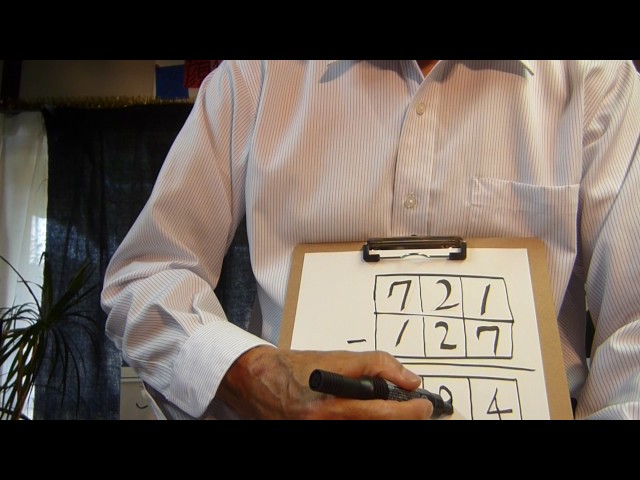
How about trying number magic that you can do with just paper and a pen? The audience can take part, so it’s guaranteed to liven things up.
It uses mathematical logic, so it’s a great mental workout, too.
The fact that you can do it on the spot is appealing as well.
Perform it in front of friends or family, and you’re sure to surprise them.
Find your favorite number trick and give it some practice.
The sense of accomplishment when you succeed in front of everyone is exceptional.
It may look simple, but it has hidden depth—why not step into the world of number magic yourself?