

Theme Songs of NHK Taiga Dramas Through the Years: The Allure of Music That Colors Historical Stories

NHK’s Taiga dramas have continued to color Japan’s grand history.
Have you watched any, such as Ryomaden or Atsuhime? The opening themes of Taiga dramas are a treasure trove of masterpieces that remain etched in our hearts across generations.
Just by listening, they whisk you away to that era in an instant—like a time machine.
In this article, we’ve compiled the theme songs from past Taiga dramas! We’ll introduce a variety of exhilarating music that invites us on a journey through history.
Please stay with us to the end!
- [2026] A roundup of popular theme and opening songs from TV period dramas
- [Drama Theme Songs] Over 800 Million Plays! A Curated Selection of Unforgettable Classics
- Theme songs from morning dramas: The historical main themes of NHK’s Morning Drama Series
- [Drama Soundtrack Collection] Timeless soundtrack masterpieces that revive the emotion: BGM and main theme
- Songs That Bring Back the Shows: Beloved Drama Theme Songs
- Theme and insert songs from the long-running Monday 9 p.m. dramas: classic hits from popular series and recommended fan favorites
- [Japanese-style BGM] Beautiful tones woven from Japanese tradition
- [2010–2019] A roundup of theme songs from popular dramas
- [Tearjerker] Songs that make your heart tremble with tears & moving tracks with lyrics that touch the soul
- [For Beginners] Recommended Enka Masterpieces for Karaoke — Male Singers Edition
- [Western Films] Moving Movie Theme Songs: A Compilation of Tear-Jerking Theme Tracks
- Historic theme songs of Netto Koshien
- [2000–2009] A roundup of theme songs from popular dramas!
Theme Songs from NHK Taiga Dramas Through the Years: The Allure of Music that Colors Historical Stories (11–20)
Blue Wind ~Opening Theme~Kurihara Kazuki

This piece is striking for its orchestral melodies that carry both power and poignancy.
Composed by Kazuki Kurihara, it was used as the opening theme for the 2001 NHK Taiga drama Hojo Tokimune.
The music conveys a wind-like sense of speed that races through a turbulent era, and from each note you can feel the protagonist’s firm resolve to face a national crisis.
Hints of Mongolian throat-singing evoke the story’s grand scale.
It is included on the album NHK Taiga Drama Hojo Tokimune Original Soundtrack, released in April of the same year.
Idaten Main ThemeŌtomo Yoshihide

This is the theme song of the 2019 NHK Taiga drama Idaten: Tokyo Olympic Story.
The composer is Yoshihide Otomo, who also worked on the music for the morning drama Amachan.
The triumphant opening fanfare and the whirlwind of shifting rhythms perfectly embody the protagonists who keep running like fleet-footed messengers.
Even without lyrics, their passion and breath come through directly.
The piece is included on the album Original Soundtrack: Part 1, released in March 2019.
It’s a rousing anthem that gives a powerful push to anyone striving toward their goals.
Time Of DestinyIwashiro Tarō

This piece, composed by Taro Iwashiro, was written as the theme song for the 2000 NHK Taiga drama “Aoi: Tokugawa Sandai.” Its sound—woven from a weighty orchestra and majestic chorus—dramatically portrays the great tides of history and the destinies of the people who lived within them.
The track is included on the album “NHK Taiga Drama: Aoi Tokugawa Sandai – Music Collection: Time to Time,” released in March 2000.
Give it a listen when you want to reflect on grand history or steel yourself to face a challenge.
Genroku Ryoran Main ThemeIkebe Shinichirō
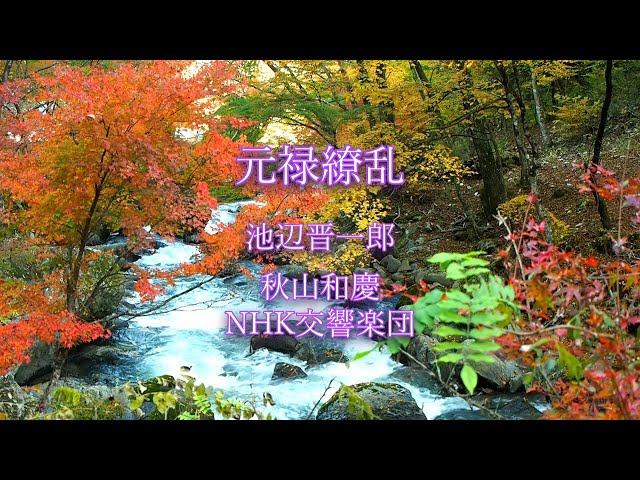
This piece was composed by Shinichiro Ikebe, one of Japan’s leading composers.
It’s a tense work that evokes the human drama swirling beneath the splendor of Genroku culture and the grim resolve of samurai who carry unwavering determination in their hearts.
The rich orchestral sonorities foreshadow the story’s turbulence, drawing listeners instantly into its world.
The piece is the theme music for the 1999 NHK Taiga drama “Genroku Ryoran,” and was included on the album “Genroku Ryoran Original Soundtrack,” released in August of the same year.
Performed by the NHK Symphony Orchestra, the powerful yet delicate ensemble masterfully conveys the characters’ complex emotions.
Souru (Main Theme)Watanabe Toshiyuki

This is the theme that opened the 2002 NHK Taiga drama “Toshiie and Matsu: The Million-Koku Story of Kaga.” The story of the couple played by Toshiaki Karasawa and Nanako Matsushima became a sensation as “the mightiest home drama of the Warring States era.” The majestic sound of the full orchestra seems to whisk us instantly into the tumult of that turbulent time.
Its driving melodies evoke the powerful, unshakable bond between Toshiie and Matsu, who weathered a harsh era together.
The composer is Toshiyuki Watanabe, known for his work across a wide range of fields, including film and anime.
In addition to the NHK Symphony Orchestra, the performance features the Orchestra Ensemble Kanazawa from Kaga, where the story is set.
MusashiEnnio Morikōne

This is the grand theme that opened the 2003 NHK Taiga drama Musashi MUSASHI.
The score was composed by the legendary film composer Ennio Morricone, making it the first Taiga drama to feature a foreign composer.
The solemn trumpet melody brilliantly captures the protagonist’s solitary spirit as he seeks to master the way of the sword, as well as his inner turmoil.
By deliberately avoiding Japanese scales and adhering to a Western musical approach, the piece elevates the story into a universal human drama that transcends borders.
Listening to it, you can vividly picture Musashi confronting his destiny.
Theme Songs of NHK Taiga Drama Through the Years: The Allure of Music Coloring Historical Stories (21–30)
Toyotomi brothers!Kimura Hideaki
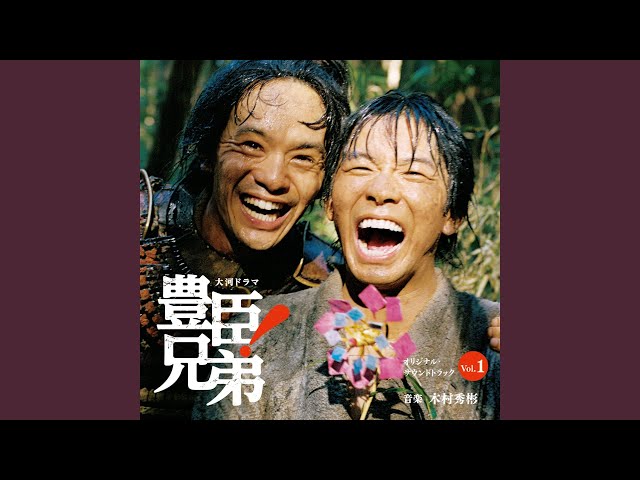
This is the main theme of NHK’s Taiga drama “Toyotomi Brothers!”, which began airing in 2026.
Taiga Nakano stars, with the story focusing on Hideyoshi Toyotomi’s younger brother, Hidenaga, depicting the tumultuous days of the brothers as they charge toward the grand dream of unifying the realm.
The music is by Hideaki Kimura, known for scoring dramas such as “Grand Maison Tokyo.” In addition to the weighty orchestral sound performed by the NHK Symphony Orchestra, Yuji Toriyama’s guitar adds a sense of speed, vividly capturing the fervor of the young brothers racing through the Sengoku period.
Released for streaming in January 2026, this is a track brimming with forward-driving energy that we hope those aiming for a big goal will listen to.