

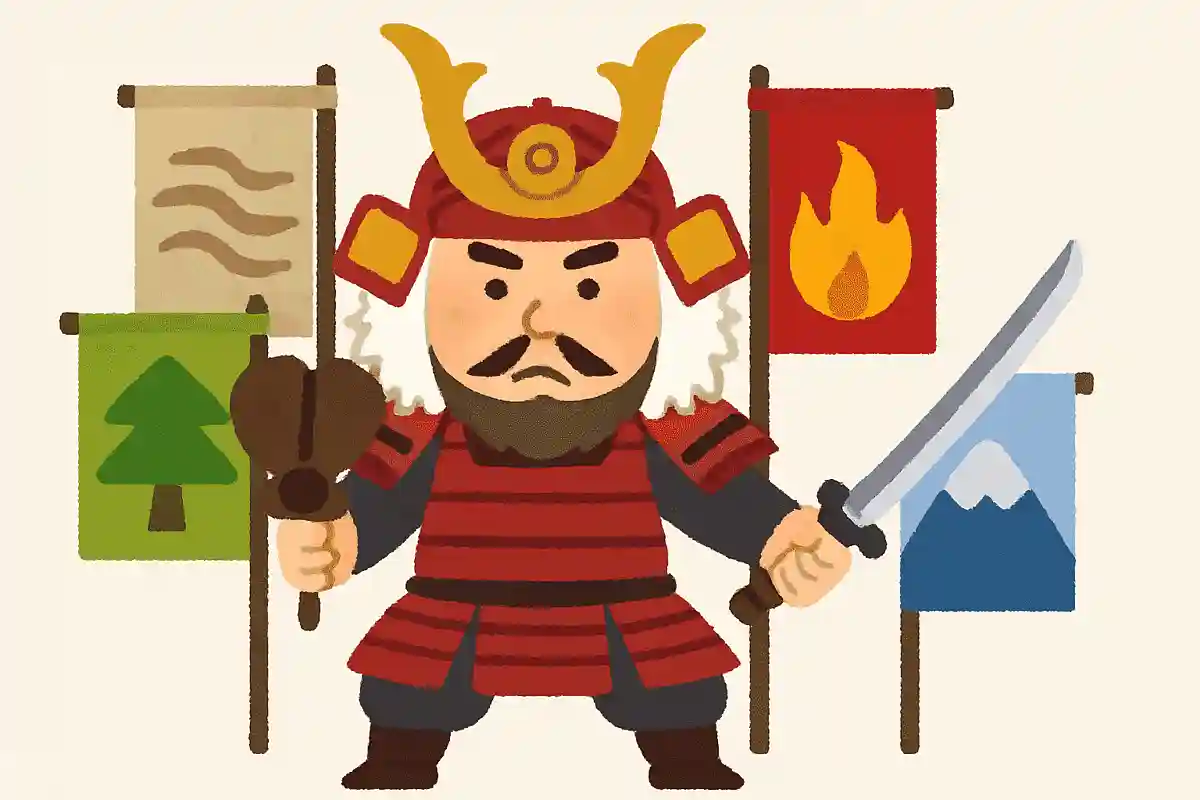
Famed for “Wind, Forest, Fire, and Mountain”! The Sengoku warlord Takeda Shingen, feared as the Tiger of Kai, and his famous quotes

Takeda Shingen, the famed warlord feared as the “Tiger of Kai,” is also known for leading the Takeda army, reputed to be the strongest of the Sengoku period.
While he projects the image of a ferocious general, he also devoted himself to domestic governance, earning the respect and affection of his retainers and subjects.
What’s more, did you know that the name “Shingen” is his Buddhist name taken after taking the tonsure, and that his real name was Takeda Harunobu?
This time, we introduce some of the famous sayings left by Takeda Shingen.
They are stern yet imbued with kindness—definitely worth a look!
- Legendary actor Ken Takakura’s treasured words of wisdom: a life that shakes the soul
- General Ouki’s Famous Quotes from “Kingdom” | Words of the Undefeated Commander That Even Made Captains Tremble
- Guaranteed to move you! Memorable words by great figures and famous people.
- Words from famous people that I’d like to adopt as my motto. Inspiring quotes that convey the power of words.
- Just remembering them fills you with courage! Striking quotes that touch the heart from great figures and famous people
- A collection of quotes from people of the past: messages from famous military commanders and great figures of the world.
- A famous quote by Miyamoto Musashi, the master swordsman who remains popular today through his appearances in various creative works.
- The famous quote by Kyojuro Rengoku, who enjoys immense popularity in Demon Slayer.
- Sakonji Urokodaki’s famous quote: the loving words of a mentor hidden within strictness.
- It stirs the heart before you know it! A collection of famous quotes from the timeless masterpiece Fist of the North Star
- Heartfelt! Inspiring Quotes Left by Great Figures of Japan
- A collection of resonant quotes by Sohei Kamiya that pierce the heart: passionate words born from love for Japan.
- A source of strength when it matters most! A special feature on proverbs and quotes about disaster preparedness
Famed for “Wind, Forest, Fire, Mountain”! Quotes 11–20 from the Sengoku warlord Takeda Shingen, feared as the Tiger of Kai
As swift as the wind, as gentle as the forest, as fierce as fire in attack, and as immovable as a mountain.Takeda Shingen

These are words said to have been written on the Takeda clan’s battle standard, based on descriptions in the Qi state military treatise The Art of War.
Also known as “Wind, Forest, Fire, Mountain,” it states the mindset for battle: “As swift as the wind, as quiet as the forest, as fierce as fire in attack, as immovable as a mountain.” Move swiftly like the wind when acting, remain still like a forest when poised, strike fiercely like fire when attacking, and be unshaken like a mountain when holding position—principles that, even in modern society, speak to how we should respond to circumstances and timing.
A memorable saying cherished in the Warring States era, when snap judgments and decisive action were required.

It’s best to win by six or seven parts out of ten. An eight-tenths victory is already dangerous, and wins of nine or ten-tenths lay the groundwork for a crushing defeat.Takeda Shingen
This saying expresses not just the importance of winning, but the hidden dangers behind it: “It’s best to win by sixty or seventy percent.
An eighty-percent victory is already dangerous, and victories of ninety or a hundred percent lay the groundwork for a crushing defeat.” Indeed, history offers many examples of dramatic turnarounds despite seemingly clear outcomes, such as the Battles of Okehazama and Ichi-no-Tani.
The idea that the very moment you are certain of success is precisely when you must not become overconfident likely gave rise to this saying.
It’s a timeless quote that teaches a lesson we must not forget even today.
After my death, rely on Uesugi Kenshin. Also, keep the mourning secret for three years.Takeda Shingen

The words said to have been left by Lord Takeda Shingen as a testament to his son are: “After my death, rely on Uesugi Kenshin.
Also, conceal my death for three years.” While Takeda Shingen was known as the Tiger of Kai, Uesugi Kenshin, called the Dragon of Echigo, is remembered as his great rival; even after five Battles of Kawanakajima, no decisive victor emerged.
The instruction to rely on Uesugi Kenshin suggests that Shingen acknowledged him to that extent, even as a rival.
As for the command to hide his death for three years, it is thought to have been to prevent enemy warlords from attacking upon learning of it.
It is a quintessential maxim of Takeda Shingen, who fought relentlessly for the sake of his domain.
Use astringent persimmons as astringent persimmons. Grafting them to make them sweet is just a petty trick.Takeda Shingen

A famous saying that criticizes the folly of twisting individuality goes, “Use an astringent persimmon as an astringent persimmon; grafting it to make it sweet is mere trickery.” It means that while astringent persimmons have their merits and sweet persimmons have theirs, turning everything into sweet persimmons is a mistake.
It reminds us of the importance of making the most of each one’s strengths.
Precisely because we live in an era that values individuality, this is a quote many people should know, so we don’t force minorities into the majority.
If you try, it will be done; if you do not, it will not—what can be accomplished is fleetingly abandoned by those who say it cannot be.Takeda Shingen

The famous saying that expresses the weakness of people who give up from the start, even though nothing can be achieved without acting with strong will—“If you try, you can succeed; if you do not, you cannot—such is the nature of things.
How fleeting are those who discard the effort, saying it cannot be done.” It’s a broad-minded phrase that, while wishing someone to do their best, also acknowledges the weak heart that lapses into complacency.
On the premise that not everyone can remain strong-hearted, it evokes the image of an ideal leader who chooses to watch over others with understanding.
In conclusion
The famous sayings of Lord Takeda Shingen contain profound wisdom that resonates across time, even in the modern era. Although Shingen is known as a warlord of the Sengoku period, his words convey a deep kindness toward others and an outstanding mindset as a leader guiding an organization. Why not use these sayings as principles to follow in your daily life and in business settings?