

From Japan! Technopop masterpieces and recommended popular tracks

Even if you have a vague image of the music genre “techno-pop,” only those quite knowledgeable about music likely know its actual origins and definition.
In fact, it’s a coined term that was created in Japan to introduce the legendary German electronic group Kraftwerk, and from the late 1970s to the early 1980s it also became a musical trend—centered around YMO—as a genre in its own right.
In this article, we’ve gathered classic tracks born during the heyday of techno-pop, which can be considered a Japan-originated movement.
The lineup also includes great contemporaneous tracks from overseas synth-pop and electro-pop, so please take a look!
- The Appeal of 80s Techno Kayō: Classic and Popular Technopop Songs
- Classic and popular tracks in Japanese techno
- Recommended Japanese techno bands. Popular and signature songs with technopop sound.
- Latest Techno Music | Introducing the Trends of 2026
- Dance music popular among teenagers. Recommended dance tracks.
- Best City Pop Classics: Recommended Popular Songs [Timeless & Modern]
- Ranking of Popular House and Techno Songs
- [For Beginners] Masterpieces of Japanese Techno: A roundup of essential albums you should listen to at least once
- Recommendation of 8-bit: A collection of classic chiptune tracks
- Nothing but iconic hits that defined an era! 2000s classics popular on TikTok
- Including global hits! 80s songs popular on TikTok
- Classic tracks of Detroit techno: famous and popular songs you should listen to first
- Classic digital rock tracks. Recommended popular songs.
From Japan! Technopop Masterpieces: Recommended Popular Songs (1–10)
shangri-laDenki Groove

I still vividly remember the impact this track made when it was released back in 1997.
You could hear it everywhere in the city, and I’m sure many people first learned the name Denki Groove through this song.
Released in March 1997 as their eighth single, Shangri-La not only became Denki Groove’s biggest hit—after enjoying cult popularity since their 1990 debut—but also remains a beloved “killer tune” and one of the defining songs of the late 1990s.
While it isn’t pure technopop, its sound is grounded in techno with elements of disco woven in, and the repeating lyrics and melody—Denki Groove’s take on J-pop—give it exceptional catchiness and broad appeal.
The elegant string phrase that immediately grabs your ear is borrowed from the Argentine pianist-composer Bebu Silvetti’s classic Spring Rain.
It’s a masterpiece where their extraordinary taste and talent burst beyond the underground.

Video Killed The Radio StarThe Buggles
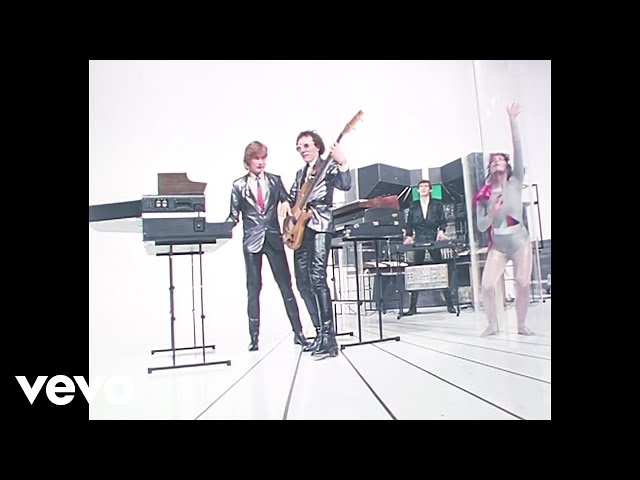
It’s a masterpiece that became a huge hit in 1979—one whose chorus almost everyone has heard at least once! Also known in Japan as “The Tragedy of the Radio Star,” it’s one of the most important songs in music history as the first music video ever broadcast on MTV, spawning countless parodies.
Created by the Buggles, the duo of Trevor Horn—who would later achieve massive worldwide success as a music producer—and Geoff Downes—who went on to form Asia and also enjoy great success—it’s their signature track and a quintessential anthem of the New Wave era.
With its shimmering synth sound and an irresistibly catchy melody you’ll never forget after a single listen, it transcends genres like technopop and synthpop, standing as a timeless example of the perfect pop song—a killer tune if ever there was one.
RelâchéSakamoto Ryuichi

Since we’ve introduced solo tracks by Haruomi Hosono and Yukihiro Takahashi, we should naturally cover a solo piece by “Professor” Ryuichi Sakamoto as well.
In this article, I’d like to highlight Relâche, included on Sakamoto’s third solo album, Left-Handed Dream, released in 1981 during what could be called the heyday of technopop.
It’s an instrumental track that, while deserving to be discussed in the technopop context, possesses a unique atmosphere—featuring guitarist Adrian Belew, a world-renowned musician known for his work with King Crimson, and also crediting Robin Scott, who scored a massive hit as M with Pop Muzik.
The looping synth riff has a curious allure, and the suddenly introduced telephone sound is oddly amusing.
With Haruomi Hosono on bass and Yukihiro Takahashi on drums generating a powerful groove, it’s essentially YMO, yet it unmistakably remains Sakamoto’s own world—which is part of the fun.
From Japan! Technopop Masterpieces: Recommended Popular Songs (11–20)
PATEPurasutikksu

Plastics were one of the bands known as the “Techno Big Three” in Japan’s 1980s music scene.
Despite an active period of only about five years, they became a legendary group that had a huge influence on later artists.
Aside from the late Masahide Sakuma—one of Japan’s leading music producers and musicians who joined later—the band was made up of unconventional members from outside the music world, such as illustrator Toshio Nakanishi and graphic designer Hajime Tachibana.
Because most of them were amateurs as performers, they incorporated a rhythm box, which naturally led them to create a technopop sound.
Among their many songs that were also popular overseas, let’s highlight Pate, a fan favorite that never appeared on an album.
It was the B-side to the 1980 single good, and features a striking vocal by the sole female member, Chica Sato, who repeatedly chants “piko piko.” It’s a technopop classic you should hear at least once!
Enola GayOrchestral Manoeuvres in the Dark

You can’t help but have your ears captured right from the intro, with that cheap rhythm box and charming synth tone! Then the live bass line layers in, the danceable drums kick off, and the unmistakably new wave vocals and melody begin—it’s pure bliss.
This wonderfully pop and delightful track, “Enola Gay,” is a hit released in 1980 by the British synth-pop duo Orchestral Manoeuvres in the Dark.
In Japan, it was introduced under the localized title “Enola Gay no Higeki” and was even used as the theme for TV Asahi’s news program CNN Daywatch.
It’s no exaggeration to call it a techno-pop classic, but what’s distinctive here is that, whereas many techno-pop songs feature rather detached, understated melodies, this one is sung with comparatively full-bodied delivery and carries a melancholic, subtly damp mood that particularly appeals to Japanese listeners.
Be sure to check out their other works as well—they were influenced by Kraftwerk and also have an experimental side!
El QueDAF

Overseas, there’s a genre known as Electronic Body Music (EBM), and DAF is often cited as one of its originators.
Unlike impersonal techno, DAF used electronic sounds while incorporating live drums to create a physical, body-driven beat and a hard-edged sound.
They’re a key German new wave unit—one that Taku Takkyu Ishino has named as a favorite.
El Que, a track from their 1981 album Gold und Liebe (also known in Japan as Ai to Oogon, or “Love and Gold”), embodies Germanic intellect and stark minimalism while remaining firmly rooted in dance music built around the body.
Its subtle catchiness is a crucial point too—it’s music meant to be felt and danced to, not overthought.
It’s Gonna Work OutTakahashi Yukihiro

Yukihiro Takahashi—a member of YMO (Yellow Magic Orchestra), pioneers of Japanese technopop; a brilliant drummer with exceptional skill; and a musician who created many works etched into Japan’s music history.
Among the many classic songs he released as a solo artist, this time I’d like to highlight “IT’S GONNA WORK OUT,” a track from his 1982 album WHAT, ME WORRY? (Boku, Daijoubu!!), released at the height of the technopop era.
With lyrics contributed by Peter Barakan, the track features delightfully “piko-piko” electronic sounds, a mechanistic beat emblematic of the New Wave–technopop heyday, Takahashi’s refined vocals, and a catchy melody—all of which make it irresistibly cool and stylish.
The song was also covered on the 2012 tribute album RED DIAMOND ~Tribute to Yukihiro Takahashi~, so be sure to check that out as well.