

Karaoke songs that are easy to sing even with a low voice (for women in their 30s)

Compared to a decade or so ago, recent Japanese pop music tends to demand more delicacy.
Perhaps it’s the result of advances in live sound engineering and broader cultural trends, but for people with lower voices, it can be tough—so many songs lean heavily on high notes, including lots of falsetto.
So this time, we’ve selected easy-to-sing karaoke songs for women in their 30s who have lower voices!
We also chose with karaoke crowd-pleasing in mind, so be sure to read to the end and find the tracks that suit you best!
- Recommended for women in their 30s! Karaoke songs that are easy to sing even if you're not good at singing
- [For Women] Easy-to-Sing and Crowd-Pleasing Karaoke Songs
- Easy-to-sing songs recommended for women in their 20s with low voices | Also great for getting a good reaction at karaoke!
- [Calling all low-voiced women in their 40s!] Songs that are easy to sing at karaoke
- A must-see for low-voiced women! Popular songs that are easy to sing at karaoke
- [Women in Their 40s] Even If You’re Tone-Deaf, You Can Sing! Karaoke Songs That Fit a Woman’s Vocal Range
- [Recommended for women in their 30s] Popular and latest songs that are easy to sing at karaoke
- Karaoke songs that are easy to sing even if you’re not confident in your pitch (for women in their 50s)
- Karaoke songs where even men with low voices can aim for high scores
- Easy-to-sing karaoke songs: Classic picks for women in their 40s
- Easy-to-sing Japanese karaoke songs recommended for women in their 50s
- [Karaoke] A roundup of songs that are easy for women to sing!
- Karaoke songs that are easy to sing even for tone-deaf beginners, recommended for women in their 60s
[For Women in Their 30s] Karaoke Songs That Are Easy to Sing Even with a Low Voice (21–30)
shameless; indecentchanmina

Chanmina’s Harenchi is sung mostly in a lower register, giving off a mature, sultry vibe.
Just when you think it will end quietly, the last chorus turns emotional and shifts into a slightly higher range.
I think that switch is really important.
There’s also a rap section in the middle, so that part needs practice too.
My students practiced the rap section a lot as well.
When the rap really lands, it feels great to sing and sounds very cool.
For the rap melody, it seems easy to memorize if you first focus on humming or using a neutral syllable like “la” instead of the lyrics.
Try singing without forcing or pushing your voice!

Song of LoveKōda Kumi

Kumi Koda’s classic song “Ai no Uta.” Since it was released in 2007, some people might not know it, but many have likely heard it through TV dramas and the like.
The piece is crafted as an emotionally rich ballad.
While it calls for a bit of expressiveness, its vocal range is narrow—mid1 G# to hi C—and the melodic rises and falls are gentle.
If you track the pitch carefully, it’s a song with which you can definitely aim for a high karaoke score.

Adult Chick Childrenyama

Yama is a female singer-songwriter known for her stylish vocal delivery.
While she sometimes sings R&B and clearly has strong vocal ability, Adult Chick Children showcases a vocal line that stays easy to sing throughout, while still making full use of her signature style.
The song has a narrow range, and even with the key change in the latter half, there are no truly high phrases.
However, because the vocals are sung with a relatively thick whisper tone from start to finish, trying to replicate this too precisely can make diaphragmatic control difficult and cause you to run out of breath.
If you’re not used to diaphragmatic (abdominal) breathing, start by singing without adding breathiness to your voice.
Ah, what a relief.Hana*Hana

The music duo Hana*Hana gained popularity with their warm, gentle sound.
They have several mega-hits, so I think many women in their 40s remember them.
Among their works, the one I especially recommend is A~ Yokatta.
It’s a classic J-pop ballad, with a gently rising and falling vocal line, a relatively narrow range, and modest long tones—features that make it easy to sing, even for those who aren’t confident singers.
My WishAI

This is a ballad themed around “wishes” and “prayers,” and it serves as the image song for the film Hanamanma, released during Golden Week in 2025.
The overall key isn’t high, so it’s easy for women to sing in the original key.
Around the final chorus, the singing style shifts with a melody-like arrangement, so please practice that part by listening to the song multiple times.
You’ll likely feel very refreshed when you can sing it well! Also, since the tempo is slow, the pauses are very important.
You can breathe sufficiently, so if you place each phrase carefully without rushing, the tempo won’t run.
It feels great to sing when you immerse yourself in the song’s world, so cherish the lyrics as you sing.
hanatabamilet
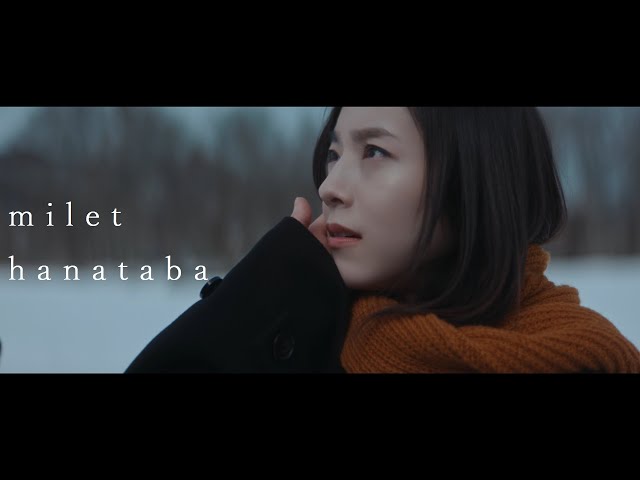
This is a poignant, ballad-style song that captures the feeling of carefully nurturing a small glimmer of hope.
It delicately portrays deep emotions and inner conflict toward a loved one, as well as the warm light felt within that relationship.
milet’s expressive artistry and translucent vocals gently resonate with listeners.
Chosen as the theme song for TBS’s Sunday drama “Anti-Hero,” this track showcases the unique expressive power that only milet—who has produced numerous acclaimed works including the album “eyes”—can deliver.
Its melody beautifully conveys subtle emotional shifts, making it a perfect fit for singers with a powerful voice.
Perform it at karaoke, and you’re sure to turn heads!
LOVE LOVE LOVEDREAMS COME TRUE

LOVE LOVE LOVE, a famous song by DREAMS COME TRUE released in 1995.
If you’re a woman in your 40s, you’ve probably heard it at least once.
The song’s vocal range is mid1 F# to hi C#, which is relatively narrow for a DCT track.
The tempo is very relaxed, and the melodic movement is gentle, so as long as you’ve memorized the vocal line well, you’re unlikely to go off pitch.
However, because the slow tempo leads to more long notes, it’s advisable to master diaphragmatic breathing to maintain stable vocal production.