

Tsunami General Knowledge Quiz! Learn surprising facts and trivia through a quiz

Are you only “assuming you know” about disaster preparedness? Tsunamis are a far more complex and profound natural phenomenon than we might think.
In this article, we present little-known facts about tsunamis in a quiz format.
From how they travel at different water depths to the ideal weight of items to take when evacuating, the more you learn, the more you’ll find yourself saying, “Wow!” Take this opportunity to deepen your understanding of tsunamis and, together with children and adults alike, learn wisdom to protect precious lives through this quiz.
- Useful in emergencies! Learn disaster preparedness the fun way with a disaster-prevention trivia quiz
- A trivia quiz about typhoons you might not know: questions range from general knowledge to disaster preparedness.
- How many do you know? An earthquake trivia quiz: from general knowledge to fun facts
- A surprisingly little-known collection of trivia quizzes and fun facts about the sea
- Learn while having fun! Ocean Trivia Quiz & Fun Facts for Kids
- How many can you get right? Check your general knowledge with a heatstroke trivia and fun facts quiz.
- Trivia quiz with useful tips to know: fun facts that come in handy at school or at home [for kids]
- [Common Sense & Trivia] True-or-False Quiz with Knowledge for Elementary School Students
- A general-knowledge quiz about public assistance (seikatsu hogo). Deepen your understanding with little-known trivia and fun facts.
- [For Elementary School Kids] A New Year’s Quiz Everyone Can Enjoy! Learn surprising fun facts with multiple-choice questions
- Recommended for elementary school students! Trivia quiz you'll want to share once you know it
- [For Kids] Fun Summer Trivia Quiz & Facts
- How many can you answer? Trivia and fun facts quiz about rice
Tsunami General Knowledge Quiz! Learn surprising facts and trivia through a quiz (1–10)
What month and day is Disaster Prevention Day?
- August 31
- September 1
- March 11
See the answer
September 1
Disaster Prevention Day is on September 1. It was established to promote preparedness and raise awareness of disasters, prompted by the Great Kanto Earthquake of September 1, 1923. It is one of the important days created in Japan to enhance disaster preparedness awareness.

Where is a safe evacuation site during a tsunami?
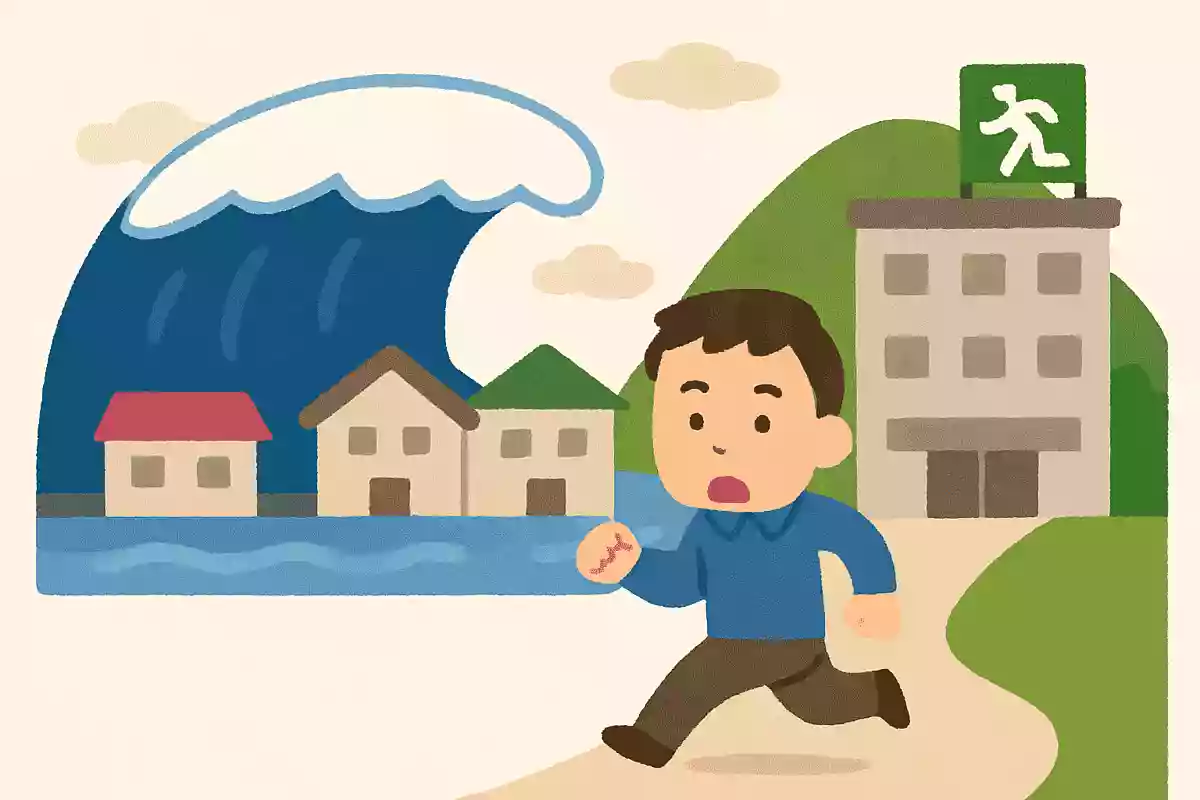
- Stay near the coast
- Evacuate to high places such as buildings or mountains.
- Hide under the bridge
See the answer
Evacuate to high places such as buildings or mountains.
To protect yourself from a tsunami, the basic rule is to evacuate as quickly as possible to higher ground or to the upper floors of a tall building. Low-lying areas and under bridges are dangerous. Since tsunamis surge in from the sea toward low-lying land, it’s important to be prepared in advance so you can act calmly.
What is the meaning of the etymology of “tsunami”?
- Large waves crashing into the harbor
- Wind that rocks the boat
- Mist Enveloping the Island
See the answer
Large waves crashing into the harbor
“Tsunami” is made up of two Japanese words: “tsu,” meaning a port or harbor, and “nami,” meaning wave, indicating a large wave that rushes into a harbor. It was originally named because much of the damage occurred in ports. So “tsunami” is a word formed from two Japanese meanings.
Tsunami General Knowledge Quiz! Learn surprising facts and trivia through a quiz (11–20)
Which of the following is not a cause of tsunamis?
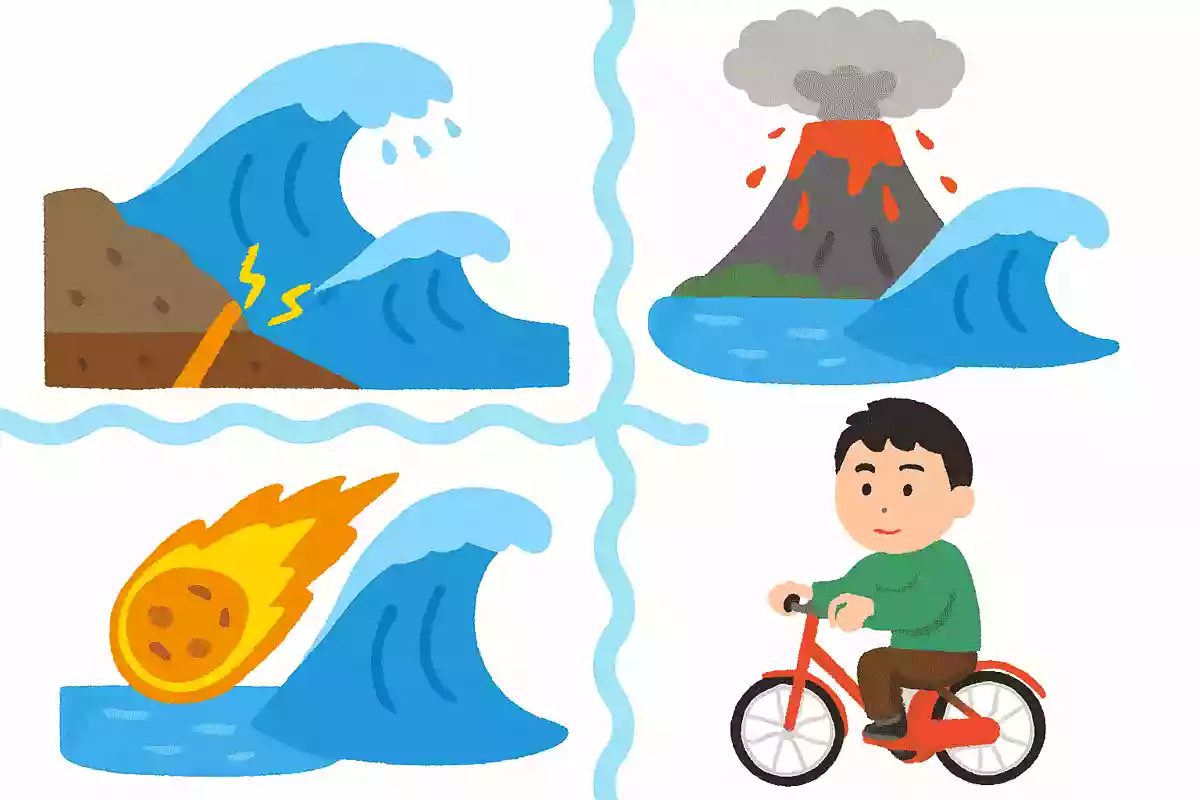
- earthquake
- Submarine volcanic eruption
- strong wind
See the answer
strong wind
Tsunamis are usually caused by earthquakes, submarine volcanic eruptions, or underwater landslides. Strong winds can generate waves (high waves), but they do not cause tsunamis. Tsunamis are primarily triggered by natural phenomena. In other words, wind alone, without accompanying natural disasters, is not sufficient to cause a tsunami.
When a tsunami advisory is issued, what is the best way for people—especially those at sea—to act?
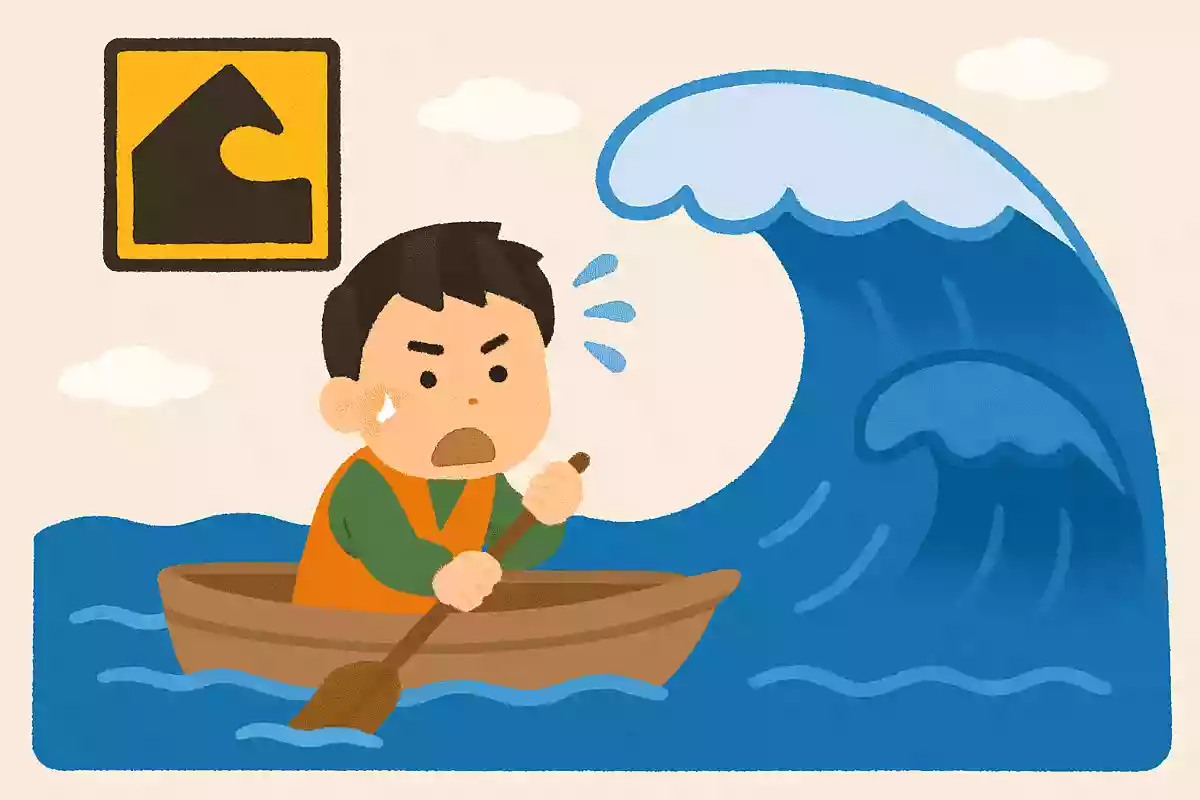
- Leave the sea immediately and evacuate to higher ground.
- Keep watching at the coast
- Swim out to sea
See the answer
Leave the sea immediately and evacuate to higher ground.
When a tsunami advisory is issued, even a small tsunami can create strong currents that are life-threatening. If you are at sea, leave the water immediately and evacuate to a safe place such as higher ground. Please be especially careful if you are playing at the beach or fishing.
Among evacuation advisories and evacuation orders, which one is the most dangerous?
- Evacuation advisory
- Evacuation order
- Alert Level 5
See the answer
Alert Level 5
Alert Level 5 indicates a state in which a disaster is very likely already occurring, and the best actions to protect your life are required. It is information even more urgent than evacuation orders or advisories. Prepare in advance so that you can take life-protecting actions immediately when it is issued.
How likely is it that a tsunami will occur even from a small earthquake?
- almost none
- It happens with about a 50% probability.
- often occurs
See the answer
almost none
Tsunamis are mainly generated by large earthquakes with a magnitude of 7.0 or greater. The likelihood of a tsunami occurring from a small earthquake is considered very low. However, on rare occasions, tsunamis can also be triggered by small, unusual earthquakes or by landslides.