

A roundup of songs that start with “U.” Perfect for shiritori or picking tracks at karaoke!

When you’re playing word-chain games using J-POP song titles, or doing “shiritori karaoke” where the next song is chosen by the last letter of the previous one, some of you might search for something like “songs that start with XX,” right?
So in this article, we’ll introduce a whole bunch of songs that start with “u.”
There are lots of words that begin with “u” that are commonly used in song titles—like umi (sea), wedding, uso (lie), and utsukushii (beautiful).
We’ve picked out a wide range of songs across different eras and by artists of all genders, so use this as a reference for choosing your next track!
- Vocaloid songs that start with 'U'
- Masterpieces with titles that start with 'A'
- [Easy to Sing] A Compilation of Recommended Vocaloid Songs for Karaoke
- A compilation of Vocaloid songs with titles that start with “Yu”
- Collection of Vocaloid songs with titles starting with 'dzu' (づ)
- A roundup of songs that start with “ku.” Perfect for shiritori or picking karaoke tracks!
- Songs with titles that start with 'yu'
- Songs whose titles start with 'I'. Masterpieces that begin with 'I'.
- A roundup of songs with titles that start with “bu.” Handy for shiritori or playlist-making.
- Discover new songs! A collection of tracks whose titles start with “Wa”
- Feel-Good Songs: Belt Them Out at Karaoke! A Roundup of Popular Numbers
- A roundup of songs with titles starting with “zu” (rare!)
- A roundup of songs with titles that start with “pu.” Great for shiritori or picking songs!
A collection of songs that start with 'U'. Perfect for word-chain games or karaoke song picks! (201–210)
Rabbit TearsKumorigahara

It’s an absolutely stunning track where complex, labyrinthine odd-time riffs intersect with heart-wrenching Japanese vocals.
As people often describe Kumorigahara’s sound as “King Crimson meets Doji Morita,” it brilliantly fuses intellectual structural beauty with raw lyricism.
The intense impatience and inner turmoil borne by a fragile soul are rendered dramatically over a growling organ and a weeping Mellotron.
The song was included on the maxi single Dokugen Dokushō released in February 2016, and reached a wider audience with the December 2021 album KUMORIGAHARA.
In concert, it can stretch past eleven minutes and even feature a guitar-and-keyboard solo battle.
How about giving it a listen on a night when you want to immerse yourself in deeply narrative rock?
WANTCHUkeshi

This is a song by Keshi, a U.S.-born singer-songwriter with an unconventional background who switched from nursing to a music career.
The intimate world the track creates—his first to emerge from a newly built home studio—feels wonderfully cozy.
While carrying forward the expressive range honed on his 2024 sophomore release, Requiem, the song leaves a strong impression with its blend of indie pop and R&B.
Released in August 2025 and developed from his experiments with recording techniques, it conveys a straightforward devotion—a simple wish: “I just want you.” It’s the perfect listen for those aching nights when you’re thinking of someone intensely, or when you want to sink into music alone—his beautiful falsetto is sure to resonate with your heart.
Welcome to the *famEGOIST

An aggressive, thrilling rap track that pulls fans into a whole new dimension.
Born from an anime, the unit EGOIST delivers a song that feels like a powerful declaration of their very existence.
Riding on an electronic soundscape, Chelly’s cool, provocative vocals are absolutely irresistible.
The song was unveiled as a surprise during the fan club tour in November 2016, sending the venue into a frenzy.
Its lyrics are laced with wordplay that blurs the line between virtual and real, beckoning listeners into a game world with a call of “Challengers, come forth,” and conveying a strong will to fight together.
When you want to push past your limits or crave a jolt in your everyday life, give it a listen—your adrenaline will start pumping!
Even if I’m rebornNozomihara Kana (CV: Hanazawa Kana)
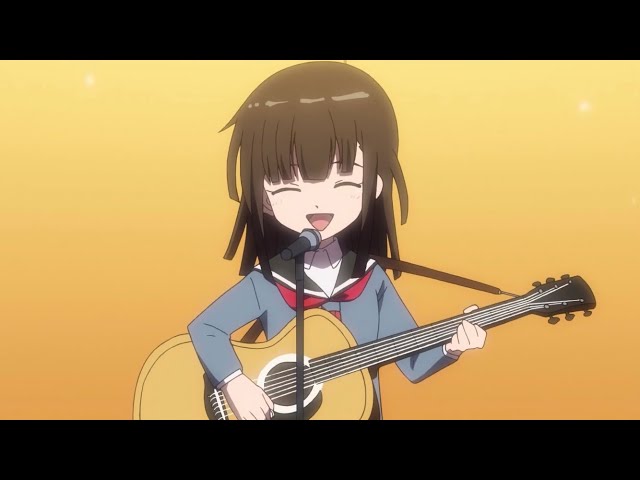
This is a gemlike ballad sung by Kana Hanazawa, featured as the ending theme of Episode 1 of the TV anime “Yo-kai Academy Y: Encounter with N.” As the character who holds the key to the story, she sings within the episode itself, creating a moving climax for the first installment.
The earnest wish to meet a cherished person again, even after being reborn, gently permeates the heart through her clear, translucent voice and the tender sound.
Give it a listen when you want to linger in the afterglow of the story!
Ura-Namba BluesMizuki Kei

This is a blues enka by Kei Mizuki that conjures up the bustle and neon of Osaka’s backstreets in Ura-Namba.
Known as a “high-spirited Naniwa girl,” she sings a one-night-only love story.
The lyrics, which even drop the names of modern cocktails, are filled with the regret of not exchanging contact information and the aching feelings of a woman who can’t forget the person she spent just one night with.
If you have an unforgettable love memory, or on a night when you want to sink into a touch of sentimentality, listening to this will surely tighten your chest at the heroine’s endearing earnestness.
Street Corner of BetrayalKai Band

The Kai Band, a group that gained popularity with a distinctive musicality that blends elements of Japanese kayōkyoku into rock.
Many men in their 60s were likely drawn to their unadorned, rugged sound.
Among Kai Band’s songs, one I particularly recommend is “Uragiri no Machikado” (Street Corner of Betrayal).
The song spans mid1 C# to hi A#, which is somewhat wide, but since the average pitch is quite low, anyone who can produce brief mid-to-high notes should be able to sing it without issue.
However, because there are relatively few rests compared to the many long tones, it’s necessary to make adjustments—such as lowering the key slightly or tucking the chin—to avoid over-projecting your voice.

With YouNishino Kana

With You, released in May 2025, is easier to sing compared to Kana Nishino’s other songs because the chorus doesn’t go very high and you can mainly use chest voice.
The song’s range is G#3 to C#5, staying in the mid register, and the track itself is short at about two and a half minutes, so it should be easy to memorize! The highest note, C#5, appears in those occasional ad‑lib-like English phrases.
It’s perfectly fine to use falsetto there.
For the verse (A), pre-chorus (B), and chorus, pay attention to the rhythm in each section.
In the A section, there’s a spoken feel, so value the space between phrases.
The B section is distinctive—think “ta-taa ta-taa ta-taa ta-taa,” taking the rhythm carefully one by one.
In the chorus, be mindful of the ends of the beats.
Stay calm and work through each part step by step!
