

[2026] A compilation of Western songs used in Japanese anime


In a sense, anime opening and ending themes are very important—many songs are so striking that they define a work’s image.
There are all kinds of anime songs, from classic “anison”-style tracks to songs performed by voice actors.
In this article, we’ve compiled songs by Western artists and bands that have been used as theme music in Japanese anime.
Some people might feel that Western music and Japanese anime don’t really go together, but in fact they’re used quite often.
You might even discover Western songs used in surprising titles—ones that even Western music fans didn’t know about.
Be sure to check it out!
- [2026] A Collection of Cool Western-Style Anime Songs
- [2026] Classic Western Songs Recommended for Junior High Students [English Songs]
- [2026 Edition] Classic Western songs with great lyrics: beautiful messages that resonate with the heart
- Popular Western Music Anime Song Ranking [2026]
- [2026] Summary of Western songs used as theme and insert songs in Japanese dramas
- [Collection of Epic Songs] A compilation of cool anime songs chosen by anime fans
- [2026 Edition] A Summary of the Latest Western Films’ Theme Songs and Insert Songs
- Touching Anime Ballads That Make You Cry [Moving & Heart-Wrenching]
- [2026] A Collection of Western Songs That Include Japanese
- [Anison × Rock] A compilation of anime songs performed by rock bands
- Top Western Wedding Songs in 2026
- [Burning] A Collection of Hype, Hot Anime Songs
- [2026] Popular in America! A Collection of Japanese Anime Songs
[2026] A Compilation of Western Songs Used in Japanese Anime (31–40)
The OneBackstreet Boys

The opening theme of Hanada Shonen-shi.
They’re an ultra-popular American idol group.
You could even say they were a forerunner to today’s groups like One Direction.
They’re a monster group with total CD sales exceeding 130 million.
It’s a refreshingly upbeat song, very fitting for idols.
THE LIGHT BEFORE WE LANDThe Delgados

The Delgados’ “The Light Before We Land,” by the indie rock band from Scotland, is a gem featured on their 2002 album Hate.
With its alternative sheen, melodic guitar fuzz, and the understated yet resonant vocals of Emma Pollock and Alun Woodward, the song made a strong impact on the mood of the anime Gunslinger Girl.
The lyrics convey a fleeting state of mind in which the value of life feels diminished and things once beautiful seem drab—deeply resonating with the characters’ inner worlds.
Even among those who listened to the Delgados in real time, many may not know that this song was used in the anime.
Colorado BulldogMr. BIG

Only episode 1 of “Heaven’s Memo Pad” uses this ending theme.
It’s included on the album Bump Ahead by the virtuoso band Mr.
Big.
I think you’ll understand why only the first episode used this song if you watch the main story.
From episode 2 onward, Kenichi Suzumura’s “Asunaro” is used.
Girls on FilmDuran Duran

Duran Duran, the British rock band that helped ignite the New Romantic movement in the 1980s.
This track is irresistible for its post-disco groove driven by a funky bassline and tight drums.
Layered on top are razor-edged guitar riffs and shimmering synthesizer tones that feel oh-so-good.
Lyrically, the song shines with a sharp critical eye, exposing the exploitation and fabrication lurking behind the glamorous world of fashion models.
Released in July 1981 and included on the classic album “Duran Duran,” it became the band’s first UK Top 10 hit.
It was also used as the opening theme for the anime “Speed Grapher,” and its stylish, danceable sound is sure to lift your spirits!
MR.RAINDROPAmplified

A song used as the second ending theme for Gintama.
They were billed as a three-piece band from Hong Kong, but even the label’s page no longer lists any activity, so it’s unclear whether they’ve disbanded.
It has a lively rhythm, but the lyrics are quite sad—an oddly intriguing song.
[2026] Compilation of Western Songs Used in Japanese Anime (41–50)
We Were LoversJean-Jacques Burnel

The opening theme of Gankutsuou.
It was reportedly created after director Mahiro Maeda went all the way to the UK to ask Jean-Jacques Burnel, former bassist of the British rock band The Stranglers.
The piano melodies make it a lovely piece.
SAYONARAMary MacGregor
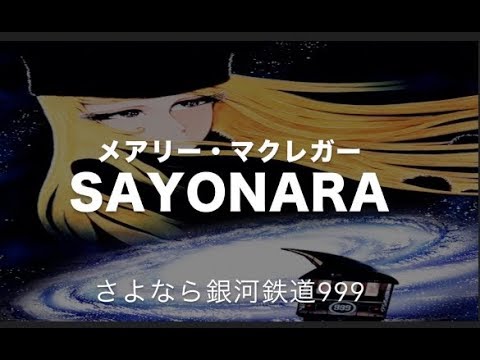
This is the ending theme of the film Farewell to Space Battleship Galaxy Express 999, created by American singer Mary MacGregor, who topped the U.S.
charts in 1976 with her smash hit Torn Between Two Lovers.
For this animated film released in August 1981, she wrote both the lyrics and the music, resulting in a roughly five-and-a-half-minute ballad featuring an impressive, grand orchestration by the Los Angeles Symphony.
The lyrics, which sing of the sorrow of parting and the hope that follows, are carried by her delicate and emotionally rich vocals, and together with the movie’s final scene, they leave a deep impression on the audience.
Showcasing the power of music to transcend borders, this masterpiece is recommended not only for anime fans but also for lovers of Western pop.