


Isoroku Yamamoto, the military leader known as the commander of the Combined Fleet at the start of the Pacific War and famous for directing the attack on Pearl Harbor.
Although he is said to have had exceptional foresight and a strong sense of justice, the many mysteries surrounding him—such as launching a daring surprise attack against an overwhelmingly superior enemy—and his dramatic life remain key to his popularity today.
This time, we introduce a selection of memorable quotations left by Isoroku Yamamoto.
These are timeless gems about leadership and how to live as a human being—well worth your attention!
- Gems of famous quotes give us insights—words that move the heart and stir the soul.
- Beautiful words by great and famous people that illuminate life
- Short maxims by great figures that you’ll want to etch into your heart and remember
- Heartfelt! Inspiring Quotes Left by Great Figures of Japan
- [Taro Yamamoto] A passionate message that resonates with the heart and conveys humanity
- A collection of resonant quotes by Sohei Kamiya that pierce the heart: passionate words born from love for Japan.
- Cool quotes from historical figures! A collection of great sayings by luminaries that resonate across the ages
- Quotes you'll want to say out loud! A collection of cool lines from anime and words that strike the heart
- One-line Quotes from Great Figures That Strike the Heart | A Collection of Words That Leave a Deep Impression
- [Sanae Takaichi] Quotes that reflect conviction and resolve. Powerful words with an eye on the future
- A collection of quotes from people of the past: messages from famous military commanders and great figures of the world.
- Remember these when you're unsure at work: short, powerful quotes and sayings that hit home.
- If you know them, they might become beacons that light your life’s path: a collection of memorable quotes.
Quotes (1–10) by the military man Isoroku Yamamoto, who fought for his homeland between ideals and anguish
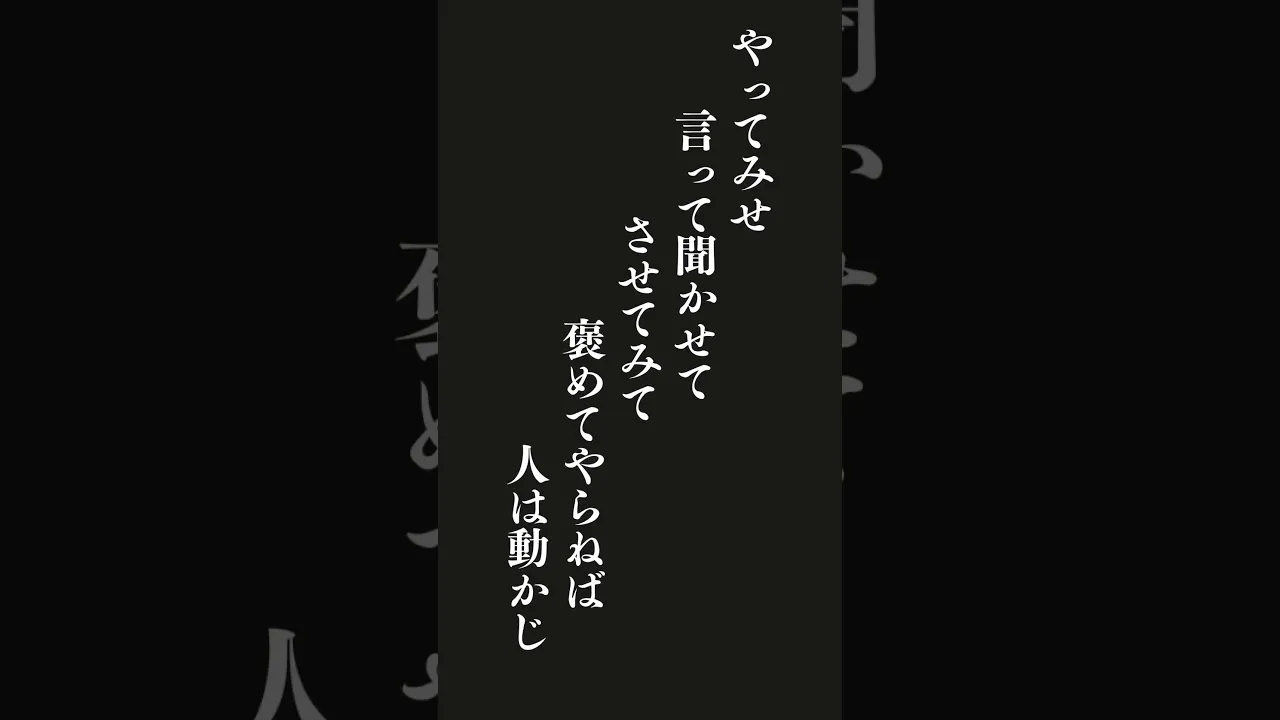
Show them how, tell them why, let them try, and praise them—otherwise, people won’t move.Isoroku Yamamoto

Here are some words I’d like anyone struggling with mentoring someone to read.
When you instruct others, first try doing it yourself and show how it should be done.
Next, explain in words how to do it, including key points.
Then tell them to try it, and only after you praise what they’ve accomplished will people truly start to move.
Coming from someone who demonstrated leadership and fought on the front lines, these words carry real weight.
I hope you’ll take them to heart.

Humans are not gods. There is something human about making mistakes.Isoroku Yamamoto

Many people may be so focused on not making mistakes that they can’t move freely or try new things.
But everyone makes mistakes.
It’s often through mistakes that we make new discoveries or find the right path.
With that in mind, perhaps we can accept our own failures and those of others without denying them.
I believe this is a wonderful quote that teaches us what is necessary to acknowledge ourselves and to accept others.

Everyone carries a sense of guilt or a burden. It is by trying to overcome it that we make progress.Isoroku Yamamoto

You could say this quote captures life itself.
Even if someone seems to have no worries from the outside, there are surprisingly many people who are suffering behind their smiles.
To a greater or lesser extent, everyone carries worries and is fighting their own battles.
This quote tells us that by overcoming them, we can grow—make progress.
In other words, it’s precisely when times are tough that we have the chance to grow.
If you remember these words when you’re feeling down, you might start to see hope even in the midst of suffering.
I am prepared to wear out the whole of my remaining life over the next hundred days.Isoroku Yamamoto
The time we have in life is shorter than we think for accomplishing anything, and both the quality and quantity of our effort are demanded.
These words express a determination to devote one’s full strength—even at the cost of wearing down one’s remaining time—during that brief span of life.
By further setting internal time frames and stating that resolve, one puts pressure on oneself and aims to draw out even greater strength.
By daring to articulate this determination in words, perhaps an even greater power can be brought forth.

Carve the favors you receive into stone; let the favors you give flow away like water.Isoroku Yamamoto
Everyone spends their days in connection with others, living while giving and receiving favors.
These words convey the importance of engraving in our hearts the kindness we receive from others, as well as the importance of extending kindness to others.
They urge us to give those around us even greater favors than we have received—and to do so without clinging to them, even to the point of forgetting them.
Because it contrasts the ways we approach favors we receive and favors we give, it clearly shows how we ought to conduct ourselves.
We maintain soldiers for a hundred years solely to preserve peace.Isoroku Yamamoto
When we think of soldiers, we often picture people who invade, but in reality they also play a major role in defending their country.
These words express the importance of training such soldiers and the idea of why we train them.
It argues that simply having people capable of defending the nation in an emergency can deter aggression and thereby contribute to peace.
The message clearly conveys a way of thinking about what we can do for the larger goal of peace.
Standing in society and serving the country is the foremost way for a student to repay their teacher.Isoroku Yamamoto
Many people feel that teachers have a profound impact on students’ lives and hold deep gratitude toward them.
These words focus on what might be the greatest way for a student to repay a teacher and present a way of thinking: rather than repaying the teacher directly, one should apply what they have learned for something greater; that very success becomes the true form of gratitude.
Perhaps what matters is how we let them know, in whatever form, that we are moving forward while valuing what we learned.