

[Childcare] Recommended play ideas for caring for 2-year-olds

Two-year-olds are able to do more and start to understand simple rules.
Some teachers wonder how to incorporate a variety of play activities.
Since the range of activities you can suggest depends on the class atmosphere, it’s easy to feel unsure about what to choose.
So, we’ve gathered play ideas recommended for two-year-olds!
We’ve mixed in both outdoor and indoor activities, with rules ranging from very simple to a bit more complex, so you’re sure to find ideas that fit your class.
Have a great time playing with the children to your heart’s content!
- No prep needed! Indoor play and game ideas that 2-year-olds will enjoy
- [For 2-year-olds] Let’s get moving! A collection of ideas for physical play and movement games
- Ideas for indoor play, physical activities, and games suited to the development of 2-year-olds
- Indoor activities that delight 2-year-olds. Enjoy the fun inside on rainy days!
- For 2-year-olds! Fun craft activities and indoor play ideas
- Indoor activities that 2-year-olds can enjoy. Recommended at-home games that will keep them engaged.
- [Childcare] Full of energy! Indoor activity ideas to get kids moving
- Toddler-approved fun! DIY toy ideas for 2-year-olds
- Ideas for performances recommended for two-year-olds’ recitals and play events
- [Childcare] Recommended circuit competition ideas for a sports day for 2-year-olds
- For 1-year-olds! Indoor play ideas that make rainy days fun
- Useful for childcare! Today’s recommended recreational activities, including fingerplay and games!
- [Childcare] Fun Songs for 2-Year-Olds to Sing! Recommended Song Collection
[Childcare] Recommended play ideas for caring for 2-year-olds (41–50)
[Ages 2 and up] Shadow Play
![[Ages 2 and up] Shadow Play](https://i.ytimg.com/vi/OXoDUwEMzVc/sddefault.jpg)
Shadow play is something you can enjoy outdoors even on days with strong sunlight.
Wherever light shines, a shadow always appears.
For adults, it’s an obvious phenomenon, but for children it might still feel mysterious.
Try observing the direction shadows form and how their size and sharpness change when you move closer or farther away.
Children might make some new discoveries! Just be sure to watch out for heatstroke when it’s hot.

gomudan
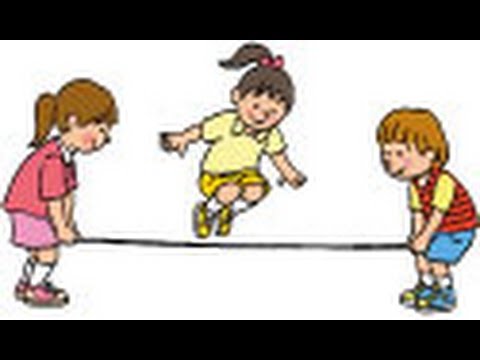
Here’s how to play Gomu-dan (rubber band jumping).
First, prepare a flat elastic band, and have two people hold the ends.
Let’s start with a simple jump-over game.
Hold the band at ankle height and jump over it.
Even if your feet catch on the band, it’s a success as long as you make it through to the other side.
Try different ways of jumping, like two-footed jumps, backward two-footed jumps, and cartwheel jumps! You can also raise the height to increase the difficulty and excitement.
Be sure to keep the band pulled tight—if it’s slack, it can be dangerous.

circuit play

Popular both as an everyday play activity and a staple event at sports days, “circuits” come in many forms, often using balance beams and vaulting boxes.
Walk across the balance beam without falling.
Cover a vaulting box with a mat to make a mountain to climb.
Jump over obstacles with both feet, or do a crab walk along tape on the floor.
Circuit activities help develop balance and overall body control.
You can tailor the content to the child’s age, or make it just a little more challenging than their current level.
And when they succeed, be sure to give them plenty of praise.

sensory toy play

Fun for all ages! Here are some sensory toy play ideas.
You’ll need: food storage bags, colored water, oil, adzuki beans, erasers, toy goldfish, beads, bells, hair gel, and tape.
Put the materials you prepared into the bag along with the hair gel! Changing up the colors and textures makes the feel different and more interesting.
Sensory toys are recommended not only for infants but also for preschoolers—they’re engaging to look at and touch, and kids will be totally absorbed.
Hoop Daruma-san ga Koronda

More ways to play! Here are some ideas for playing “Red Light, Green Light” using hula hoops.
You’ll need two balance beams, a hula hoop, a ball, and flat markers.
“Red Light, Green Light” is a game that’s been loved for generations.
Since the rules are easy to understand, many preschools and childcare centers likely include it in their activities.
Using hula hoops, balls, and balance beams expands the possibilities, so it’s highly recommended.
Once children are comfortable with the basic rules, give these variations a try!