

[Showa Kayō] A roundup of Japanese love songs that hit in the 1970s

Faint first loves, heartrending unrequited crushes, passionate declarations of love… The 1970s produced countless Japanese love songs that still make our hearts flutter today.
In an era that blossomed with rich sensibilities and free expression after the period of rapid economic growth, feelings of love were sung both directly and delicately across a diverse sonic palette—from intense rock sounds and enka to kayōkyoku and city pop.
In this article, we introduce exquisite love songs born in the golden age of Shōwa-era pop.
Whether you’re basking in nostalgia or discovering these songs for the first time, come savor the timeless sparkle of youthful love.
- 1970s Female Singer-Songwriters: Popular Songs Ranking [2026]
- A love song that makes a man in his sixties relive his youth. Timeless classics that rekindle the romances of those days.
- Recommended love songs for women in their 70s: A collection of nostalgic love songs
- Love songs that resonate with women in their 60s: gem-like romance tunes that revive memories of youth.
- Debut songs by Japanese male artists from the 1970s
- [Japanese Music] A Collection of Heart-Touching Hit Folk Songs from the 1970s
- Heart-touching, tear-jerking masterpieces from the Showa era
- Popular Showa-era pop. Timeless hit songs.
- Love songs in Western music that were hits in the 1970s. World-famous classics and popular tracks.
- [1970s] Collection of Japanese hit songs. Nostalgic masterpieces of Japan
- Nostalgic Japanese hit songs from the 1970s: the golden age of idols and kayōkyoku (Japanese pop songs)
- Popular Oldies and Classic Songs Ranking: 1970s Japanese Music
- Classic and hit songs by nostalgic Japanese idols from the 1970s
[Showa Kayō] A roundup of Japanese love songs that were hits in the 70s (1–10)
Love Dial 6700Fingā 5
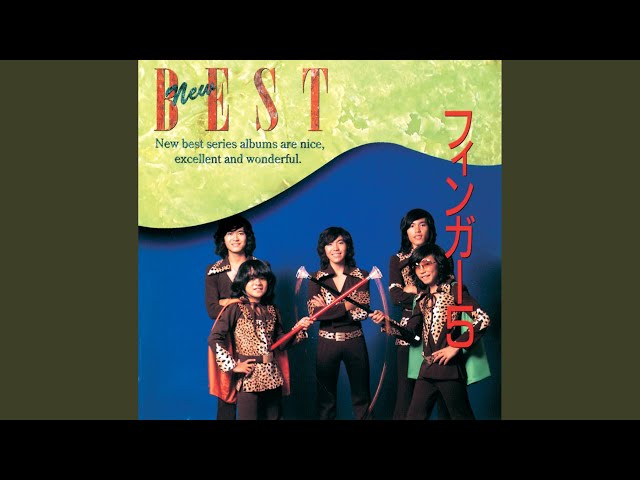
This gem of a song captures the sweet-and-sour feeling of first love, opening with a catchy telephone ring—“Rin-rin-ri-riin”—and the adorable greeting, “Hello, darling!” With lyrics by Yu Aku and music by Tadao Inoue, it portrays the protagonist’s hesitant heart, unable to find the courage to make the call, set to a lively rock ’n’ roll beat.
Released in December 1973 as their third single, it topped the Oricon charts for four consecutive weeks and became a massive hit, selling over 1.6 million copies.
It was also chosen as the theme song for the film Finger Five’s Great Adventure released the following year, bringing the charm of the family band to audiences nationwide.
If you’ve ever clutched a receiver with a pounding heart before confessing your feelings, this one is guaranteed to make your heart skip a beat!
You’re not alone.tenchi mari

This is a song that brightened early-1970s Japan with its warm message encapsulated in the phrase “You’re not alone.” Released in May 1972 as Mari Amachi’s third single, it spent six consecutive weeks at No.
1 on the Oricon weekly chart and sold over 1.1 million copies in total.
The lyrics were written by director Mitsuhiko Kuze under the pen name “Natsu Kotani,” with composition by Koichi Morita and arrangement by Shunichi Makaino.
Its lavish arrangement, woven from strings and brass, is carried by Amachi’s crystal-clear vocals, delivering a straightforward celebration of the joy of walking together as two.
Radiating the upbeat sparkle of being in love, this track is perfect for times when you want to reminisce about an old romance or cherish moments with someone special even more.
Journey of the Heartchūrippu

Tulip’s third single, released by Toshiba EMI in April 1973, is a classic that poignantly portrays the bittersweet feelings of a protagonist setting off on a journey by train.
Written and composed by Kazuo Zaitsu and tenderly sung by Tatsuya Himeno, whose sweet voice conveys the longing for a lover far away, the song topped the Oricon weekly chart and sold a total of 870,000 copies, becoming one of Tulip’s signature love songs.
It has been widely featured in tie-ins, including the Fuji TV program “Ninjō Ippon Kokoro no Tabi,” a Toyota Carina commercial, and JR West’s graduation trip campaign, making it a heart-tugging tune for the season of farewells and new departures.
It gently accompanies those in long-distance relationships and anyone parting from someone special due to graduation or a job transfer.
[Showa-era Kayōkyoku] A collection of Japanese love songs that were hits in the 1970s (11–20)
Love without meetingUchiyamada Hiroshi to Cool Five

A song by Hiroshi Uchiyamada and the Cool Five that portrays the love of two people who cannot meet.
Precisely because there is a distance keeping them apart, their love burns even stronger.
That aching yet passionate feeling is sung through Kiyoshi Maekawa’s deep, resonant low voice.
Tears, dreams, and flowers alike sway violently like a life burning crimson, even though they can never meet.
The contradictory emotion of continuing to love without seeing each other presses on the heart alongside the sound of saxophone and piano.
Although released in December 1969, the song topped the Oricon Weekly Singles Chart for three consecutive weeks in February 1970, becoming the group’s only number-one hit.
Why not give it a listen when you’re caught in the frustration of wanting to see someone but being unable to?
Heartbreak RestaurantShimizu Kentarō

A love song set in the gentle space of a café, its tender embrace of wounded hearts is striking.
Released in November 1976, it was Kentaro Shimizu’s debut single.
Rather than forcing someone to overcome the pain of heartbreak, the lyrics speak of a place that accepts your tears—a warmth characteristic of 1970s kayōkyoku.
The song reached No.
1 on the Oricon Weekly Chart and ranked ninth on the year-end chart.
Hiro Tsunoda’s soulful arrangement pairs exquisitely with Shimizu’s sweet vocals, earning him the Japan Record Award for Best New Artist among many other newcomer honors.
It’s a song that gently stays by your side when you’re tired of love.
I want to go back to that dayArai Yumi

Yumi Arai’s sixth single, released in October 1975, is a love song that wistfully longs for days gone by.
Chosen as the ending theme for the TBS drama “Kazoku no Himitsu,” it reached No.
1 on the Oricon weekly singles chart, selling approximately 615,000 copies in total and becoming Yuming’s first number-one hit.
Even knowing it can never come true, the heart drifts back to “that day.” The guilty feeling that recalling a past love might hurt someone in the present, and the irrepressible urge to return to it—this duality is rendered with delicate nuance through a restrained yet uplifting melody and a prose-like narrative voice.
It’s a song that gently stays by your side on nights when old romances come to mind.
A Little Lovetenchi mari

This is Mari Amachi’s second single, released in February 1972, weaving scenes of first love—pinky promises, Sunday dates, and crimson sunsets.
It reached No.
1 on the Oricon weekly chart, with an estimated 540,000 copies sold and a cumulative total of 900,000.
The lyrics were written by Kazumi Yasui, the music composed by Kōsuke Hamaguchi, and the arrangement by Shunichi Makaino.
A gentle folk-tinged arrangement layered with strings and flute wraps Amachi’s clear, transparent voice in a soft glow of excitement.
It was also included on the album “Chiisana Koi / Hitori Janai no,” released in June of the same year, and this work became her first to top the weekly chart.
A song that quietly stays by the side of anyone nurturing a tender, budding love.