

[Nostalgic Classics] Hit Japanese Love Songs from the 1980s


There are always love songs that match each generation, no matter the era.
Here, we’ll introduce love songs that were hits in the 1980s!
A common trait of 80s rock and pop love songs is that women are often portrayed as waiting for men, while men tend to emphasize their own strength to women.
Influenced by folk and kayōkyoku, as well as the social climate of the time, you’ll find many expressions that are rare today.
It might be interesting to listen while noticing those differences.
And above all, the unique sound of the 80s.
If you’re “looking for classic 80s songs” or “want to listen to nostalgic hits,” be sure to check these out.
- Top Male Singer-Songwriter Hits of the 1980s: Ranking [2026]
- Top 1980s Female Singer-Songwriters: Popular Songs Ranking [2026]
- Showa-era love songs: A roundup of timeless love songs cherished across generations
- A collection of nostalgic Japanese hit songs from the 1980s that still linger in our ears
- A heartbreak song that was a hit in the 1980s. A classic and popular track in Japanese music.
- Classic and hit Japanese pop songs from the nostalgic 80s
- Cool songs from the Showa era. Masterpieces from Showa that shine with sensuality, passion, and rugged charm.
- Love songs that resonate with women in their 60s: gem-like romance tunes that revive memories of youth.
- A heart-wrenching story that tightens the chest! A Showa-era unrequited love song
- Evokes the charm of the good old days. Showa-era inspirational songs that are still loved today.
- A special feature on classic and hit songs by bands that were active in the 1980s
- Autumn songs that were hits in the 80s. Classic and popular tracks from Japanese music.
- Popular Nostalgic Hits and Classics Ranking [1980s Japanese Music Ranking]
[Nostalgic Classics] Hit Japanese Love Songs from the 80s (21–30)
Your heart is marine blue.Sugiyama Kiyotaka & Omega Tribe

It’s a song released in 1984 that was chosen as the theme for the drama “Toshigoro Kazoku” (The Family at That Age).
Alongside Kiyotaka Sugiyama’s dandy yet refreshing charm, the guitar and various resonant sounds create a mature, slightly moody atmosphere.
Perhaps it’s about a romance between a man and a woman who have crossed a certain boundary.
It also seems to depict a situation where the woman wished to be accepted.
It doesn’t quite feel like a pure, innocent couple, but you can sense the man’s willingness to forget everything for now and embrace her.
A summer fling.
Just like the title suggests, it makes you want to listen while driving along a marine-blue seaside.

Stop the night once moreSakiya Kenjirō

This was the third single, released in 1987.
It’s a love song that was featured in the film “Beloved Ellie” and the drama “Tokyo Love Story.” It’s often covered by male artists such as Ken Hirai.
Kenjiro Sakiya’s vocals over a simple piano melody evoke a sentimental mood.
As the title “Mou Ichido Yoru o Tomete” (“Stop the Night Once More”) suggests, it expresses a man’s earnest longing to return to that night.
I was surprised to learn the lyrics were written by Yasushi Akimoto, and listening to it conjures vivid scenes that leave you with a bittersweet ache.
Rainy BlueTokunaga Hideaki

Speaking of male singers with beautifully androgynous voices, wouldn’t Hideaki Tokunaga be the one who comes to mind? Besides this song, he has had many hits, including commercial jingles, “Kagayakinagara…” and the drama theme song “Kowarekake no Radio.” His cover album VOCALIST, which makes full use of his beautiful voice, is so popular that it has become a series.
He has overcome various challenges such as throat troubles and cerebrovascular illness, and we hope he continues to delight us with his beautiful voice for years to come.

Dancing All Nightmonta & burazāzu

Released in 1980, this song was the debut single from Monta & Brothers and became a big hit.
The husky voice of vocalist Yoshinori Monta is truly captivating.
The lyrics were written by Keiji Mizutani, and the music was composed by Monta himself.
It has been covered by many singers and can be considered one of the kayōkyoku standards.
After this, Monta went on to sing numerous commercial jingles, becoming one of the most familiar voices in Japanese households.
Remember MeTUBE
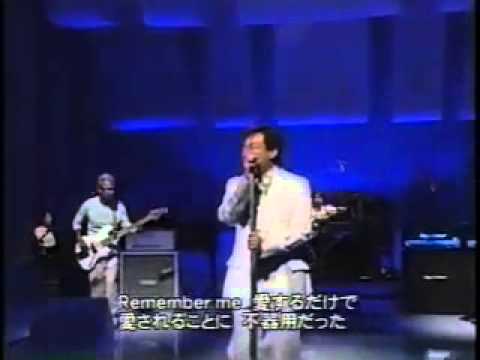
When it comes to TUBE, they’re the quintessential band you want to listen to in the summer.
Norihiko Maeda’s refreshing yet passionate vocals really suit the season.
That said, this particular song might come across as a bit more understated.
Even so, since it was used in a diamond commercial, many people have probably heard it.
It’s a beautiful ballad that begins with a piano intro, and it reminds you just how captivating Maeda’s voice is.
The lyrics were written by Maeda, and the composition was done by Seiichiro Kuribayashi.
Romantic Flightkome kome CLUB

It’s a song included on the 1987 album “KOMEGUNY,” and several different versions were released afterward.
It has an undeniably glamorous feel, and apparently it was written with the aim of getting a commercial offer from an airline.
In 1990, it finally became the song for a JAL commercial.
You can really feel the extraordinary determination behind it.
Whether it was Ishii’s idea from his art university background or not, the costumes and music video are also fascinating—be sure to check them out together.
white parasolMatsuda Seiko

This was Seiko Matsuda’s sixth single, released in 1981, with the B-side serving as the theme song for her first starring film, “Nogiku no Haka.” The music was composed by Kazuo Zaitsu of Tulip, and the lyrics were written by Takashi Matsumoto.
As a track released in summer, the arrangement has a cute, summery feel.
Seiko herself said the recording was tough because it coincided with her film appearance.
Even so, her exceptional vocal ability shines through—it’s truly a timeless classic that’s always a rewarding listen.