

![[80s Western Music] A roundup of debut songs by girl bands](https://i.ytimg.com/vi_webp/E79N7X0LbPk/maxresdefault.webp)
[80s Western Music] A roundup of debut songs by girl bands

When it comes to the Western music scene of the 1980s—often called the “golden age of pop”—it was an era that gave rise to countless artists and bands who scored mega-hits around the world, including in Japan.
With the advent of MTV and rapid technological innovation, the decade has a very glamorous image.
Among the Western music of the ’80s, this time we’re focusing on the debut songs of all-girl bands that burst into a male-dominated music scene.
Rather than vocal groups, we researched bands that played instruments as much as possible, and we’ll be showcasing, all at once, the memorable debut tracks of uniquely individual girl bands—spanning rock, pop, metal, and punk—regardless of genre or fame.
[80s Western Music] Debut Songs by Girl Bands (1–10)
Getting Out of HandThe Bangles

The Bangles—an iconic band from Los Angeles who produced numerous hits in the 1980s like Manic Monday, Walk Like an Egyptian, and Eternal Flame (known in Japan as Mune Ippai no Ai)—dramatically elevated the status of girl bands and influenced many musicians.
After blazing through the glorious ’80s and disbanding to much regret, they pulled off a miraculous reunion in the 2000s and continue to perform actively as a fully-fledged band today.
While the Bangles are often associated with a pop image—cute yet glamorous looks and fashion paired with irresistibly catchy melodies and harmonies—their indie-era debut single, Getting Out of Hand, released in 1981 under the name THE BANGS, features a sound heavily influenced by 1960s genres like garage and surf rock.
If you look at the jacket of the 7-inch single from that time, the three members dressed in ’60s-style fashion are utterly charming and heartwarming! With guitarist Vicki Peterson handling both lyrics and composition, and the band producing the track themselves, it might be an intriguing theme to explore their position in indie rock history from the perspective of girl bands.

Candy ManMary Jane Girls

If you were someone who danced your heart out at discos in the 1980s, just hearing the name Mary Jane Girls might instantly bring to mind their smash hit “In My House.” They weren’t a band per se, but a female group fully produced by bassist and producer Rick James, known as one of the most outrageous characters in the history of soul and funk music.
Their debut single “Candy Man,” released in 1983, isn’t as widely known as the aforementioned hit, but it’s a phenomenal 80s disco classic with an ear-grabbing intro riff that’s irresistibly cool!
Our Lips Are SealedThe Go-Go’s
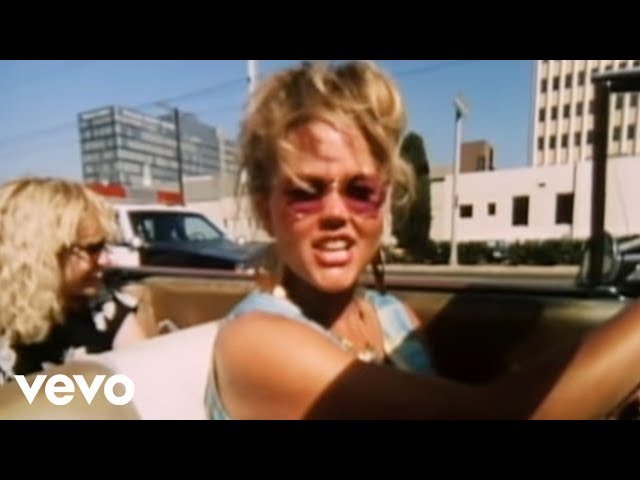
The debut album Beauty and the Beat (1981) captured the No.
1 spot on the Billboard chart—the first time in U.S.
history for an album released by an all-female band.
In 2020, the documentary film The Go-Go’s was released, and the group has exerted a tremendous influence on subsequent artists as the most successful girl band in music history.
Their colorful, sophisticated pop songs, perfectly suited to the New Wave era, enjoy strong popularity not only in the U.S.
but also in Japan and across Europe.
Rather than relying on songs provided by other writers, they primarily wrote their own material and played their own instruments, forging a distinctive band sound—in that sense, they were true pioneers.
The band’s landmark debut single was released in 1981 as a co-write between rhythm guitarist Jane Wiedlin and Terry Hall, known for his work with The Specials and Fun Boy Three.
The Go-Go’s originally emerged from Los Angeles’s punk rock scene, and the song was born from their supporting slot on The Specials’ tour and from the personal relationship between Terry and Jane.
As a side note, Our Lips Are Sealed was also released as a Fun Boy Three track, so be sure to compare the two versions and hear how their interpretations differ!
Edge of a Broken HeartVixen

Formed in 1980 by guitarist Jan Kuehnemund, who was then a high school student, this all-female hard rock/metal band became a pioneering presence and a highly skilled girls’ band that thrived during the metal-dominated 1980s.
Boasting both catchy appeal and glamorous looks—so much so that they were dubbed the “female Bon Jovi”—they achieved commercial success after their classic lineup solidified in 1987, turning out accessible pop-leaning tracks and powerful rock ballads.
Their landmark debut single is the 1988 classic Edge of a Broken Heart.
Though not an original band composition—co-written by singer-songwriter Richard Marx and Fee Waybill, known as the lead singer of The Tubes—the husky, wistful vocals and tight hard rock sound perfectly capture that quintessential ’80s vibe.
Be sure to pay attention to the fiery guitar solo by the band’s founder, Kuehnemund, who sadly passed away from illness in 2013.
I’m Here I’m GoneThe Pandoras

Unless you’re quite familiar with punk and garage rock, you may not know them, but The Pandoras, formed in Los Angeles in 1982, are a band you should definitely remember as pioneers of an all-female “girls’ band.” They’re also known for featuring Kim Shattuck, who later formed The Muffs.
Although they never achieved major commercial success and ultimately disbanded after vocalist Paula Pierce—the face of the band since its inception—passed away suddenly in 1991, they are indispensable when discussing the history of the LA punk rock scene.
The group burst onto the scene with a sound influenced by ’60s garage rock, releasing their raw debut single “I’m Here I’m Gone” in 1983, loaded with fuzz guitar and a roaring Hammond organ.
The following year they put out their debut album It’s About Time, which, in 2004, finally saw a domestic Japanese release under the very on-the-nose title “Jikan Desu — The Pandoras Tōjō!” As an aside, after Shattuck joined, the band shifted their musical direction, ultimately transforming into a group that played glamorous hard rock—so you’ll likely be surprised after listening to the debut track introduced here!
Why Call it Love?Phantom Blue

When you think of all-female hard rock and heavy metal bands that were active in the ’80s, names like Vixen and Girlschool come to mind, and Phantom Blue is one of them as well.
Formed in Los Angeles in 1987—a city that produced many girls’ bands—they’re also known as a girl band signed by Shrapnel Records, a heavy metal label specializing in shred guitar.
Marty Friedman is even credited as a co-producer on their album.
Although they only left behind two albums, their 1989 indie-era debut, Phantom Blue, is a glamorous gem of ’80s heavy metal and hard rock, with a well-balanced fusion of heaviness and melody.
The track Why Call It Love?, also included on that album, was their debut single—a killer tune highlighted by its heavy, tight sound, powerful vocals, and an irresistible sing-along chorus.
Considering it came out in 1989, a time when the music scene was shifting toward alternative rock and grunge, it’s a shame it took about four years to release their second album, by which time they had evolved into a more traditional metal sound.
ShoveL7

When people mention Seattle in the early 1990s, Western music fans immediately think of keywords like “grunge” and “alternative rock.” But are you familiar with the “Riot Grrrl” movement, said to have started in nearby Olympia? It was a movement launched by women with feminist ideas, aiming to spark a revolution within the male-dominated punk rock scene.
Each band had its own values, but L7—formed in Los Angeles in 1985 and featured in this piece—is considered one of the quintessential Riot Grrrl bands.
With candid lyrics, provocative performances, and their hard, heavy, distinctly L7 brand of rock, they took the scene by storm and have continued to influence countless women musicians.
Their self-titled debut album was released in 1988, but their debut single came in 1990 with “Shove.” The track opens their classic second album Smell the Magic—their first release after moving to Sub Pop, the venerable label essential to any discussion of grunge—and its swaggering shouted vocals and ferocious, riff-driven heavy groove are guaranteed to knock you out!